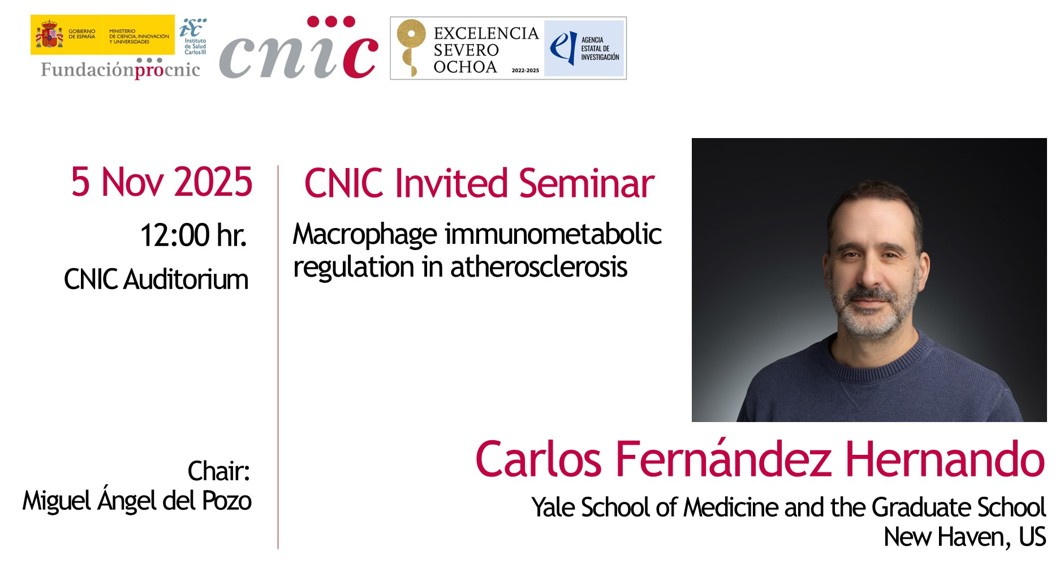
Carlos Fernández Hernández: "Excellence Comes from Genuine Interaction Between Basic and Clinical Research"


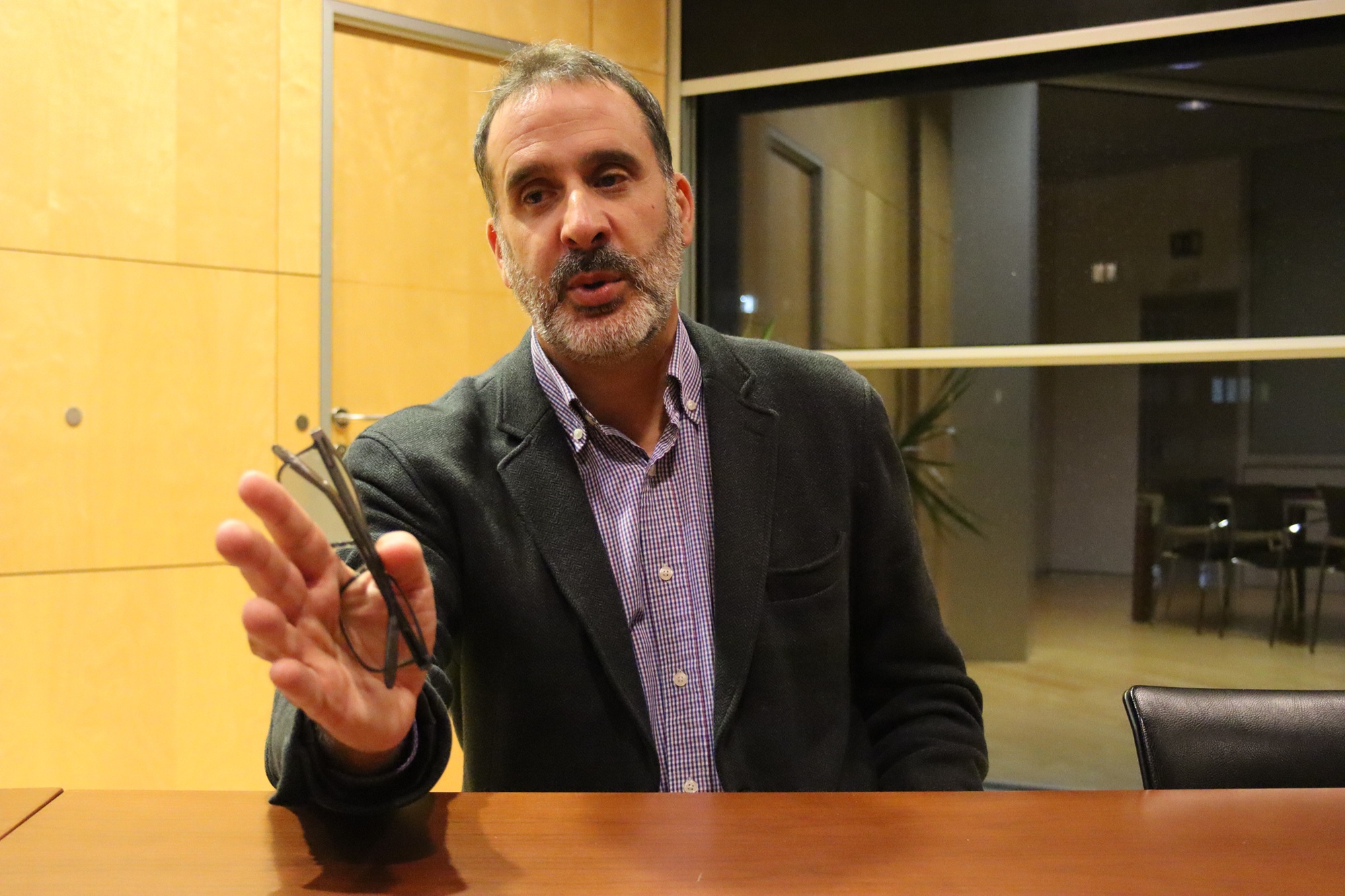
Dr. Carlos Fernández-Hernández studied Biochemistry and Molecular Biology at the Universidad Autónoma de Madrid. He studied for his PhD between 1999 and 2004 under Professor Miguel Ángel Lasunción at Hospital Ramón y Cajal (Madrid), subsequently moving to Yale University for postdoctoral training with Professor William Sessa. Carlos later established his own laboratory in the Department of Medicine at New York University. Today, he is the Antony N. Brady Professor of Comparative Medicine, Professor of Pathology, and Director of the Vascular Biology and Therapeutics Program at Yale University.
- What is the current focus of your research?
My lab studies lipid metabolism. We’ve identified a new class of glycerophospholipids—called plasmalogens—that play an important role in macrophage pro-inflammatory activity and in regulating both vascular wall inflammation and the morphology of atherosclerotic lesions. When these phospholipids are dysregulated, lesions become more severe. And when we manage to control them, we can slow lesion progression.
- How do you identify them?
We performed a screening to find genes that are modulated in macrophages when they are loaded with cholesterol. Using this approach, we identified a new family of enzymes that regulate plasmalogen metabolism and the formation of pro-inflammatory intermediates called lysoplasmalogens. We saw that these lipids accumulate in the necrotic core of atherosclerotic lesions and are associated with a more pronounced inflammatory phenotype in arteries.
Plasmalogens are synthesized through an enzymatic pathway that begins in the peroxisome and is then remodeled in the plasma membrane via the Lands cycle, which regulates lysoplasmalogen formation. To manipulate this pathway, we can inhibit the phospholipases that generate these intermediates or attempt to regulate the enzyme that degrades them. When this enzyme is missing, lysoplasmalogens accumulate, and the severity of inflammation and atherosclerosis increases.
- How did you enter this field? Was it an interest from your university days?
My parents are physicians, so I was always interested in biomedicine, and I studied Biochemistry with the idea of going into research. I started at Hospital Ramón y Cajal working on lipid metabolism, mainly cholesterol. And since high cholesterol is a cardiovascular risk factor, when I moved to the U.S. twenty years ago, I decided to dig deeper into how alterations in lipid metabolism contribute to cardiovascular disease.
My lab has made important discoveries: we were the first to identify the role of small nucleolar RNAs in lipid homeostasis; we discovered a microRNA, miR-33, that regulates cholesterol flux and reverse transport, and we showed that suppression of miR-33 attenuates lesion progression. Later, we expanded our research to the liver (fatty liver and cirrhosis), the brain (Alzheimer’s), and now also the heart, using models of heart failure with preserved ejection fraction.
- Your research is very translational.
Yes. Research at my center is evenly divided between physician-scientists and basic researchers. Collaboration is essential. Clinicians understand the disease, and basic scientists understand the underlying biological mechanisms. Our research is highly translational, like here at the CNIC. The key is genuine interaction, not just coexistence. It’s not enough to put clinicians and basic scientists in the same building; you need to create an environment where they truly want to work together. At Yale, for example, many pilot projects require a clinical PI and a basic PI, and that requirement creates the conditions for genuine interaction.
- When you set up your lab, did you already have this philosophy?
My PhD thesis was full-on basic research, all in cell lines. Then, when I went to the U.S., my goal was to study how alterations in lipid metabolism were linked to cardiovascular disease. My postdoctoral training at Yale was where I really learned vascular biology—atherosclerosis models, angiogenesis, tumor angiogenesis, and so on.
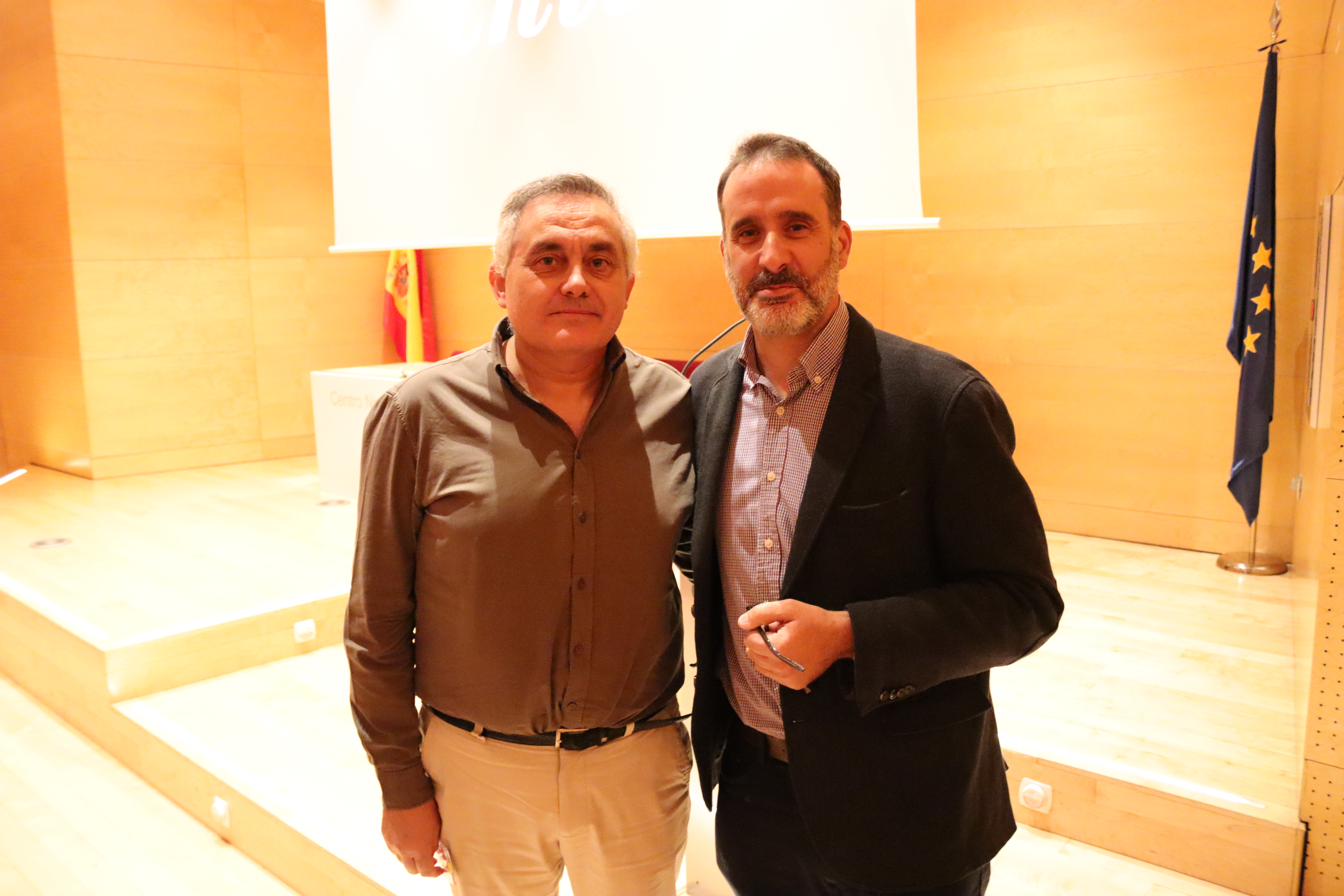
That training gave me a dual perspective: I come from a very basic-research background, but I learned the molecular mechanisms of cardiovascular disease. And for the past 20 years, we’ve combined basic studies with translational research and human samples.
At Yale, I collaborate with cardiologists and vascular surgeons. Our starting point is often alterations observed in patients, which we then take to animal models to investigate the molecular mechanism. This is what’s called bench-to-bedside—or bedside-to-bench—research.
Excellence comes from the interaction between basic and clinical research. There must be respect and collaboration. Some centers house both but lack the microenvironment needed for interaction. In our center, that interaction happens organically, and I think this is the case here too.
- You’ve been at Yale for 20 years. How has this collaborative culture evolved?
This has always been my approach, perhaps for family reasons. I understand both the basic researcher who wants to do only basic science and the clinician who wants to do only clinical work. Discoveries can come from either side.
But if you want real commitment between the two groups, you need excellent people on both sides and you need to actively promote collaboration. At Yale, for example, we have pilot projects where it’s mandatory to have both a clinical PI and a basic science PI. Many centers fail because they put people together but don’t create mechanisms to facilitate interaction. Interaction must be real, not superficial.
There also has to be a collaborative environment; if this is lacking, you need to rethink the ecosystem.
Valentín Fuster brought this same vision of collaboration to the CNIC. Valentín is a physician-scientist and has always had a deep respect for basic research. He’s been a crucial figure for biomedicine in Spain. And I’m confident that bringing in more clinicians will not come at the expense of basic research excellence; indeed, this combination has been key to the center’s success.
In the United States, the MD–PhD pathway is very clearly defined: medical training is followed by a PhD and then postdoctoral training. That model could be developed further here. Research-active cardiologists in the United States can spend many years in training—including medical school, a fellowship, a PhD, and postdoctoral training—and their training pathways formally allocate protected time for research. This is very different from the typical career path in Spain.
- When you recruit for your group, do you take all this into account?
I’ve never put much weight on labels like PhD, MD, or MD–PhD. What really counts is whether someone is genuinely interested in science. Everything else can be learned.
This science vocation is not easy to detect in an interview, because interviews are rehearsed. What I usually do is ask candidates to read a few papers and then discuss them with me. I’m not especially concerned with whether the questions they ask are good or bad; instead, what I’m looking for is genuine interest and scientific curiosity.
Academic degrees don’t define anything. What defines someone is their motivation: whether they want to do science, whether they’re curious, whether they ask questions, whether they want to be in the lab not out of obligation but because they want to discover things.
I also don’t think a researcher is defined by publishing 200 or 300 papers. Take Elaine Raines, for example. She never earned a PhD, yet her work with Russell Ross revolutionized the field of atherosclerosis, and she was involved in fundamental discoveries about the pathophysiology of the disease. Today, the American Heart Association honors her legacy through its Young Investigator Award.
- But in Spain, formal qualifications do matter for career progression, don’t they?
Unfortunately, yes.
Some more examples: Joe Goldstein and Mike Brown won the Nobel Prize for discovering the low-density lipoprotein receptor. The key papers were published in The Journal of Biological Chemistry, not in Nature or Science. Napoleone Ferrara’s discovery of VEGF was published in Biochemical and Biophysical Research Communications. And just this year, Shimon Sakaguchi won the Nobel Prize for the discovery of regulatory T cells, which play a fundamental role in autoimmune diseases, cancer, and many other conditions. The paper reporting that finding was published in the Journal of Immunology in 1995.
Today, scientific evaluation relies far too heavily on impact factors and percentiles, when it should instead be based on scientific content. You can have 300 publications, including two Nature papers, but if you can’t explain why your research matters in one minute, then perhaps it doesn’t.
Our evaluation criteria are too rigid, and we fail to assess real scientific contribution. I recognize that we need defined metrics, but the ones we use today are not the right ones. And often this comes down to external pressure: “Why did you choose this person and not another one who has ten more papers?” That kind of pressure creates barriers that prevent genuine discussion of the science.
- Your lab has federal funding. Have the current cuts affected you?
No. Ongoing grants already have their funds transferred. The real issue is the current budget freeze: Republicans and Democrats have not yet reached an agreement.
Many newly submitted grants are not being reviewed—neither approved nor rejected—so there will inevitably be delays. I was fortunate to have my grants awarded just before the change in government. This is not the first time this has happened, but the duration is unusual. We’ve already been in this situation for five weeks. It looks as though it may be resolved soon, but no one really knows.
When politics becomes polarized, situations like this arise. Personally, I believe virtue lies in the middle ground. I believe in moderation. There has to be accountability—if a party is corrupt or consistently makes poor decisions, change is necessary.
Sometimes decisions do not benefit everyone, and that creates frustration. You see that here and elsewhere. But failing to make decisions is even worse: it generates conflict on both sides.
- My final question: there seems to be a growing disregard for science, both in the United States and here—denialism, vaccines, and so on. Is that something you perceive?
Science has always been under pressure. The environment has been difficult since the 2008 financial crisis. Funding success rates are now below 10%. If you’re a denialist, you shouldn’t go into science. When funding is tight, you have to look for alternatives—collaborations with industry, program projects, new funding pathways. Dwelling on the negative doesn’t help.
Young researchers are the most vulnerable. If they begin their careers under pressure to publish five papers, they lose sight of what really matters. When you work under pressure, you don’t try to refute your hypothesis; you try to confirm it with two experiments. The best researchers work to falsify their hypotheses.
That pressure also leads people not to repeat experiments and not to seek reproducibility. This is why so much biomedical data is irreproducible. Salvador Moncada once told me: if a result is important, it has to be reproduced by different hands and using different approaches. That mindset is being lost today because of the pressure researchers are under. We need to evaluate scientists on the basis of their scientific contribution, not impact factor.