Genome Biology: A new technology helps reveal how the heart generates cells with regenerative potential


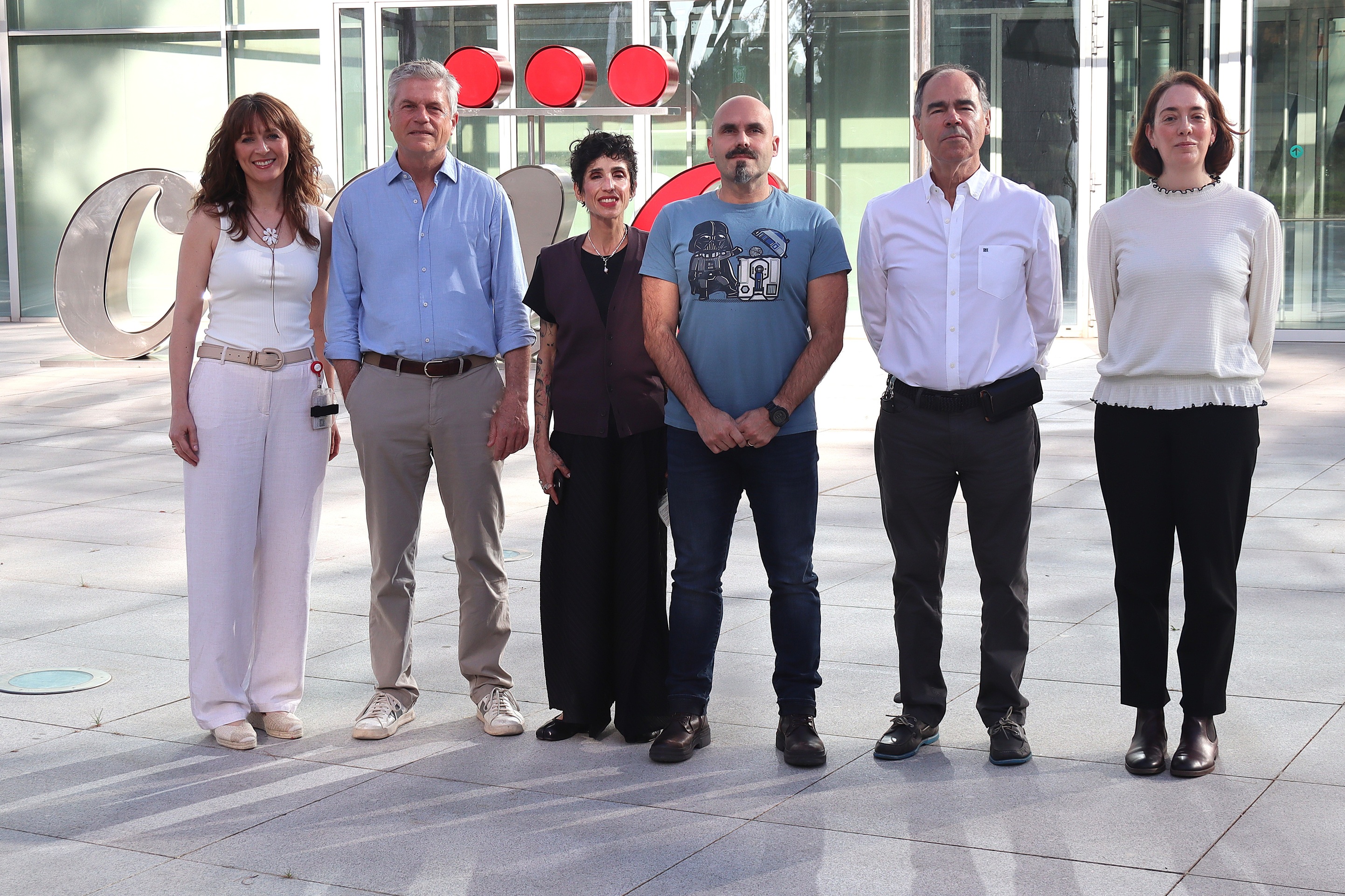
Two CNIC teams have developed a pioneering technique to analyze proteins in individual cardiomyocytes and uncover new clues about cardiac regeneration
Two research teams at the Centro Nacional de Investigaciones Cardiovasculares Carlos III (CNIC) have developed a pioneering technique in Spain to characterize the proteome of individual cardiomyocytes—the cells responsible for heart contraction.
The study, published in Genome Biology, shows that the transcription factor Myc, used in regenerative strategies, alters protein expression in each cell differently, generating a subpopulation of cardiomyocytes with regenerative potential.
According to study leaders Miguel Torres and Jesús Vázquez, the findings provide key insights into the mechanism of action of Myc at the level of individual cardiomyocytes and offer new opportunities for the development of future regenerative therapies.
All organs and tissues in the body are composed of different cell types that perform specialized functions. In the heart, for example, cardiomyocytes coexist with fibroblasts, cells that line blood vessels, and various immune cells, among others.
Recent research has shown that even cells of the same type are not identical. Some display distinct characteristics and functions, forming specialized subpopulations that perform specific roles in tissue function and disease development.
The study of this cellular diversity has transformed biomedical research in recent years, providing new insights in areas such as cancer, neurodegenerative diseases, and cardiovascular conditions. However, systematically analyzing the proteins present in individual cells remains a major technological challenge, limiting scientists’ ability to fully understand how healthy and diseased tissues function.
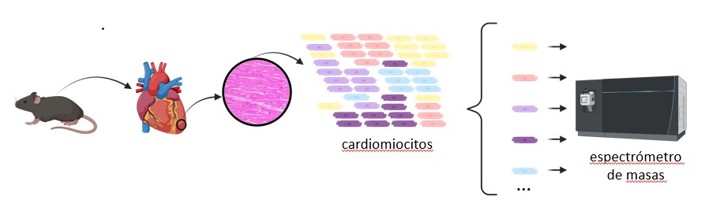
In the new study, CNIC scientists, working with partners at the Karolinska Institute in Stockholm (Sweden), developed a technology to characterize the proteome (the full set of expressed proteins) of individual cardiomyocytes isolated from the heart.
“This new method was developed by combining optimized cell isolation protocols, state-of-the-art mass spectrometry techniques, and new bioinformatic and statistical algorithms,” explains Dr. Vázquez.
The adult mammalian heart has little regenerative capacity and cannot effectively replace cells damaged by cardiovascular events or disease.
Previous work by Miguel Torres’s group demonstrated that expression of the transcription factor Myc in the adult heart promotes recovery after myocardial infarction. These studies, explains Dr. Torres, showed that “Myc has great potential for the development of regenerative therapies; however, its mechanism of action and its impact on cardiomyocytes—particularly at the single-cell level—remained unknown.”
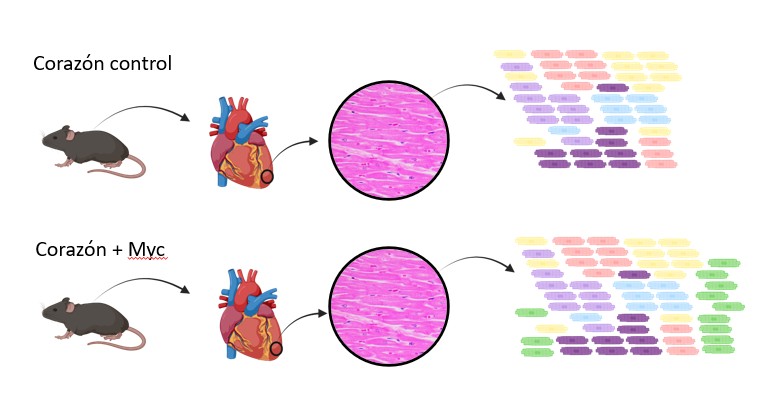
In the present study, the researchers applied their new single-cell proteomics method to analyze the effects of Myc expression in adult cardiomyocytes.
“Our results show that Myc expression alters the levels of metabolic enzymes differently in each individual cell, generating distinct states of cellular immaturity and giving rise to a subpopulation of cardiomyocytes with regenerative potential,” says study first author Consuelo Marín-Vicente.
The study was supported by the Leducq Foundation Consortium “Redox Regulation of Cardiomyocyte Renewal”; Ministerio de Ciencia, Innovación y Universidades; Comunidad de Madrid; Fundación “la Caixa”; CIBER de Enfermedades Cardiovasculares (CiberCV), and ERC-Advanced Grant.