David Sancho receives the 22nd Health Sciences Award from the Caja Rural Granada Foundation


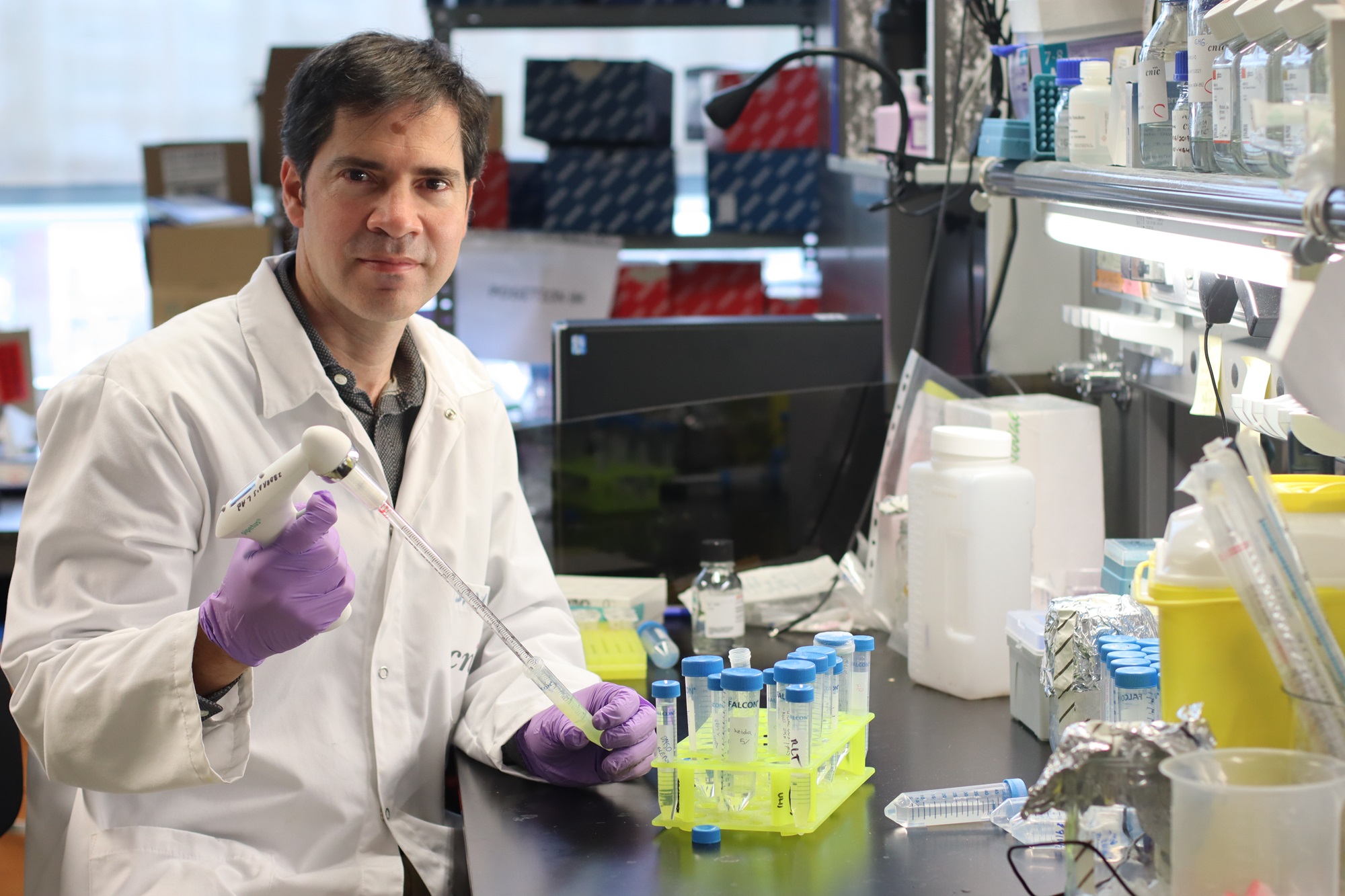
The Foundation recognises the pioneering research into the link between gut microbiota and cardiovascular disease led by David Sancho at the CNIC
A study led by David Sancho Madrid, head of the Immunobiology Laboratory at the Spanish National Centre for Cardiovascular Research (CNIC), has been awarded the XXII Premio Ciencias de la Salud Fundación Caja Rural Granada. The jury has awarded this prize, worth 25,000 euros, for the paper ‘Imidazole propionate is a novel causative factor and potential therapeutic target in atherosclerosis’, published in Nature.
The study highlights how cardiovascular diseases are one of the leading causes of death, and have their origins in atherosclerosis – a condition in which the arteries progressively harden and narrow due to the build-up of inflammatory plaques on their walls; if these plaques rupture, they lead to the formation of blood clots associated with heart attacks or strokes. Although factors such as high cholesterol, smoking and high blood pressure increase the risk of developing this condition, there are also people who suffer from it without exhibiting these traditional risk factors, suggesting that there must be other mechanisms that are as yet poorly understood.
In recent years, the scientific community has discovered that the microbiota – the collection of microorganisms living in our gut – influences numerous aspects of health, including cardiovascular health.
Dr Sancho’s team identified a molecule produced by certain gut bacteria, known as imidazole propionate, which promotes the formation of atherosclerotic plaque independently of cholesterol. The human study showed that levels of this molecule are elevated in people in the early stages of atherosclerosis, even before symptoms appear. Furthermore, the researchers demonstrated in experimental models that imidazole propionate contributes directly to the development of atherosclerosis by activating certain immune cells involved in arterial inflammation. This finding established a causal link between this metabolite and the disease.
The jury has awarded this prize to the paper ‘Imidazole propionate is a new causative factor and potential therapeutic target in atherosclerosis’
The significance of the findings is further reinforced by the fact that the team succeeded in blocking the action of this molecule. By preventing it from interacting with inflammatory cells, the progression of atherosclerosis was halted in the models studied. Even in cases of advanced disease, the treatment managed to slow down and even partially reverse the vascular damage.
This discovery of imidazole propionate as a key factor in the development of atherosclerosis in a section of the population opens up two important avenues for the future. On the one hand, measuring imidazole propionate levels in apparently healthy individuals could help to identify at an early stage those at risk of developing atherosclerosis. And, on the other hand, the development of treatments that block the action of this molecule could offer new therapeutic options for preventing or treating cardiovascular diseases.
The Caja Rural Granada Foundation is co-organising the Health Sciences Award with the Fundación Pública Andaluza Parque Tecnológico de la Salud, in collaboration with the Junta de Andalucía, the Universidad de Granada and the Medical and Pharmaceutical Associations of Granada and the CSIC.
Teamwork
For David Sancho, “it is an honour to receive this award for work that reflects the talent and dedication of an extraordinary team. I would particularly like to highlight the work of Annalaura Mastrangelo, whose metabolic profiling enabled us to identify imidazole propionate as a new metabolite associated with atherosclerosis, and that of researcher Iñaki Robles-Vera, a postdoctoral fellow from the University of Granada who joined our laboratory to demonstrate the causal role of this metabolite in atherosclerosis and explore therapeutic strategies to block its action. “This recognition encourages us to continue investigating new mechanisms of atherosclerosis with the aim of developing tools for its early diagnosis and new treatment options for patients.”
The expert committee comprised representatives from the organising and collaborating institutions: Ignacio Molina (Head of the Department of Biochemistry, Molecular Biology 3 and Immunology at the Faculty of Medicine), Lourdes Núñez-Müller (Director of Knowledge Transfer and Entrepreneurship at the Andalusian Public Foundation for the Granada Health Technology Park), Javier Martín and Elena González -Rey (Researchers at the López-Neyra Institute of Parasitology and Biomedicine, CSIC), Isabel Castillo (President of the Granada Medical Association), Juan Eloy Jiménez (President of the Granada Pharmaceutical Association), Francisco Cepero (Head of Medical Services at Caja Rural Granada) and María Eugenia Penela (Head of Healthcare Planning and Evaluation at the Regional Ministry of Health and Families of the Regional Government of Andalusia).
David Sancho is head of the Immunobiology Group at the Spanish National Centre for Cardiovascular Research (CNIC) and leads a nationally and internationally recognised research programme focused on studying the function of the immune system and developing new immunotherapy strategies for the treatment of cardiovascular and inflammatory diseases, as well as cancer.