María Ruiz Castell: "There is often a tendency to design top-down solutions without fully considering people’s real needs"


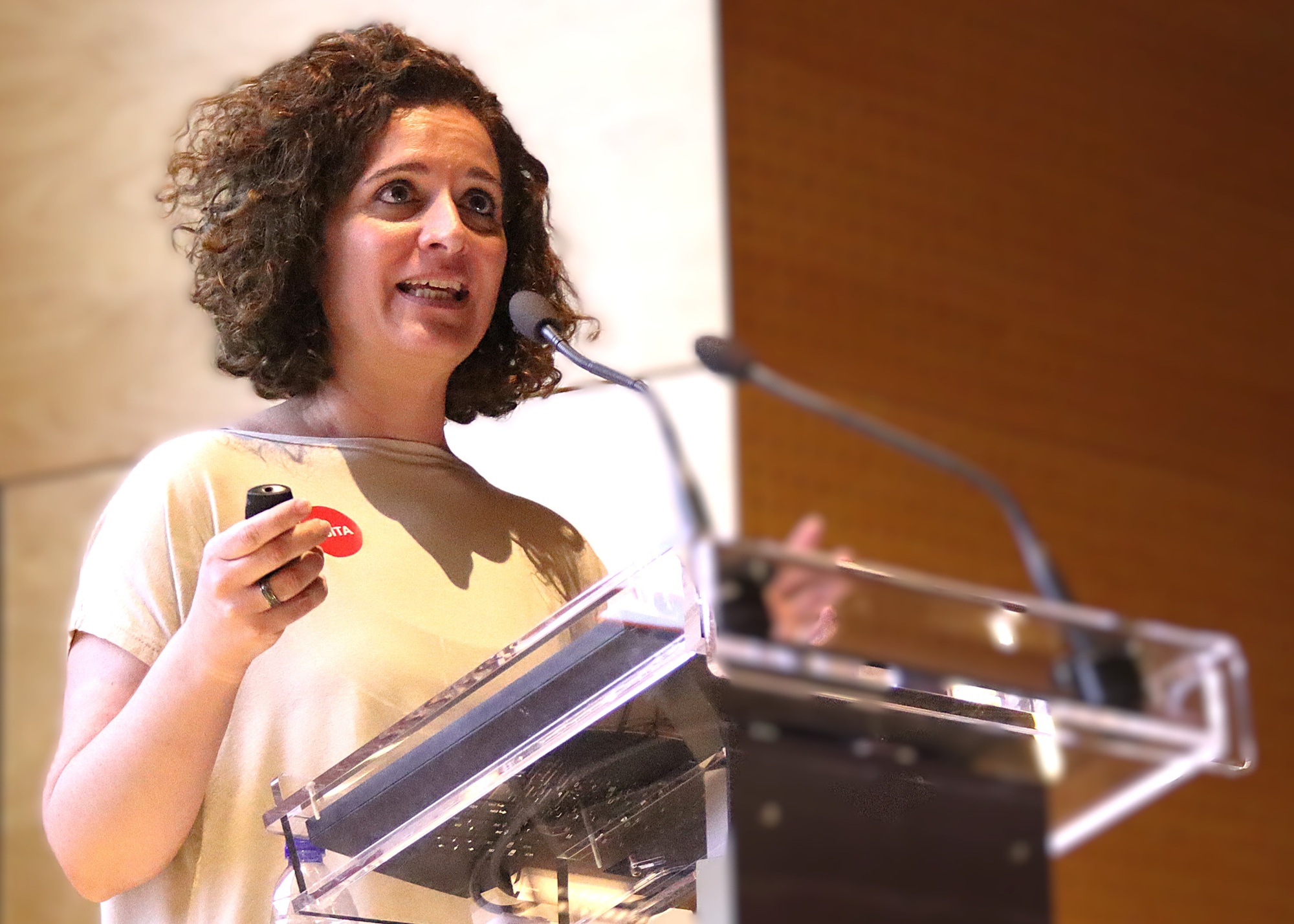
María Ruiz-Castell is a researcher and head of the CARES (Socio-Economic, Environmental Health and Health Services) group at the Luxembourg Institute of Health. She holds a degree in Human Biology from Pompeu Fabra University and specializes in environmental epidemiology, public health, and health inequalities.
Her research focuses on the exposome, the social determinants of health, and the combined impact of environmental and social factors on chronic diseases and mental health. She has worked on international projects in Bolivia, Canada, and Luxembourg, with a particular focus on vulnerable populations and on translating scientific evidence into public policy.
- You studied Human Biology. How did your interest in health inequalities arise, and how are they influenced by the environment?
I didn’t start out in this field; in fact it was something I discovered while studying in Barcelona. I had always been interested in both biology and medicine, though I knew I didn’t want to become a doctor, as I’m deeply affected by patient-related work and preferred to pursue research.
When I came across the Human Biology degree at Pompeu Fabra University, which combines biology and medicine, I assumed I would end up working in a laboratory. After graduating, I enrolled in a master’s in Public Health at what is now ISGlobal, where I discovered environmental epidemiology and public health—areas I found really compelling.
From there, I joined a project in Bolivia setting up a cohort study of children and pregnant women. I spent two years there and was able to see first-hand how inequalities affect health. Not just social inequalities, but environmental ones as well.
I later moved to Canada to work with Inuit communities in northern Quebec. Although I continued to study similar topics, the context was much more challenging. Inuit populations face numerous social problems, and it was in Canada that I expanded my understanding of exposure to include not only chemical or environmental factors, but also psychosocial ones. My current work in Luxembourg combines both perspectives.
- What led you to specialize in health inequalities?
I’ve always been interested in social inequalities and in more extreme contexts. I worked on projects with local populations in Bolivia and Canada, but moving to Luxembourg marked an important shift.
I now lead a small research group that has a combined focus on environmental health and social inequalities. We are also engaged in more applied and advisory work, partnering with Luxembourg’s Ministry of Health on policy-related issues. Because Luxembourg is a small country, it’s easier to build connections between research and decision-making.
- Do you feel that your work can now have a real impact on public health?
Yes, absolutely.
- In your research you often refer to the exposome. What does the term mean, exactly?
The exposome encompasses all the exposures a person experiences throughout their life. An exposure is anything that can influence health, whether chemical substances, lifestyle, education level, economic situation, social and environmental context, or other factors.
The exposome can be defined as the sum of exposures accumulated from before birth through to adulthood. It also includes aspects related to gender and social inequality.
- And do these social factors interact with one another?
For sure. There are clusters of exposures that tend to accumulate within certain population groups. For example, women with lower levels of education or certain migrant groups may be exposed to multiple risk factors all at once and also show poorer health outcomes.
What we see is that exposures are not evenly distributed across the population. Instead, they are concentrated in specific groups and places. These interactions also depend heavily on the national context.
We’ve used intersectionality approaches to analyze factors such as gender, education, and migration together. In Luxembourg, for instance, we’ve found that gender and education play a major role in mental health, while migration seems less influential. In contrast, in other countries migration is much more significant.
- You’ve worked in very different contexts: Bolivia, Inuit communities in Canada, and Luxembourg. Which would you consider the healthiest?
Each population has its own particular characteristics. It’s always important to understand the context people live in and how different factors interact.
The population I worked with in Bolivia was very poor and lived near mining sites, with exposure to heavy metals. There were also issues with food insecurity. On the other hand, the pace of life was slower.
For the Inuit communities, psychosocial factors carried enormous weight due to their recent history. Many families had been separated, there were language barriers between generations, and geographical isolation was significant. Fresh food is extremely expensive, making it difficult to maintain a healthy diet. There were also problems with overcrowding due to housing shortages.
Luxembourg represents a completely different reality. There is more stress linked to work and the pace of life, as well as issues related to environmental pollution. So it’s difficult to make direct comparisons between such different contexts.
- Do you think there is sufficient awareness in societies and governments of the impact these factors have on physical and mental health?
Awareness is growing. But although the concept of the exposome has been around for years, we are still at a relatively early stage.
For a long time, research focused on single exposures linked to a single health outcome. But real life is much more complex—people are exposed to multiple factors that interact with one another.
This broader perspective is now starting to be incorporated into both research and public policy. In 2025, for example, the European Parliament promoted initiatives related to the exposome. There is also an international network of research groups working to standardize methods and make studies more comparable.
We are also seeing more longitudinal studies that allow us to analyze the cumulative effects of exposures from prenatal stages to adulthood.
- Is the exposome the same as the social determinants of health?
Not exactly, although they are closely related.
Social determinants mainly refer to the social, economic, and cultural context in which people live. The exposome, on the other hand, includes all exposures that may affect health, including environmental, social, biological, and behavioral.
In many cases, we are using different terms to describe similar phenomena. The main difference is that the exposome approach is more exploratory and seeks to identify new relationships between multiple exposures and health outcomes, whereas social determinants focus on factors whose effects are already relatively well established.
- When designing health policies, is it necessary to tailor interventions to each specific context?
Absolutely. While some factors are common across settings, it is essential to understand the specific context of each population.
There is often a tendency to design top-down solutions without fully considering people’s real needs. As a result, interventions may fail because they don’t address the actual problems.
That’s why we are developing participatory projects with groups such as cleaning workers in Luxembourg. We want to understand their concerns directly and co-design interventions that fit their reality.
If we don’t understand the context, we risk proposing solutions that are ineffective, or that even add an extra burden.
- Collecting and analyzing all this data sounds extremely complex.
It is. We are currently trying to integrate information from questionnaires, geospatial data, sensors, biomonitoring, and many other sources.
The challenge lies in combining all these data and extracting meaningful conclusions. That’s why methodological development is so important. In this area, artificial intelligence is enabling significant advances and helping us analyze large volumes of complex data. It’s one of the fastest-moving fields right now.
- Do you collaborate with Spanish research groups?
Yes, although on a limited basis. We’ve collaborated with Rodrigo Fernández here at the CNIC, and I maintain links with ISGlobal, where I trained.
Our group is still small, and environmental epidemiology research in Luxembourg is still developing, although it is progressing rapidly. We’ve recently launched a doctoral school focused on the exposome, and we are building more national and international collaborations.
- Do you think this work will eventually be reflected in public policy?
I hope so. Priorities obviously differ depending on the context. In some places, the first priority is ensuring access to clean water or basic healthcare.
One common criticism of exposome research is that most data come from high-income countries, while regions like Africa or many low-income countries remain underrepresented.
That said, we are gradually building more scientific evidence that can inform policy decisions. Some cities, such as Barcelona, are already incorporating this knowledge into areas like urban planning and mobility.
Change is slow, and there are many competing interests, but having solid data helps guide decisions and evaluate the impact of interventions.
- It also depends on who is in government.
Exactly, that’s another key factor. In Barcelona, for example, some interesting initiatives have been implemented. They are not huge changes, but they represent progress.
The presence of a leading center in environmental epidemiology has helped bring scientific evidence closer to policymakers and translate it into concrete actions.
- At least policymakers now have scientific evidence available to guide their decisions.
Paris is another good example. The changes in the city center have been very significant. Some measures are controversial, such as reducing space for cars or the challenges these changes can create in daily life.
But when you look at the broader picture, the impact has been substantial. These experiences show how evidence-based decisions can transform urban environments and improve health and quality of life.
We now have much more scientific data than we did a few years ago, and this helps translate research findings into policy. Even so, change tends to be slow. Other countries are also beginning to develop similar initiatives. It’s a complex process, with many different interests and factors at play.