“Understanding the Neurovascular Network to Prevent Dementia”: why understanding the neurovascular network matters for dementia prevention


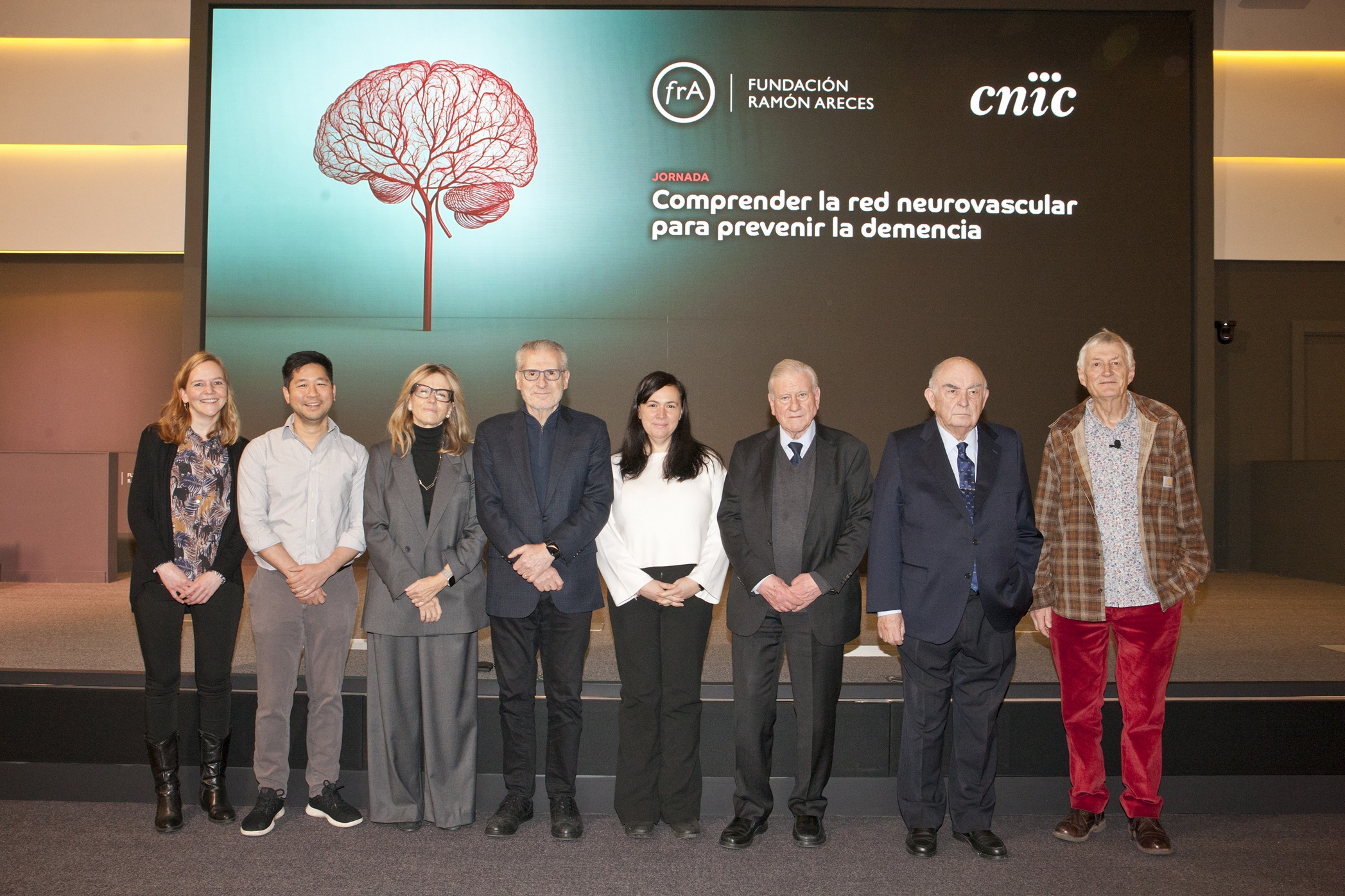
Dementia has become one of the most pressing public-health challenges of the 21st century. As populations age and effective curative treatments remain elusive, prevention is emerging as the most promising strategy. Against this backdrop, the international symposium Understanding the Neurovascular Network to Prevent Dementia, organized by the CNIC and Fundación Ramón Areces, focused attention on a factor that has long been underestimated: the neurovascular network. This complex system—integrating blood vessels, neurons, and the brain’s protective and clearance mechanisms—is now recognized as central to preserving cognitive function.
The meeting was coordinated by CNIC General Director Valentín Fuster; Costantino Iadecola, Director of the Feil Family Brain and Mind Research Institute at Weill Cornell Medicine (New York); Marta Cortés-Canteli, from the Cajal Center for Neuroscience (CSIC); and María Ángeles Moro, Coordinator of the CNIC Program on Cardiovascular Risk Factors and Brain Health.
Growing evidence links cognitive decline and dementia closely to cardiovascular health. As Fuster emphasized during the symposium, “Cardiovascular diseases are now recognized as the underlying cause of a wide range of cognitive syndromes, defined as vascular cognitive impairment and dementia.”
A substantial body of research also indicates that cardiovascular and metabolic risk factors—hypertension, diabetes, obesity, and atherosclerosis—contribute to other forms of dementia, particularly Alzheimer’s disease. “These factors can interact over many years during preclinical stages, long before symptoms appear,” Fuster explained, underscoring the urgency of understanding these mechanisms in order to develop effective preventive strategies.
A network essential for cognitive function
The human brain contains nearly 700 kilometers of blood vessels, responsible for supplying oxygen and nutrients to an organ that accounts for just 2% of body weight yet consumes around 20% of the body’s oxygen. “This alone highlights the critical importance of the cerebral vasculature,” noted Moro.
Neurons, astrocytes, microglia, endothelial cells, pericytes, and smooth-muscle cells together form an integrated signaling network that precisely coordinates vascular activity with neuronal excitability, synaptic plasticity, immune responses, and cerebral clearance mechanisms. “This complex interplay must be understood both in health and in disease, because it is essential for brain function and cognition,” she added.
Cerebral vessels: active players, not bystanders
Key advances presented at the symposium addressed cerebral small-vessel disease, capillary dysfunction, and their contribution to brain aging and dementia. For Cortés-Canteli, cerebral vessels are “not mere bystanders” but “active partners in neuronal signalling, metabolism, immunity, and waste clearance.”
She also highlighted growing evidence for the close interdependence of immunity and hemostasis. “When this delicate balance is disrupted, the microcirculation is compromised, cerebral blood flow decreases, and processes are triggered that can ultimately lead to dementia,” Moro explained.
Iadecola recalled that until relatively recently, the vascular component was barely considered in diseases such as Alzheimer’s. “If a patient had suffered a stroke, an Alzheimer’s diagnosis was often ruled out automatically. That created a misleading perception,” he said. It is now well established that mixed dementia—arising from the combination of vascular pathology and neurodegeneration—is the most common form of cognitive impairment.
Cortés-Canteli further stressed that cardiovascular health is a fundamental element in Alzheimer’s pathogenesis, reframing the disease as systemic rather than purely neurological. “The prevalence of Alzheimer’s triples among individuals with atherosclerosis, and increasing atheromatous plaque burden is associated with reduced cerebral metabolism and higher levels of blood markers of neuronal death,” she noted.
The symposium brought together leading international experts who addressed the problem from a multidisciplinary perspective. Among them, Andy Shih (Seattle Children’s Research Institute – University of Washington) presented advances in optical imaging to study neurovascular function and the blood–brain barrier; Susanne van Veluw (University of Edinburgh) analyzed the relationship between small-vessel disease and dementia; and Joanna Wardlaw, a global leader in neuroimaging, shared her work on brain aging, stroke, and vascular dementia.
Towards meaningful dementia prevention
The message emerging from the meeting was unequivocal: understanding the neurovascular network is essential for preventing dementia. Integrating vascular biology with neuroscience will make it possible to identify early biomarkers, intervene on modifiable risk factors, and delay—or even prevent—the onset of cognitive decline.
In Fuster’s words, “If we want to curb the dementia epidemic, we must start long before symptoms appear—by looking after the heart to protect the brain.”