Isabel Fariñas: “Research Is Not a 9-to-5 Job; It Is Almost an Artistic Profession”


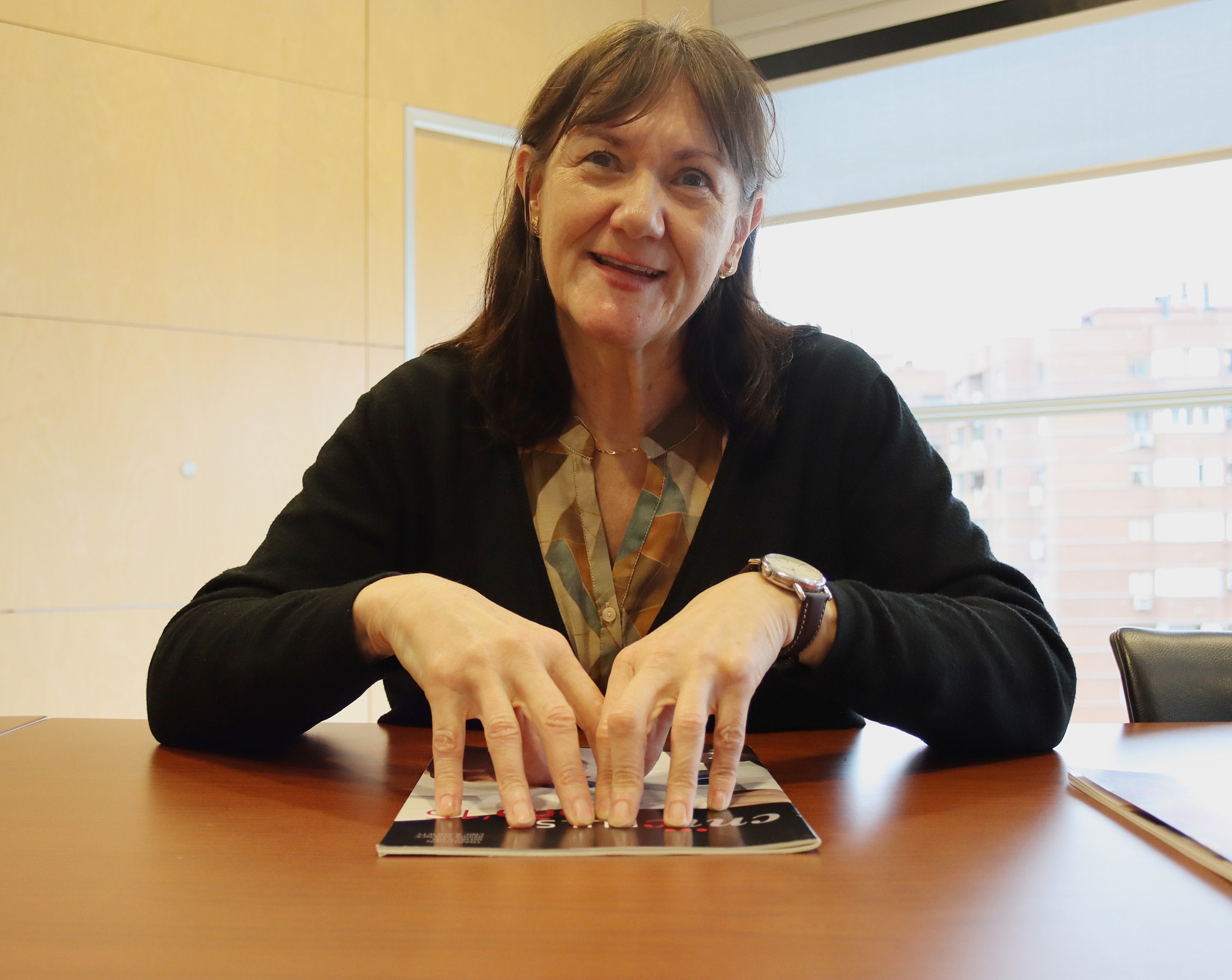
Isabel Fariñas is Professor of Cell Biology at the Universitat de Valencia and coordinator of the Molecular Neurobiology Unit (NeuroMol). She completed her PhD at the Instituto Cajal and carried out postdoctoral research at University of California, San Francisco with Louis Reichardt, where she made key contributions to demonstrating the essential functions of neurotrophic factors using genetically modified mouse models, publishing in leading journals. Since establishing her independent research career in Spain, her work has focused on the biology of the neural stem cell niche. She helped define the role of blood vessels in neurogenic niches, the active regulation of stem cell quiescence, and the influence of cell-cycle molecules, cell adhesion, and inflammation in maintaining these cells. She has led more than 30 competitive research projects—including an ERC Advanced Grant—and published over 100 articles in journals such as Nature, Cell, Neuron, and Cell Stem Cell. With an h-index of 51 and more than 15,000 citations, she ranks among the top 2% most cited scientists worldwide.
She is a member of EMBO and the recipient of the 2024 Santiago Ramón y Cajal National Research Award in Biology, and has held numerous leadership positions, including President of the Biosciences and Biotechnology panel at Spain’s State Research Agency. She serves on multiple national and international scientific committees and is active in technology transfer and science outreach. Her teaching record is equally distinguished: more than 25 years teaching cell biology and neuroscience, a key role in developing degree programs at her university, supervision of 18 doctoral theses, and the training of nearly 40 researchers.
- What does it mean to you to be awarded the Santiago Ramón y Cajal National Research Award in Biology?
It is overwhelming—although I must say that many people deserve this award. So I consider myself fortunate. I repeat: there are countless researchers in this country who are equally deserving. Spain is deeply committed to science, and often—despite limited resources—near miracles are achieved. I have enormous respect for the research community. That is why receiving this award is both overwhelming and an immense honor.
- In your career, you must have experienced uncertainty and frustration. How do you deal with them?
What does frustration mean? That’s what I ask young researchers. In a mentoring session, a student once asked me how to deal with failure, and I replied: “Define failure.” If you set very specific expectations and things do not turn out as planned, you tend to see that as failure. But in our profession, we must view such situations as opportunities. We have to be prepared for things not to work out, because the problems we tackle are complex and difficult.
I often tell my students that we train them as if they were going to solve the great problems of science. But that is not entirely true, because real problems require immense creativity, and you are never fully prepared for them. Life is complex. That is why you must let go of expectations and approach questions by “embracing your stupidity,” as a colleague once wrote in an editorial in Nature. Only when you say, “This is beyond me; I have no expectations,” do you begin to think without limits. Then you enjoy the process, you become creative, and when you solve the problem, it is wonderful.
- But failure and frustration are not synonymous.
In this profession, there is no fixed pathRam, so there is no single predefined destination. After so many years, I believe the most important thing is to enjoy the journey, not the goal. I wake up happy each day because of what I do. That is what I tell my students: in life, the aim is to be happy. You have to know what lies within you, understand what you would like to do every day, and seek out what makes you happy.
- How long did it take you to reach that conclusion?
I think I always felt that way, even if I had not put it into words. When I read that editorial in Nature, I thought: “Of course—that is exactly what happens to me.” The researcher described how he realized it the day he went to the world’s leading expert on a topic, explained his problem, and the expert replied: “I have no idea how to solve it.” That was the turning point. If you enjoy the process—even when things do not work out—you find gratification.
- You have spoken about creativity.
Research is not just technical. There is a great deal of technique, yes, but I am absolutely convinced that it is an almost artistic profession. Often you read a colleague’s paper and think: “How beautifully they solved that!” It is marvelous. That is why it is not a 9-to-5 job.
- Have research students changed much since you began your career?
Yes, because society has changed and different values are now emphasized. I love working with young people—they have extraordinary talents. It is not better or worse; it is different. They hold strong values and know how to assert themselves. At the same time, regulations shape how research centers are structured. Now, for example, time tracking is sometimes required because of European Union regulations, which can convey the idea that research is a clock-in, clock-out job. In the past, research was experienced in a more “liberal” way. Both young researchers and institutional structures have changed.
- In some way, the way research is conducted has changed.
Yes. The European Union has provided many guidelines and frameworks, and that influences how individuals perceive their work. Even so, young researchers have much to contribute and are very well trained. We may have been more obsessive, but I am very satisfied with my career. Each generation operates within its own context; today’s young scientists live in a different one, and their decisions make sense within the society they inhabit.
There is a concept I like very much: reverse mentoring. Senior scientists mentor younger ones, but younger researchers also mentor their seniors. That is how progress happens—by learning from one another. That point of encounter is where we move forward most effectively.
- But isn’t that what a good mentor already does?
Yes—but the concept prompts you to ask yourself how much you truly listen. It is a reminder, like the idea of “embracing stupidity.” It encourages reflection on how you act.
- Your field is neurobiology. Did you always know this would be your path?
I wanted to be a researcher from the age of thirteen. My parents did not have formal education, but they wanted us to study. I am the eldest, and it was not clear whether I would be able to attend university because we had family difficulties, so I began looking for work. A classmate told me that I would not have to pay tuition because I had graduated with honors in my final year of secondary school. That allowed me to study Biology.
In my second year at university, I discovered Santiago Ramón y Cajal. I read his books—very accessible—and was captivated.
- How far have we progressed from Cajal’s time to today?
Enormously. Yet he was a visionary. With a microscope that we would not even use for teaching today, he interpreted astonishing things. Everything he wrote has proven correct. He understood the nervous system during development, when it displays its full dynamism—that insight was crucial. Today, thanks to modern technology, we demonstrate what he had already intuited.
- You often say that we still do not know the true cause of neurodegeneration.
We know some associated genes, but we do not know why these diseases emerge. By the time they become clinically apparent, many neurons have already been lost. The brain compensates, and when it can no longer do so, the disease has been present for years. Assuming that these conditions affect only older people is a mistake. That is why there is so much effort devoted to early diagnosis: blood biomarkers, more precise imaging techniques, prodromal syndromes. I believe we are approaching a paradigm shift.
- What is the value of studying people who reach 100 years of age with a “remarkably healthy” brain?
There is tremendous diversity. A study in Ireland was able to relate childhood cognitive performance—examination records from compulsory schooling had been preserved in residential institutions—to brain aging decades later. It is not a simple cause-and-effect relationship, because many factors are involved, but childhood performance explained a significant portion of the variability. Who we are in childhood and how we care for the brain matter greatly.
- In the early 2000s, people spoke of the “Decade of the Brain.” We are now in 2026. Have we advanced as much as expected?
We have advanced enormously, but the brain is the most complex structure that exists. Every brain is unique. We are born with all our neurons, and from that moment neural plasticity reshapes connections throughout life. That is why stereotypes make little sense: each person is unique. And that complexity makes the brain extraordinarily difficult to understand. We cannot assign a thought or action to a single specific circuit. That is the great challenge.