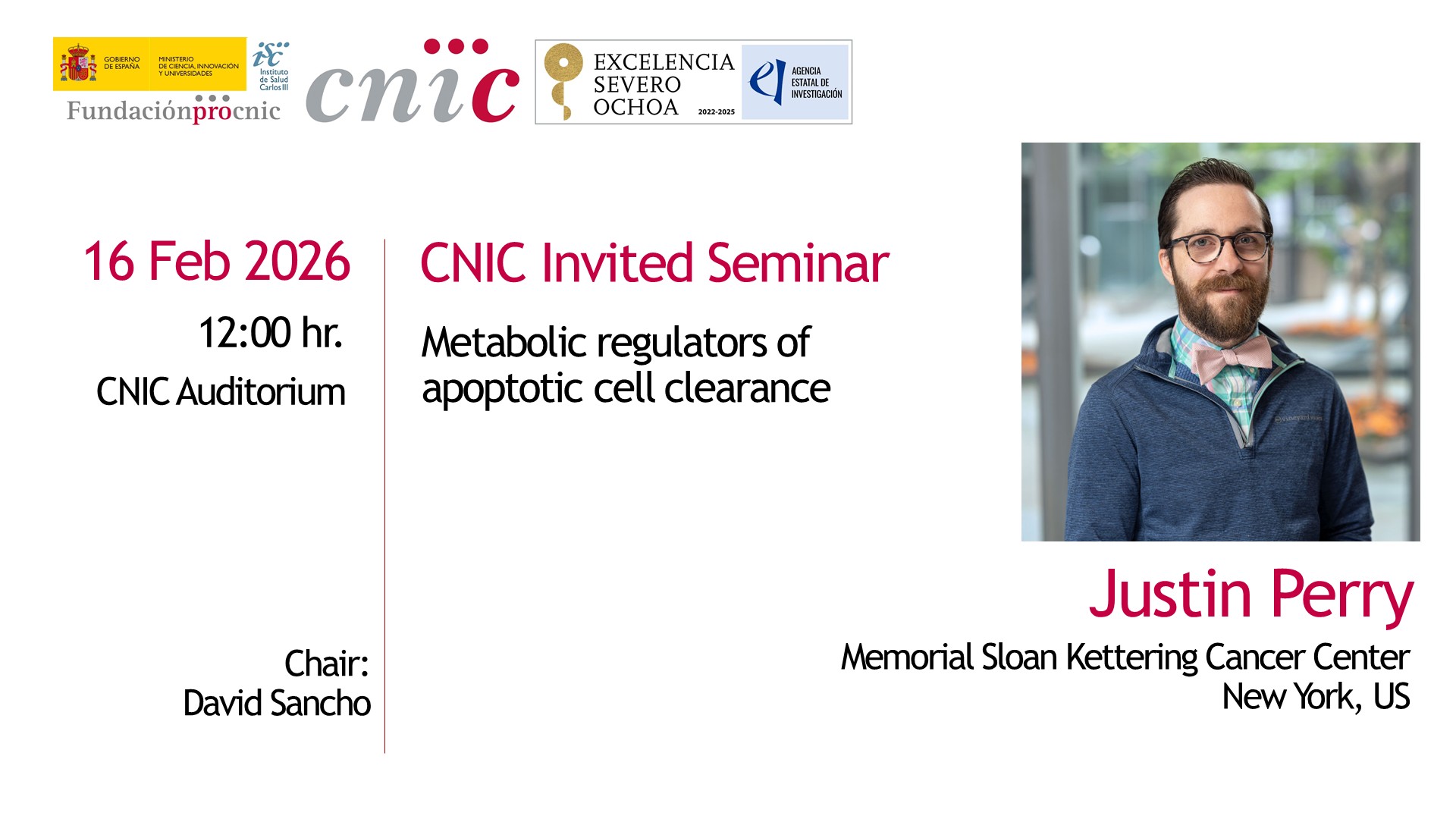
Justin Perry: "In science, we are wrong all the time"


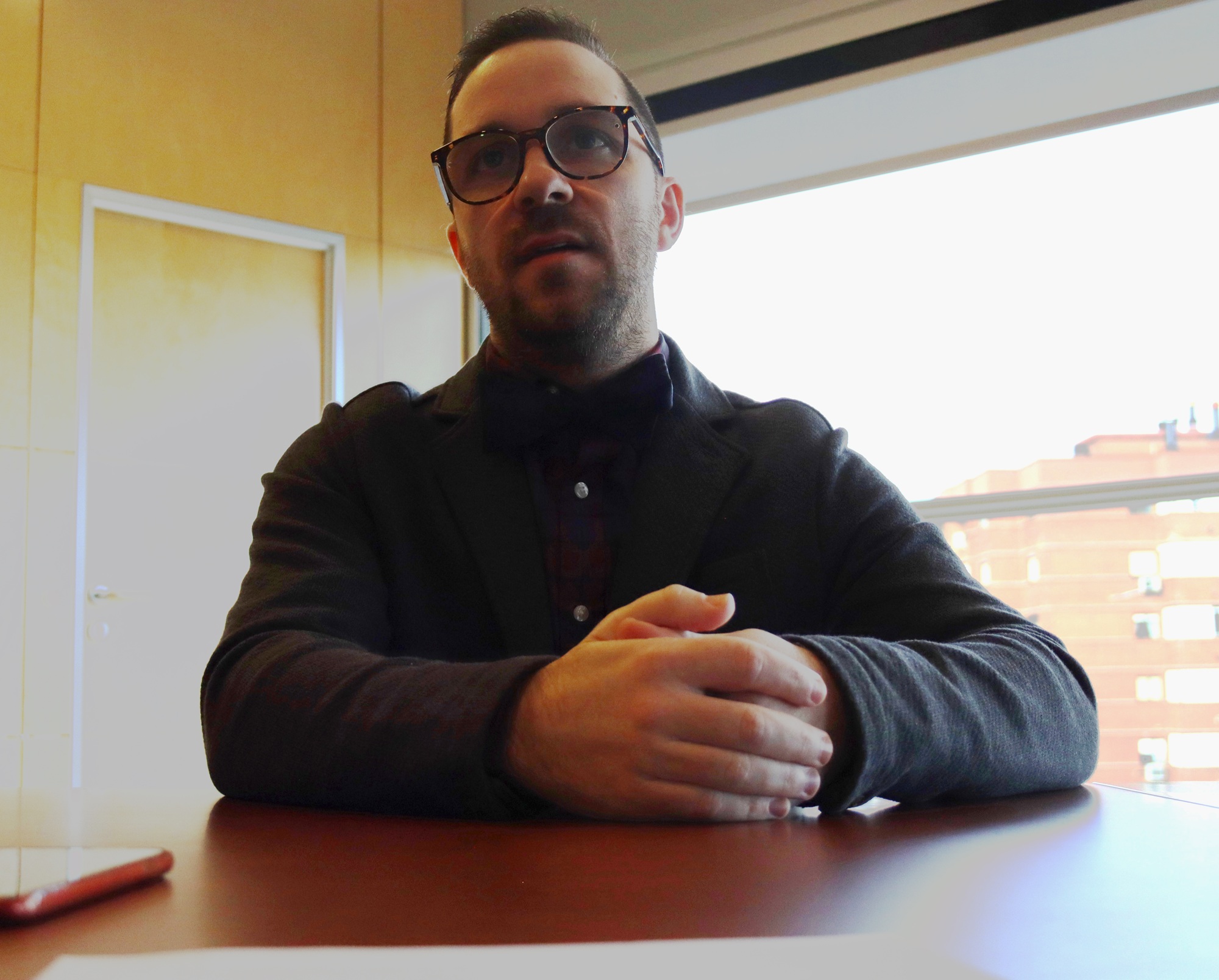
Justin Perry, Associate Member in the Immunology Program of the Sloan Kettering Institute at Memorial Sloan Kettering Cancer Center and an Assistant Professor in the Immunology and Microbial Pathogenesis Program at Weill Cornell Medical Center
Justin Perry is an Associate Member in the Immunology Program of the Sloan Kettering Institut at Memorial Sloan Kettering Cancer Center and an Assistant Professor in the Immunology and Microbial Pathogenesis Program at Weill Cornell Medical Cente. He obtained an M.A. in Clinical Psychology, followed by a Ph.D. in Immunology from Washington University in St. Louis. Research in the Perry Lab broadly focuses on understanding the mechanisms underlying the “healthy” clearance of dying cells, known as efferocytosis. The Perry Lab combines techniques from immunology, cell biology, metabolism, and informatics to address how phagocytes, such as macrophages, handle the immense burden of efferocytosis. In particular, the lab studies how a phagocyte manages the massive influx of biological material in extreme tissue environments, how this relates to host immune function and homeostasis, and how these processes are exploited or go awry in disease. For his work at SKI, he received various awards, including a V Foundation Scholar Award, a Pew Foundation Biomedical Scholars Award, and the NIH Director’s New Innovator Award.
- How do you usually explain your research to non-specialists or to the general public?
My lab studies cells that eat other cells and other debris. The human body turns over about 3 million cells per second. It is basically the size of a football field that turns over every day. This is really important for every tissue and every organ. In the developing organism, when the brain is growing, those neurons that make up your brain have to die and be turned over — that is a classic example. We study that process, literally the clearance of those dead and dying cells to make room for new cells to come in.
- What is this process useful for?
During development, it helps organize and shape tissues into the appropriate structure, etc. As we age, for instance, in your intestines or in your lungs, those tissues are made up of cells called epithelial cells. They are getting old and have to be replaced. But in order to replace them, you have to get rid of the old ones first. That process is called cell death, and those dead cells have to be cleared. Otherwise, they can lead to autoimmune disease, chronic inflammatory disease, and atherosclerosis. And those are the reasons why it is an important and useful process. The downside to the process is that it can be exploited by cancer. When cancer develops, it takes advantage of this cell death clearance process to promote its own growth.
- What has been your most significant discovery in this field?
We recently published that, thinking about development, the young brain has to develop in an organized manner. And it turns out that high fructose corn syrup, or high fructose.
- Are you referring to the paper you published in Nature?
Yes, correct. And so it turns out that high fructose can be transmitted from mother to the developing organism. Even when you're in your younger years, if you're a young child consuming high fructose, this fructose suppresses that normal clearance process. This negatively affects how the brain develops, how a child's brain develops, making children more susceptible to different psychological disorders, anxiety disorders, etc., and so on.
- What is wrong if dying cells are not cleared properly??
All sorts of things. It depends on which tissue or organ we are talking about. So the classic examples I like to give are — what's a good example? The classic example would be during pregnancy. A mother has to produce milk to feed the baby. After that happens, all of those cells and the material that was made have to be cleared or removed. And if that doesn't happen, then you are unable to lactate in the future. It can negatively affect lactation.
On the other side, in males, everyday millions of germ cells, or sperm, die and have to be cleared. And if they're not cleared, it leads to infertility in men.
We have a manuscript coming out in a week that shows that in multiple different tissues — lung, liver, and also in male testes — microplastics accumulate in these tissues, in the cells that do dead cell clearance, preventing them from doing this. And so that's a possible contributor to rising infertility in the world.
Every tissue has this process. In the lung, your lung epithelium is important for breathing and gas exchange. If you don't have this cell turnover process, then you get accumulation of important material in the lung called surfactant. This is what happens in patients with cystic fibrosis, for instance. They are susceptible to infection, they have trouble breathing, and you have fluid buildup. It can also lead to asthma and other lung complications.
This is an amazing cardiovascular research institute, and the classic examples there are in atherosclerosis. In the early stages of cell death and lipid buildup, macrophages — the cells that perform this clearance process — are trying to prevent plaque buildup. They are trying to remove dying cells. If that doesn't happen, if you have a failure of this process, then it can lead to accumulation of cholesterol, plaque formation, etc.
Another really good example is in neurodegeneration. In Alzheimer's disease or frontotemporal dementia, you have dying neurons that have to be cleared. This happens in all of our brains as we age. Cells in your brain called microglia — which are macrophages (macrophage literally means “big eater”) — eat this debris. As we get older, our cells are less capable of doing this process, making us more susceptible to neurodegeneration, osteoporosis, or other bone-related diseases. Aging is another area where this becomes very relevant..
- Is there any method or treatment to promote this process when it doesn't occur properly?
This is literally the front edge of what we're trying to do. By understanding these processes, we can reverse engineering them.
In the context of fructose, without disclosing too much, we are trying to come up with ways of safely addressing it. You're not going to give a drug to children. If I'm a parent — and I am — I don't want to give my kids drugs to counteract fructose consumption. But, for instance, if you could come up with something safe that could go into these foods and compete with fructose, preventing it from entering the cells — because we identified the specific protein that allows these metabolites into cells — you could competitively inhibit fructose metabolism in those cells. We are finding that there are molecules that look similar but are metabolized differently.
The other example is more engineering-based. My lab does a lot of cell-based therapeutics. In the microplastic case, those cells are already filled with microplastics. The problem is that we have not evolved with plastics. We don't recognize them as harmful. Our cells ingest them but don't mount an inflammatory response. However, their presence indirectly prevents clearance.
We have developed enzymatic replacement approaches, engineering macrophages to detoxify cells. That’s literally where we are now. One of the fructose-related methods also appears beneficial in solid cancer contexts. We are planning to start a phase I clinical trial this year in lung and breast cancer patients.
- How did you become interested in science?
I studied psychology first. I am a trained clinical psychologist. Then I did a biology PhD afterward. I was always interested in the biological underpinnings of psychology. As an undergraduate at the University of Alaska Anchorage, I worked on biofeedback — using biological information like skin temperature to learn to regulate it consciously.
I was always interested in taking unconscious biological processes and making them conscious. Even now, I still think in terms of psychology and neuropsychology. I still volunteer and see middle and high school students for therapy. Mental health is a global issue, especially among children, and I’ve kept that part of me active.
- Do you think your psychology knowledge enriches your career as an immunologist?
When I moved into biology, I thought I was leaving psychology behind. But half the job of leading a lab is psychology. Building an environment where people feel valued and supported requires it.
In science, we are wrong all the time. Many interesting projects come from being wrong. Teaching trainees that being wrong is exciting is important. Psychology has definitely helped with that.
- When you arrived at Sloan Kettering, Joan Massagué described you as “an outstanding scientist and immunologist” and said he was confident you would make an important contribution to science. What did you think when you heard that??
Joan also helped start an institute here in Spain as well. When I met Joan, he was already the director of Sloan Kettering. But a lot of times I talk to my trainees and they forget that he discovered TGF-beta, basically discovered the functions of TGF-beta, which is one of the most important molecules not just in cancer, but in immunology and beyond. He's a bona fide, incredible scientist.
Any time Joan — and also our president at the time, Craig Thompson — would come to your talks and ask questions, it was significant. So to have their respect and to have them as colleagues recognizing your work is incredible.
I have a ton of appreciation and respect for Joan. He's an incredible scientist, and I had the fortune of collaborating with him a few times on some of the things they do. He's still going incredibly strong. I hope to be that successful and as good at continuing to do science as he is.
- What would you like to achieve in your career?
The ultimate goal of a PhD is contributing fundamental knowledge. But Sloan Kettering has also allowed me to pursue another goal, which is to see a therapeutic move from its earliest stages all the way through to FDA approval. I genuinely want to see something through that entire process. The idea of developing a therapy that actually reaches patients — especially patients for whom no other treatment has worked — is incredibly exciting to me. Ultimately, though, when I was interviewing for jobs — this is a fun story — I met with a really famous scientist, Ruth Lehmann, who now leads the Broad Institute. At the time, she was directing a program at NYU that I was interviewing for. She asked me, “What would your two-sentence description of your science be for the National Academy of Sciences?” Imagine getting that question during a job interview. What are you going to be remembered for? What defines your work?
At the time, I didn’t answer it this way, but what I really wanted to say was twofold. First, that the work done by the trainees in my lab helps explain the biological process we study — efferocytosis — and establishes it alongside major processes like autophagy. I want it to be part of the broader scientific conversation about how it contributes to, or prevents, multiple diseases. Second, I want to train enough people who can go on to do this work themselves — so I don’t have to. So really, the goal is for people to say: “This group helped define why this process is so important across many diseases.” And then to see my trainees go off and study it in different contexts — one focusing on Lyme disease and tick-borne pathogens, another studying it in sepsis, and so on. Then they can carry it forward… and maybe I can retire to a cabin in New Hampshire. Or Alaska — I’m from Alaska, after all. We hunt and fish and do all of that. That’s the plan.