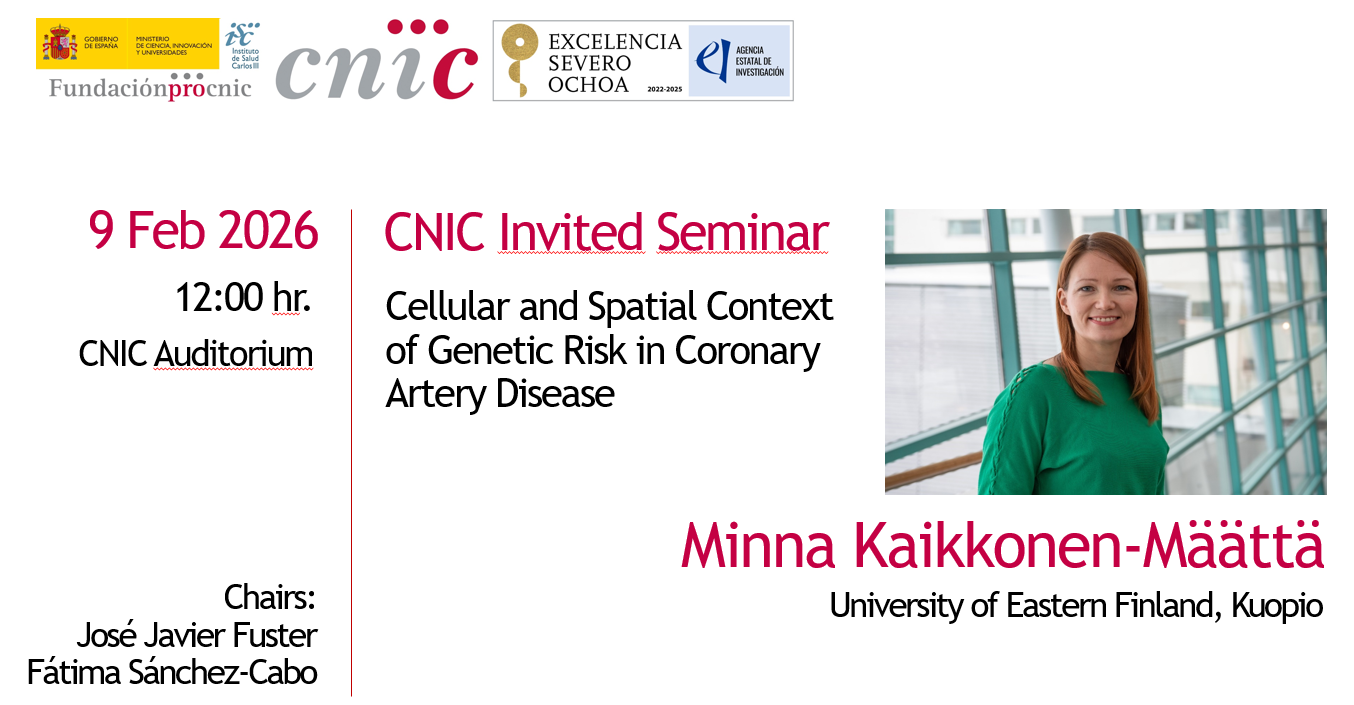
Minna Kaikkonen-Määttä: "Research is a unique career because you essentially get to be curious for a living and contribute to new knowledge that might eventually benefit society"


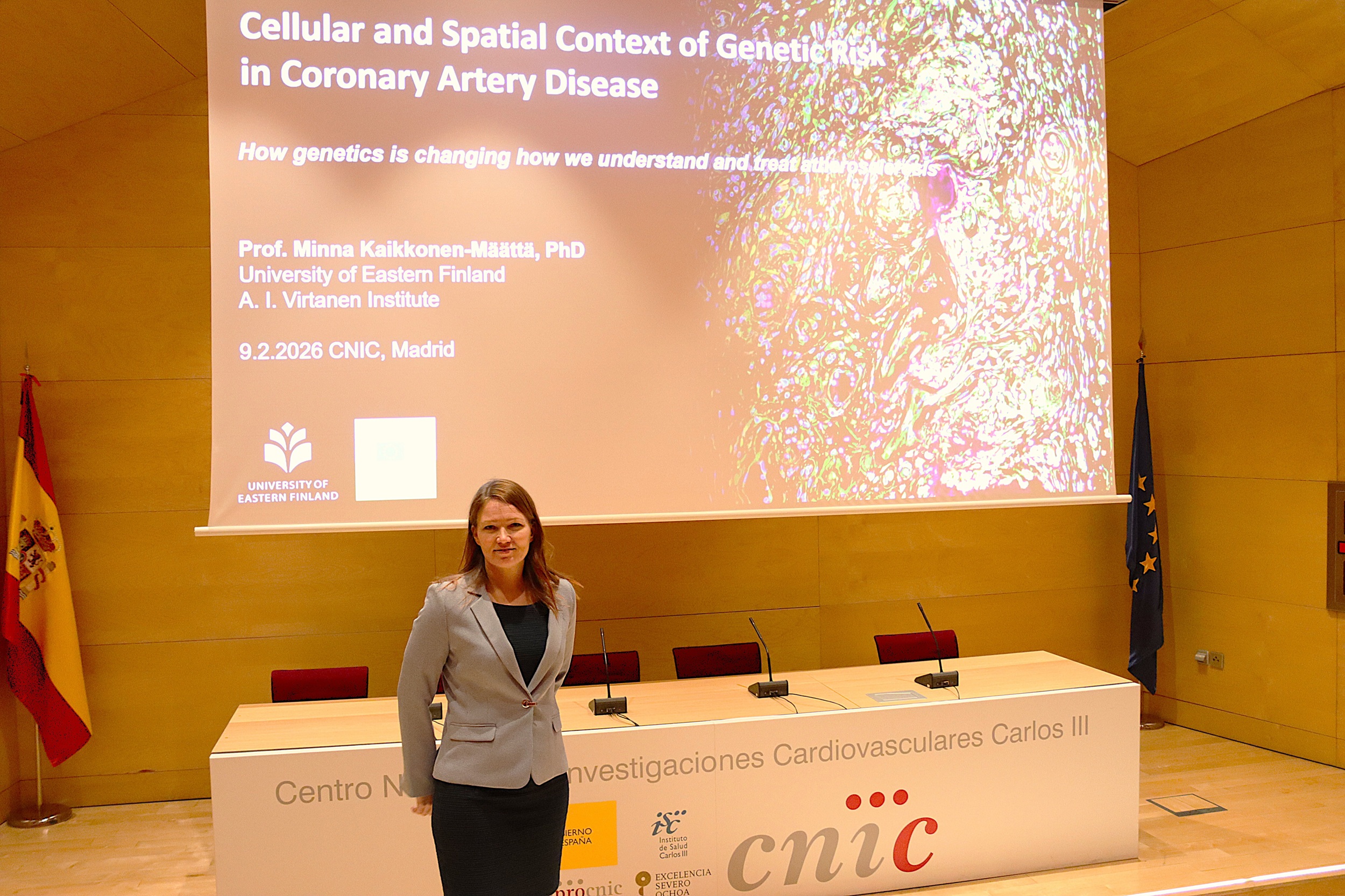
Minna Kaikkonen-Määttä is a Professor of Cardiovascular Genomics, and Director of the Single Cell Genomics Core at the University of Eastern Finland. She obtained her Bachelor’s degree in Cellular Biology and Physiology from Claude Bernard University Lyon 1, France, in 2002, and a Master’s degree in Molecular Biology from the University of Jyväskylä, Finland, in 2005. She obtained her PhD in Molecular Medicine in 2008. She did her postdoctoral studies at the University of California San Diego investigating transcriptional gene regulation and enhancer RNAs (2009–2012) before moving to the University of Eastern Finland to establish her own research group. She is the Vice Director of Research, at the A.I. Virtanen Institute, President of the Finnish Society of Atherosclerosis, and a board member of the European Society of Cardiology (ESC) Council on Cardiovascular Genomics and of the Nucleus of the ESC working group on Atherosclerosis and Vascular Biology
- You studied molecular biology. Did you always want to become a scientist?
Yes, I did. Although at the time I actually had two career options in mind—I either wanted to become a French interpreter or a scientist. I ended up missing the entrance exam for the French interpreter program, but I did take the biology entrance exam. So I often say that fate decided for me that I would choose biology. Fortunately, I was still able to keep French as a hobby, and later I even lived in France for a couple of years.
Over time, research has really become a passion for me, so most of the time it doesn’t even feel like work. What I value a lot is the academic freedom to explore new ideas and directions, and the chance to discover or learn something new almost every day. I also really enjoy the creative side of research—designing studies, asking new questions, and trying to solve complex problems. Another very rewarding part is collaborating with inspiring colleagues from around the world and mentoring younger scientists as they develop their own ideas and careers.
In many ways, it’s a unique career because you essentially get to be curious for a living and contribute, even in a small way, to new knowledge that might eventually benefit society. I think this is something we as scientists should talk about more, especially with younger generations, to show how exciting and rewarding this path can be. Too often the conversation about science focuses on budget cuts, temporary contracts, and stress, whereas we should also highlight the many inspiring and fulfilling aspects of an academic career.
- What’s your research focus?
Our work studies the genetic basis of atherosclerosis and coronary artery disease. We're interested in interpreting the signals from genome-wide association studies to understand what the causal elements in the genome are, what the causal cell types are through which the variants act, which genes they regulate, and ultimately how this predisposes to disease. Our efforts particularly focus on looking at the vascular cell contribution to the risk, not just the traditional cholesterol- or liver-specific view of coronary artery disease but now looking at the vasculature itself and how the cells there can be really important for the disease.
- You've said that future heart disease treatment might target just one specific cell type in the body. Which cells and why?
I think the coolest cell types at the moment are smooth muscle cells, fibroblast-like cells, and endothelial cells. They seem to carry a large part of the genetic risk for atherosclerosis. But it’s probably also important to remember that different cell types may play key roles at different stages of the disease. In the very early stages for prevention, we should focus on preventing endothelial dysfunction which often is one of the disease initiating events. But when the disease has progressed already to subclinical atherosclerosis or even further, then we should shift the focus to smooth muscle cells. Here then the progression of the disease and development of plaque could be inhibited if we somehow are able to inhibit the disease associated changes that happen in these cells. So I think there is a lot of potential there.
- It looks like genes in individual cells instead of mixing all cells together. What has this cell-by-cell view told us about how heart disease actually starts? What does cell-to-cell interaction tell us?
That's a difficult question. I think now that there are a lot of really cool new technologies like spatial transcriptomics, we can actually look at interactions between cells. What we believe, for example, is that endothelial cells and smooth muscle cells are the ones that mediate a large part of the genetic risk. But it doesn't mean that immune cells like macrophages, T cells, or B cells are less important. It's more like these vascular stromal cells load the gun, and then you need the immune cells, which interact with them, to trigger the gun. The immune cells being the effectors.
So what changes in the interactions between the stromal cells and immune cells that promotes disease progression? I think that's a really key question to answer in the future, which we can only now tackle because we can really look at the cellular interactions in the actual lesions themselves.
- You mentioned new single-cell technologies. Do you think these technologies have transformed medical research in recent years, and what will happen in the next years?
Single-cell RNA sequencing, for sure, has really revolutionized the field. I think it was 2018 when it was selected as the Breakthrough of the Year by Science, and now it's considered a fairly standard methodology. Previously, we did bulk RNA sequencing on tissues, and now it's totally standard to do everything with single-cell RNA sequencing. If you based your key manuscript findings on bulk RNA sequencing, you are likely to get reviewer comments saying that you should prove your findings are also seen at single cell level, not confounded by measurement of a mixture of cells. So these technologies have really become a mainstay.
Now I guess the new wave is spatial transcriptomics technologies, which are getting better and better. We can now investigate almost all the genes in cells in the spatial context. So basically doing single-cell RNA sequencing but retaining the spatial context of the tissue. I think that's super exciting.
What will come next, I guess, is multimodal technologies where you can measure from the same sample RNA, epigenetics, proteins, and metabolites. Building different layers of information can give even further insight. You could also look at metabolic fluxes within the tissue context. That would be exciting, but there is still some way to go. I hope that future developments will also help bring down the cost of these still fairly expensive technologies.
- Other than cholesterol and blood tests, what biological signs might help doctors spot risk early?
One thing close to my heart is using genetic information, because genetics is the same from birth. For younger people, many of the classic risk factors have not appeared yet, while genetic predisposition is already fixed. That’s why genetic risk scores may be especially informative when evaluating risk in this group.
In Finland, we would like to initiate population-based trials where individuals at 40 years old would have their polygenic risk scores measured and combined with traditional risk scores like SCORE2. Combining these layers could help identify high-risk individuals earlier and enable earlier initiation of preventive treatment.
Current standard methods—such as cholesterol and other laboratory measures—are insufficient, as a large proportion of patients who experience myocardial infarction are classified as low risk by traditional risk scores. There is a significant fraction of patients who, based on genetic information, should be assigned preventive medication, such as statins, earlier. There are also imaging-based methods, like those being developed in the PESA cohort, as well as metabolomics and proteomic markers that are emerging.
Ideally, these layers should be combined to achieve the most accurate identification of individuals at risk. However, clinical trials are needed to demonstrate the cost-effectiveness of integrating such measures into standard care and to show that improved risk prediction translates into better therapeutic outcomes.
- Everybody agrees that atherosclerosis starts earlier than we previously thought. How can we prevent this disease with the methods that we have right now? You mentioned combining traditional methods with new methods like polygenic risk. And you mentioned that you are planning a study in people after 40.
Currently, one strategy for individuals at higher risk is earlier treatment of risk factors, for example by initiating statin therapy at a younger age (e.g. around 40) before symptoms occur. Increasing awareness of individual risk may also help motivate lifestyle changes. In the future, we hope that we will have other drugs besides lipid-lowering therapies. We are probably going to see more anti-inflammatory drugs, and maybe new drugs that target vascular wall changes, emerging as alternatives for preventing disease.
- Statins don’t work in some patients. What alternatives do they have or will they have in the future?
Yes, so I guess if statins don’t work for some people, they might need more aggressive lipid-lowering treatments or other therapies. Blood pressure medication also affects the cells of the vascular wall. Anti-inflammatory drugs are definitely going to be important; they are already in clinical trials, and we’re going to see more and more of them being used, particularly in secondary prevention, but also in primary prevention.
And then there are future drugs. It’s hard to predict what those will be. Ideally, if we want to move fast, we hope that some drugs already on the market could be repurposed and tailored for these indications. But it might also require the design of entirely new drugs that target vascular changes.
- We know that lifestyle factors like diet or stress can affect how our genes behave. Can unhealthy habits cause long-lasting changes in our cells that increase heart disease risk later in life?
Oh, absolutely, yes. About half of the risk for coronary disease is mediated through genetics and the other half through lifestyle. So definitely, the best prevention at the population level would be for everyone to exercise more and eat healthily.
- It’s easy to say.
Exactly, it’s easy to say. Unfortunately, it seems just easier to take drugs. That is probably the problem. But we are facing a massive epidemic of obesity, for example, and finding ways to control that and improve people’s lifestyles would have a tremendous effect on health and also on the economy.
What is also needed are studies that look at the interaction between genetics and environment. They clearly interact, but we are not yet able to fully understand how lifestyle and genes work together in health and disease.
- Since five years ago, we have medical treatments for obesity. Some people believe the solution is just taking the drug, without changing diet or lifestyle. Do you think these drugs could improve the situation in the long term?
I don’t necessarily have a definite answer to that, but I think these drugs are definitely going to make a big change, and we’re going to see a major decrease in obesity because of them. But does that mean people will use these drugs long-term? Currently, that seems likely, because it’s easier to take a drug than to change lifestyle. Of course, that’s not an ideal solution, and it really shows that we still need strong public health efforts to support healthier lifestyles and prevent obesity in the first place.
I don’t personally work with these obesity drugs, but I do see that they are transforming the field. These drugs also decrease cardiovascular disease risk at large, so there is huge potential for health benefits worldwide.
- Doctors have talked about personalized medicine for many years. Is personalized medicine for heart disease something we already have, or something for the future?
We don’t have it yet. People at high risk of coronary artery disease or stroke are treated with blood pressure medication and lipid-lowering therapy, but it’s not really personalized. Most patients receive similar treatments.
Personalized prevention would mean including polygenic risk scores, other omics layers and/or imaging data in risk evaluation. You would gather as much information as possible about a person and use that to guide treatment decisions. For example, someone with a high combined risk might benefit from starting statin therapy earlier—this is how personalization is currently envisioned.
In the future, we hope to have a broader range of drugs that act through different mechanisms. Then, based on a person’s genetic and clinical profile, we could assign the therapy from which they would benefit most — for example, an anti-inflammatory drug or a combination therapy. But we’re not there yet unfortunately. Also, because atherosclerosis arises from many interacting factors and partly unpredictable processes, risk prediction will likely never be perfectly precise.