Faseeha Ayaz: "I would say the editors are very much on the researchers’ side"


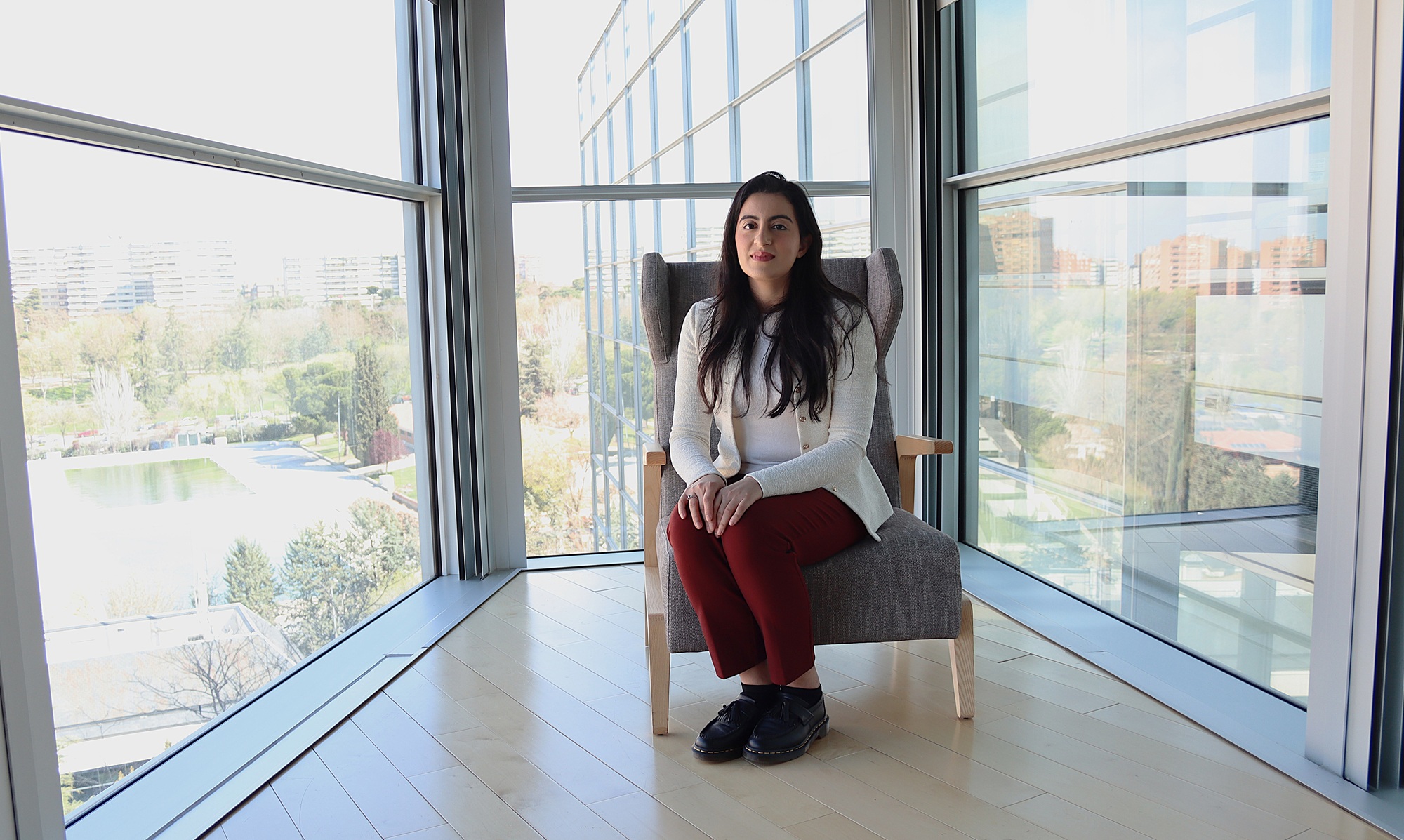
Faseeha Ayaz, senior Editor Nature Communications, Springer Nature
Faseeha Ayaz completed her undergraduate degree in Pharmacology at King’s College London before pursuing a DPhil in Cardiovascular Science at the University of Oxford. Her research focused on immunometabolism in diabetes and vascular function. In 2023, she joined Nature Communications, where she primarily handles papers on cardiovascular biology and disease, including preclinical, clinical, epidemiology, and machine learning manuscripts. She is also an advisory editor for npj Cardiovascular Health and a freelancing editor for Nature Cardiovascular Research and Communications Biology.
- You worked in a lab before you started working at Nature. What changed the most, and why did you decide to move from the lab to publishing?
That’s a nice question to start with. I did my PhD at the University of Oxford in Cardiovascular Science. It was a wet-lab-based project in immunometabolism in atherosclerosis, so I was in the lab all the time. Unfortunately, I was doing my PhD during the COVID-19 pandemic, which made things particularly challenging as much of the scientific and research infrastructure had moved online. I found it difficult to be in the lab and to make the same connections.
More generally, I started my PhD loving lab work, but I ended it not enjoying it as much. I loved the lab environment, academia, and the science itself, but the manual aspects of lab work—and the fact that things don’t work out most of the time, which is just the nature of research—became tiring. So I moved into publishing, which is where I am now.
My current role is as close as you can be to science and academia without actually being in academia. It’s a very scientific environment as everyone has a PhD, and everyone is focused on publishing the best science and moving the field forward. The difference is that you’re not in a university setting and you’re not doing lab work.
- Do you think researchers in the lab have a different view of science compared to your perspective now on the publishing side?
Absolutely. One of the reasons I was attracted to this position is that my research project felt very niche. Academia often pushes you to become an expert in a very specific area, going deeper and deeper into it.
As an editor, however, you zoom out. You gain breadth of knowledge. I’m no longer focused only on immunometabolism in atherosclerosis. My job is to stay on top of many different fields—stroke, hypertension, diabetes, and more. You can’t make publishing decisions unless you understand what’s happening across the research landscape.
With this birds eye view, you start to see patterns; for example, metabolic reprogramming appearing in one area and then spreading into others. It’s fascinating to see how entire fields evolve.
- You work at one of the world’s most influential journals, Nature Communications, and you receive thousands of submissions. What makes you think: this paper really matters?
Nature Communications is one of the largest journals in the world. As editors, we look for high-quality science and a clear conceptual advance. For example, if someone studies a particular protein in hypertension, we ask: has this been studied before in hypertension or in other cardiovascular diseases? What new knowledge does this bring? What is the impact on disease pathophysiology? Is it targetable? Is there human relevance? What models have been used?
We are looking for solid science. That may sound straightforward, but it represents years of work. These papers build the foundation of the field. Progress happens incrementally, and it is the collective effort of many researchers that ultimately advances science.
- How does the peer review process work?
We usually aim for around three reviewers, with a minimum of two. With the previous example I mentioned, we would seek a reviewer with expertise in that protein, another with expertise in hypertension and the relevant models, and possibly a technical reviewer if specialized methods such as multi-omics are used.
Ultimately, the decision is made by the editor. We consider all reviewer comments, but it’s not about counting votes. It’s about evaluating the strength of the arguments and how they affect the quality of the manuscript.
- Cardiovascular research is evolving rapidly. What breakthroughs excite you the most?
There are several major unanswered questions. One example is heart failure with preserved ejection fraction, which is a highly heterogeneous disease, and key questions remain: what are the patient subgroups? What are the phenotypes? What is the metabolic component? It’s increasingly viewed as a metabolic disease, but the molecular mechanisms are still unclear. Papers addressing these questions are particularly exciting.
Another area is GLP-1 agonists. They have revolutionized obesity treatment, but their cardiovascular effects are still not fully understood. Clinical measures often focus on weight loss or cholesterol levels, but not necessarily on outcomes like all-cause mortality.
Understanding how these therapies work mechanistically and whether they truly impact long-term outcomes how is something I find particularly interesting.
- Do you remember a paper that really impressed you?
Yes, one comes to mind. The authors conducted a mechanistic clinical trial in which they studied “the athlete’s paradox”, which refers to both athletes and diabetic patients having increased intramyocellular fat levels despite opposing insulin sensitivity and cardiovascular disease risk. After placing the diabetic patients on endurance training and the athletes on deconditioning, they found that diabetic patients had higher unsaturated intramyocellular fat, lower palmitate kinetics. This was reversed with following endurance training.
It was a fascinating question and gives you that sense of, “this is really interesting”—it has direct human relevance and is a very clean, well-designed study. It addresses a question that researchers have been asking for years, and it’s a fascinating question in itself.
For me, an elegant paper is one that answers a complex and important question in a very simple way. When you see it, you think, “of course—that makes perfect sense.” But it only seems obvious in hindsight.
- There is increasing debate about publication costs. What is your view?
I think article processing charges at Nature Communications, as well as across the Nature portfolio, can be considered quite high. Many Nature journals offer hybrid model where APCs are only charged if the article is open access. At Nature Communications, all our content is open access.
What the company tries to do is offer fee waivers. If you are from a less economically developed country—and there is a defined list—you may receive a 50%, 70%, or even a full waiver of the APCs (Article Processing Charges). Spain, for example, is not included.
We also always encourage researchers to submit regardless of APCs, because editors are not involved in costs at all. I personally have nothing to do with that process—once a paper is accepted, it moves into production.
We are also advised to reassure authors not to be discouraged by APCs and to submit their work. In some cases, solutions may be found after acceptance. Overall I would say the editors are very much on the researchers’ side. The financial aspects are handled at the company level.
- Is there a global shift in science? Have you seen changes in where submissions come from?
I think there may be a shift away from the US especially as other regions, including China, India and parts of the Middle East, are investing heavily in research. Funding is essential for science. I personally see many submissions from China, as well as from the US and Europe. China’s investment in research is very strong, and both the volume and quality of research are increasing significantly.
- How is artificial intelligence changing scientific publishing?
AI is becoming integrated into science. It is already being used to detect fraudulent papers and paper mills. AI is not used for editorial decisions, which remain entirely human. Researchers and reviewers can use AI for writing support, but not to generate data, and its use must be declared. AI may democratize writing, especially for non-native English speakers, but it may also narrow the scope of research. It is clearly reshaping how science is conducted.
- Do you use AI to detect AI-generated content?
Editors don’t directly use AI to detect AI-generated content. However, this may be done as part of checks before or after the editor sees the paper. If there are any red flags raised, we liaise with other teams in the company who can assess this for us.
- What advice would you give to researchers who want to publish in Nature Communications?
Every journal also has its own focus and audience so understanding what each journal is looking for is key. Reading the journal and speaking with editors helps with this. For example, for pre-clinical work, at Nature Communications we look for strong mechanistic insight and depth. This kind of mechanistic focus may differ from journals such as Circulation or the European Heart Journal.
Editorial decision making is never a tick-box exercise and involves many different parameters. That being said, there are useful guidelines which I will share during my talk so that, when researchers are preparing their papers, they can think about whether additional elements or further validation might strengthen their work.
The simplest way to understand if the journal is the right home for your paper is to submit it and receive feedback. We also offer transfer options within the Nature portfolio, helping authors find a suitable journal. Otherwise, reviewing the journal’s content and consulting editors can help.