Michael Reth: “People with dyslexia are specialized to explore the unknown”


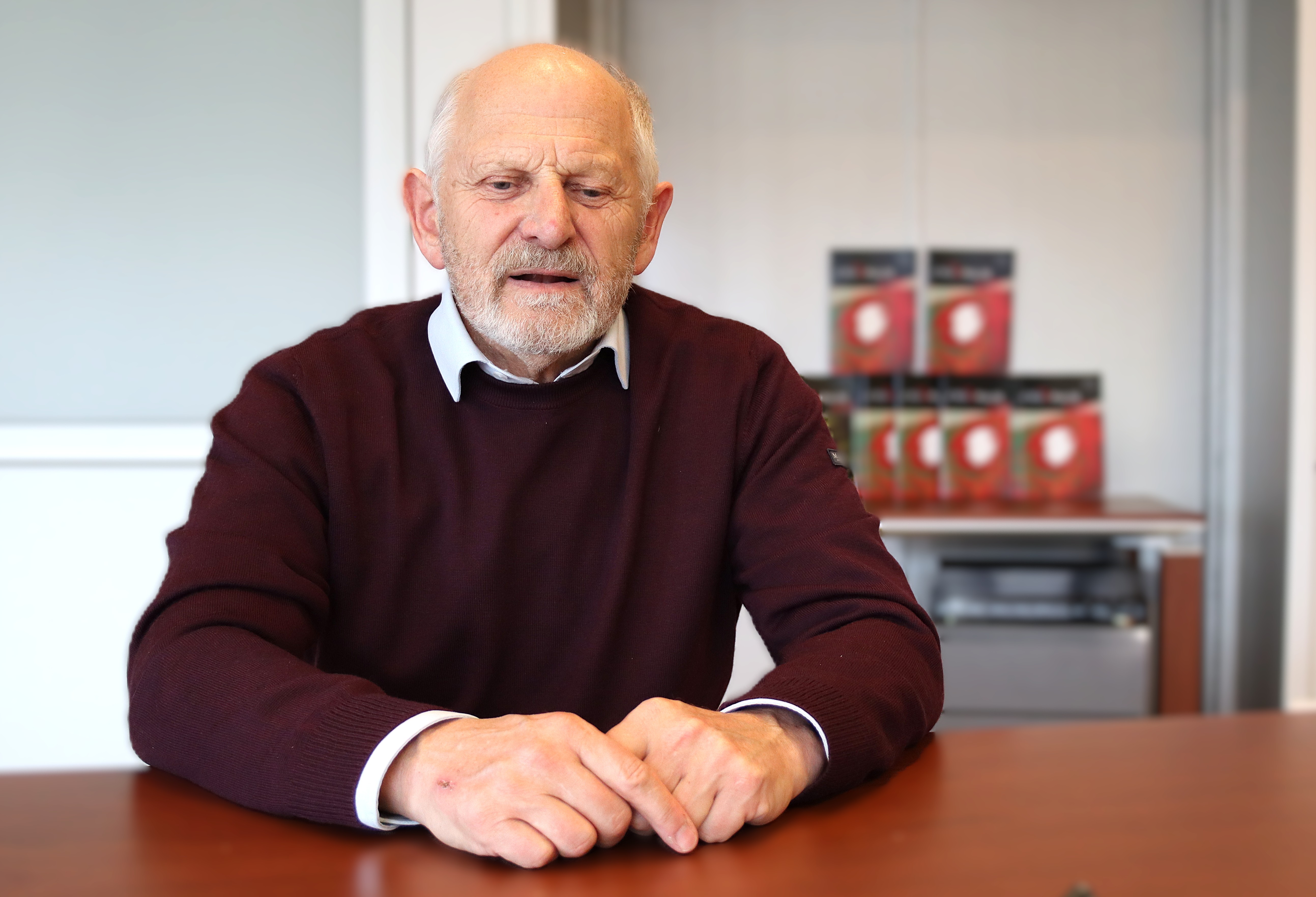
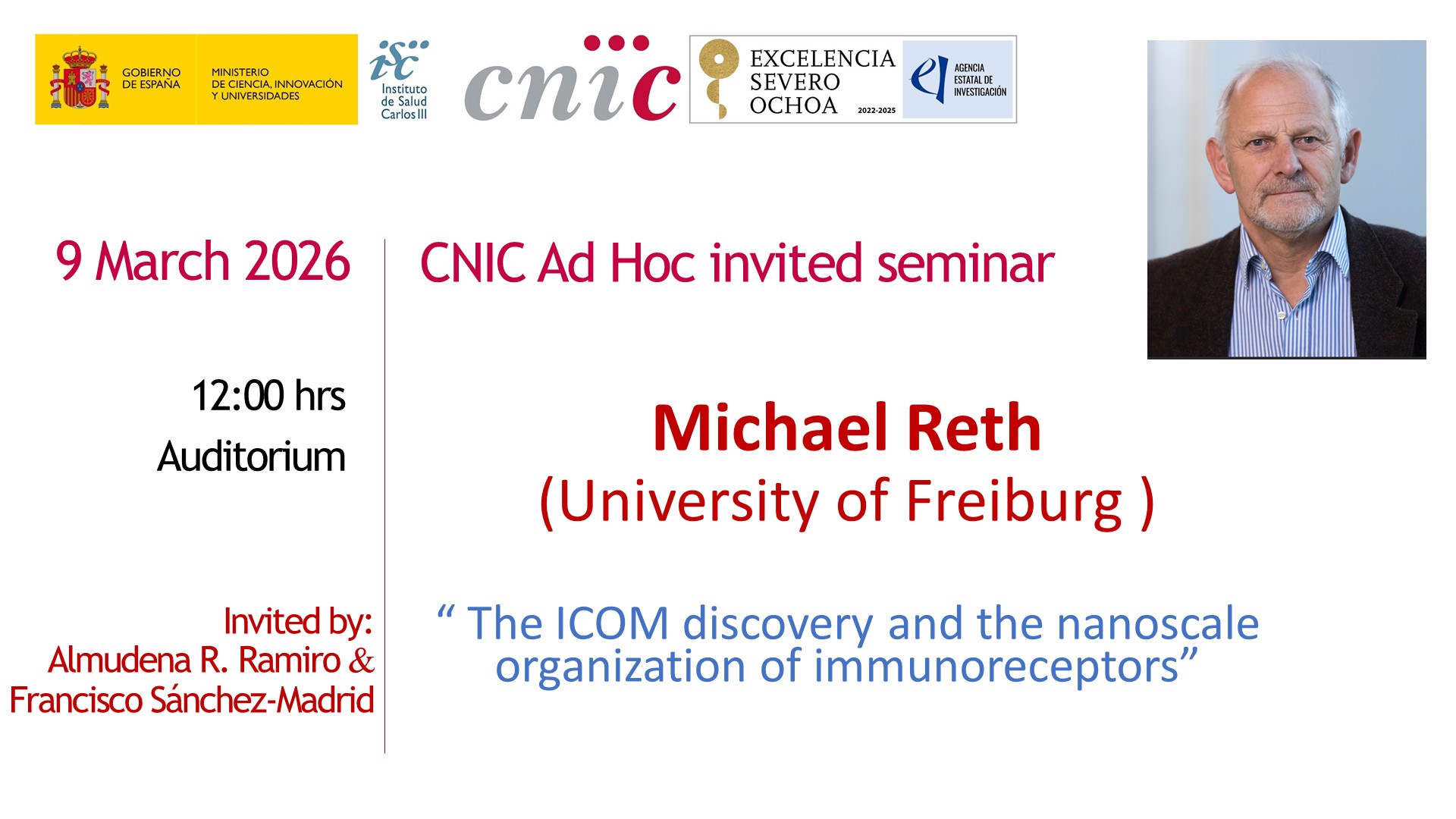
Michael Reth is a leading German biologist and immunologist and Professor of Molecular Immunology at the University of Freiburg since 1995. His research focuses on the structure and activation of the B cell antigen receptor (BCR), which is essential for antibody production. He discovered the BCR signaling subunits CD79a and CD79b and identified with the immunoreceptor tyrosine-based activation motif (ITAM), a protein sequence motif that is essential for the signal transduction of immunoreceptors on B, T, and mast cells. Since the success of the ITAM identification he has been a motif hunter. During his seminar at the CNIC he described his recent discovery, namely that of the ICOM. The “immunoreceptor coupling and organization motif” short ICOM is a protein motif that is found within the transmembrane domains of many immunoreceptors. Although hidden in the lipid bilayer of the plasma membrane this motif plays an essential role in the regulation of the activity and lateral interaction of many receptors on the surface of immune cells.
Reth has received major awards, including the Gottfried Wilhelm Leibniz Prize and the Paul Ehrlich y Ludwig Darmstaedter, Prize, and is a member of the U.S. National Academy of Sciences, EMBO , and the Leopoldina. His recent work using cryo-electron microscopy to resolve the IgM-type BCR structure (published in Nature, 2022) has important implications for vaccine design.
- If you have to explain what immunology research is to the general public, how do you explain how important it is for us?
Immunology developed in a different way from other sciences. Normally, science begins with curiosity: people ask questions, experiments are designed, answers are found, and new questions arise. From this process, science develops. Later, applications appear. In physics, for example, basic research came first, and only afterwards were machines, radars, and other technologies developed.
In immunology, the process was reversed. People began vaccinating without understanding the mechanisms. For example, scientists like Louis Pasteur and Robert Koch observed that microorganisms can cause diseases and found ways to generate vaccines from them. They vaccinated people and achieved protection, even without knowing how it worked. The application—vaccination—came before the explanation.
This led to a key question: how does it work? The answer began with the discovery of antibodies, molecules in the blood that recognize foreign substances. Antibodies are essential components of the immune system and can be generated through an infection or a vaccination. Vaccines activate not only T cells but also B cells with the appropriate (cognate) BCR, which then differentiate into antibody producing plasma cells.
I started my scientific career when the hybridoma technique was developed. After an anti-virus vaccination, the body produces many different antibodies against a virus. The hybridoma technique allows to immortalize B cells that produce so called monoclonal antibodies with only one specificity. This method, invented by the Nobel laureates César Milstein and, my mentor in Freiburg, Georges Köhler, revolutionized medicine.
Monoclonal antibodies are now widely used in medical therapies and diagnosis. They allow very precise detection of pathogens. However, the mechanisms of B cell activation remained less well understood.
B lymphocytes initially carry BCR complexes on their surface but do not yet produce antibodies. After vaccination, for example, with the spike protein of SARS-CoV-2, only those few B cells that carry a SARS spike-binding BCR on their surface, are activated, proliferate, and differentiate into anti-spike antibody-producing cells. My research focused on understanding the structure of the BCR and how its function on the B cell surface.
- You mentioned something surprising: vaccines were used before understanding how they work. Could this be dangerous for people who distrust vaccines?
This is simply how immunology developed historically, when vaccines were applied without knowing the details of how the immune system works inside the body.
Yet, despite the lack of knowledge people benefited from vaccination and vaccines helped control diseases effectively.
- During the COVID pandemic many people questioned whether new vaccines worked.
Vaccine development has improved significantly. The polio vaccination is a clear example of one of the most successful medical interventions. In the 1930s and 40s, polio caused widespread fear. Many infected children became paralyzed or could not breathe. The vaccination of all children eliminated that fear and saved lives. The oral polio vaccine, administered on a sugar cube, was simple and effective.
Today, vaccines are rigorously tested and controlled. Although people respond differently due to biological variability, the benefits are clear. Without vaccines, infectious agents would cause far greater harm. Yet more detailed knowledge of the function of the BCR on the B cell surface is required to improve vaccination protocols and to prevent autoimmune diseases.
- You began your career in the early 1980s. What is the most important discovery about the immune system during your career?
At that time, scientists did not understand how B cells could generate such a diversity. Millions of B cells are continuously produced in the bone marrow, each with a different BCR. The diversity mechanism was finally explained through advances in molecular biology. Antibody genes are assembled from gene segments through a process called V(D)J recombination, generating enormous diversity. This discovery earned Susumu Tonegawa the Nobel Prize.
My research addressed a different question: how B cells are activated. I discovered that the membrane-bound immunoglobulin on the B cell surface is associated with two additional proteins that together form the BCR. The binding of a cognate antigen to this BCR complex triggers intracellular signaling and activates the expansion and differentiation of B cell to antibody producing plasma cells.
A more profound knowledge of BCR signaling is also relevant for a better treatment of cancer diseases such as leukemia and lymphomas. These B-cell tumors are driven by a deregulated BCR signal. Some viruses can also transform B cells and induce tumor formation through similar mechanisms.
- With this knowledge, immunotherapy has advanced significantly. Could it be a universal solution for diseases?
There have been major successes. Monoclonal antibodies such as Rituximab eliminate B cells by targeting CD20. This therapy is now used in the treatment of severe autoimmune diseases such as multiple sclerosis (MS). However, the anti-CD20 antibody therapy also removes healthy B cells, leading to temporary immune deficiency. Our recent research (described in a manuscript that is just been accepted for publication in EMBO Journal) has shown that CD20 plays a role in keeping B cells in a resting state. This illustrates how scientific understanding evolves: therapies may exist before their mechanisms are fully understood but a better understanding can then improve the therapies.
- You mentioned at the beginning that you are a motif hunter and that, as a dyslexic scientist, you have the advantage to recognize patterns in protein sequences where other people only see letters.
Yes, for a long time dyslexia was regarded as a neurological disorder of children who fail to easily attain the skills of reading and writing. Such children were often counter selected by the school system and prevented from obtaining a higher education. For me this was particularly bad, as the German school system in the 1950s was run by teachers that grew up with an ideology favoring the elimination of the unfit. It was only due to my father, who did not accept the verdict, that his son was an idiot, that I managed to survive this system and finally could study biology.
Newer research now suggests that dyslexia is not at all a disorder but a specialization in exploration, that was selected during human evolution. People with dyslexia (and these can be up to 10-20% of a population) are specialized to explore the unknown and this can play a fundamental role in human adaptation to changing environments. Thus, without dyslexic people and their explorative hunter and gatherer skills, humanity would not have survived tough times during the last 300.000 years of its evolution. But then 5.000 years ago with the advent of written languages and their importance for cultural development, brains with rapid automated processing skills had an advantage over explorative brains and the readers and writers were the winners of this development. However, now with the help of computers and AI tools, explorative brains may play again an important role in human evolution if we manage not to destroy our planet during this time. I am approaching the end of my scientific career but I think my recent ICOM discovery will be an important contribution for the better understanding of immunological and other receptors of the cell surface and the regulation of the immune system in health and disease once it becomes accepted.