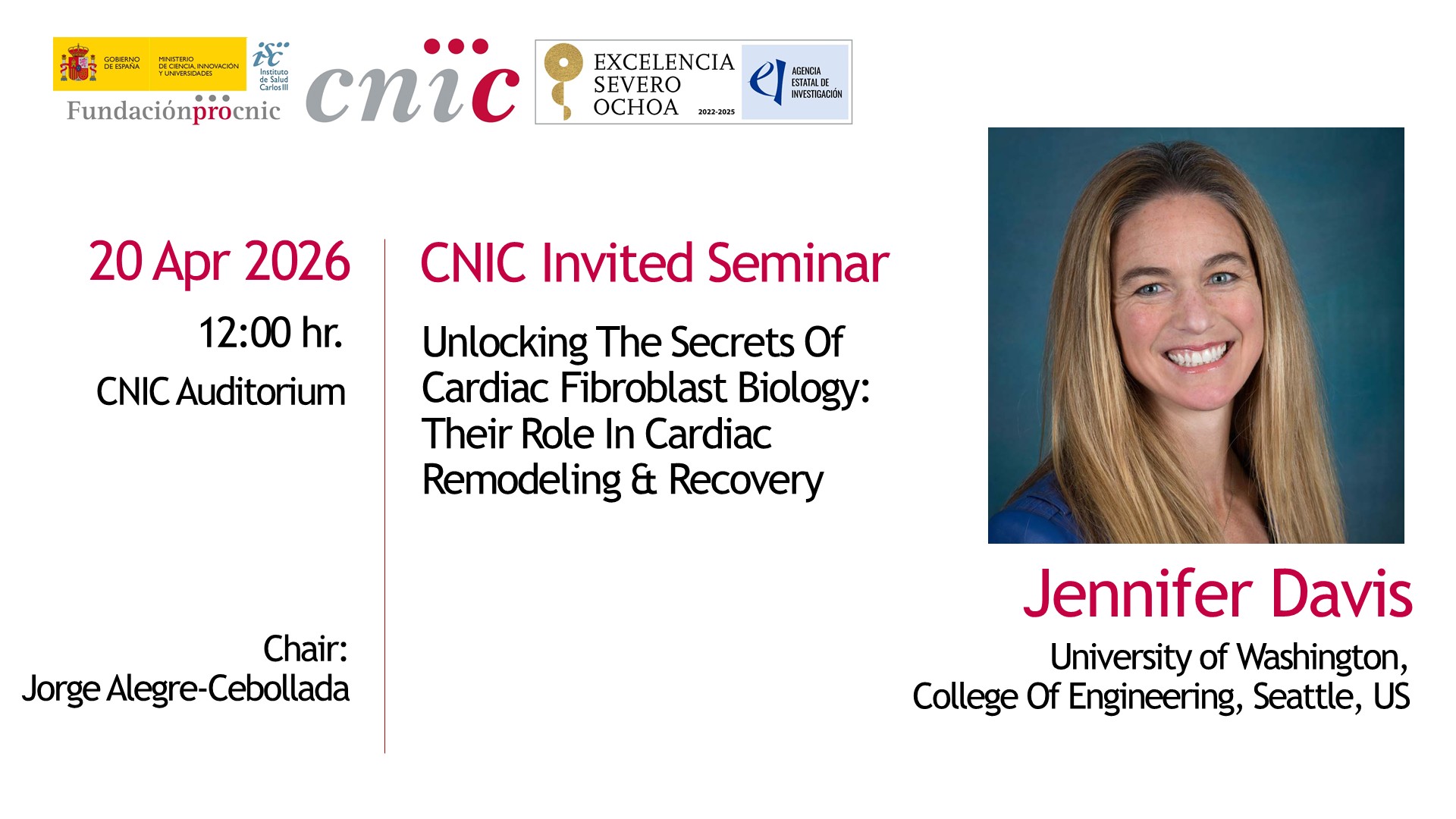
Jennifer Davis: "We need to treat IA as a tool for generating hypotheses, not final answers"


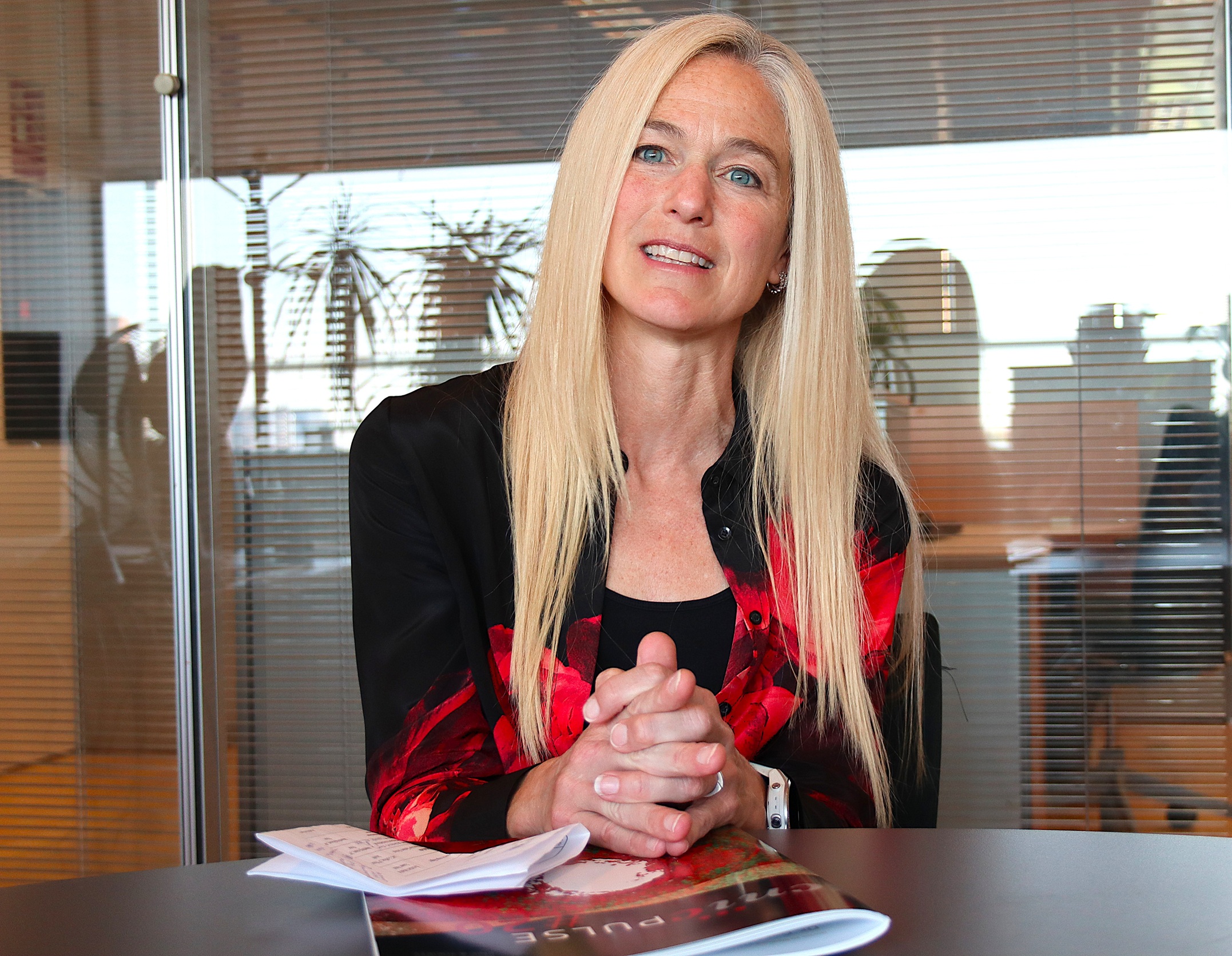
Jennifer Davis is a cellular and molecular physiologist and associate professor at the University of Washington, where she leads a research group focused on cardiovascular biology. She also serves as director of the Center for Cardiovascular Biology and the Institute for Stem Cell and Regenerative Medicine. Her work uses genetic engineering and advanced biological models to understand how the heart responds to injury—particularly how scar tissue forms and how it affects cardiac function and regeneration.
- What are the main research questions your lab is trying to answer?
My lab is really interested in understanding the mechanical signals that underlie cardiac and skeletal muscle diseases. We mostly study the heart, but we also occasionally study skeletal muscle.
In thinking about these questions, we’ve largely focused on a cell type called the fibroblast, and how fibroblasts respond to mechanical perturbations in muscle cells, as well as how these two cell types work together to transition the heart from a healthy to a diseased state.
This includes how cells remodel, how the extracellular matrix remodels, and how these processes impact disease severity.
Another key question we’re interested in is whether these changes are reversible—therapeutically reversible—and what needs to be done to bring the heart from a diseased state back to normal, focusing on these mechanical and structural changes.
So that’s what my lab does—it’s very much mechanics-driven.
- And why is it so hard to repair heart disease?
One of the biggest issues with the heart is that it has a very limited ability to repair itself. Once the muscle is damaged, the extracellular matrix starts to take over instead of muscle tissue, and that pushes the heart toward failure.
So we need ways to restore healthy muscle function—whether through regenerative strategies or drugs that can revive normal function.
One of the biggest challenges right now is changing how the extracellular matrix remodels. In disease conditions, this leads to fibrosis, and fibrosis is extremely hard to reverse. The matrix changes so much that it can’t easily return to its normal state.
- There have been some approaches to regenerate the heart, but some were associated with risks like promoting cancer. Which do you think will be the most useful in the future? You mentioned drugs, but which approach will be the most promising?
That’s a great question. Cellular therapies for heart regeneration are still struggling because the cells are often very young when introduced into a diseased environment, so they are unable to properly support the mechanical loads or electrical activity of the adulty heart. In addition, the host heart still retains pathological signals and environment niches that impairs proper integration and function of the engrafted cells.
So it’s not clear whether we need to fix the environment first before applying cell therapy.
That’s something my lab is trying to understand—how to remodel the extracellular matrix to make the heart more receptive to interventions like cell therapy.
We’ll probably need to solve several of these problems before it becomes a viable treatment.
That said, in the future, we might even be able to engineer a new heart using stem cells. That’s on the horizon—but still quite far away.
- But that sounds like science fiction.
It does—at least for now
- To create a whole new heart…
Yes—bioprinting, for example.
- How far are we from that?
We’re still quite far away. But synthetic biology may help us get there. We’re making great progress, and at some point these fields may converge and solve these problems—but we’re not there yet.
- Maybe it’s closer than we think. At the beginning of the century, nobody believed in artificial intelligence, and now we use it every day. Do you use it in the lab?
We don’t use true AI directly, but we do use a lot of machine learning.
We use it to understand mechanical properties and identify which features change when we perturb the extracellular matrix, muscle cells, or fibroblasts.
Machine learning is very useful for detecting patterns that are difficult to measure with traditional approaches.
- So these technologies are going to accelerate research in the next 10–20 years.
Definitely.
- How difficult is it to explain these advances to the general public? People often ask: if we can cure cancer, why not heart disease?
It’s very difficult. In cancer, we’ve made major progress—there are cures for some cancers now.
But in heart disease, we’re still mostly managing the disease rather than curing it. That’s harder to explain.
- I asked a researcher why cancer treatments have become so effective over the past 10 or 15 years—what happened in cardiology? And he told me, “We’re as clever as cancer researchers, but the problem…” And I asked, “What’s the problem with the heart?” And he said, “The heart is a very difficult organ.” Do you agree?
I do. With tumors, you can intervene in many different ways, and they’re not required to function continuously to sustain life.
The heart is different—it has to function constantly. It has to beat every second, pump blood, and generate force over time.
That makes interventions much more challenging.
- Also, it seems cancer receives more attention and funding than cardiovascular disease, even though cardiovascular disease is the leading cause of death.
That’s true. Another issue is that heart disease progresses slowly, so it may seem less urgent. But outcomes have actually worsened in recent years, especially in the United States.
That’s a strong argument for increasing investment—we’re not improving, we’re getting worse.
- That’s true.
Yes—and in cancer, we’ve made clear progress, especially with therapies like CAR-T cells.
- That’s incredible.
It really is. It’s an exciting time to be a scientist because we have so many new tools.
- And also, this is my impression: cancer seems more important to the public, donors, and funders than cardiovascular disease. But the biggest killer worldwide is cardiovascular disease. So how do you convince funders?
We spend a lot of time applying for funding. I was surprised by how much time shifts from doing science to writing grants once you run your own lab.
- Maybe sometimes you think: why did I start my own lab?
Exactly! Ideally, we’d spend 80% of our time on science and 20% on funding—but in reality, it’s often the opposite.
- And how important is the team?
The team is essential. But in academia, we’re also responsible for training new scientists. So it’s not just about selecting the best people—we also have to mentor and develop them.
- Like a coach.
Exactly. If we were a professional football or basketball team, we’d be able to go out and recruit the best players. But in a setting where your mission is training and teaching—and that’s a major part of it—you have to be able to coach your trainees and help them reach the level your team needs. So there’s this additional element: you have to train your people to become the team you need them to be. We don’t just get to select our team—we have to work within the framework of training and education. Education should really be at the forefront of our mission. At least, that’s the case in academia in the United States. So you have to keep that in mind—it’s not just about the research.
- Did you always want to be a scientist?
I had a somewhat unusual path—it’s actually my second career. At first, I trained to become a physical therapist. Then I worked for Reebok, helping develop training programs for fitness instructors.
That’s when I became interested in skeletal muscle research—how to improve performance and make better athletes. That led me back to science. I did my PhD and eventually started my own lab.
So I didn’t take the traditional path—and I definitely didn’t know this was my future when that baby picture was taken.
- And why the heart?
During my PhD, new technologies allowed us to modify cardiac cells using viruses. That’s what drew me into cardiovascular research.
- Looking ahead 10 years, what will your lab be doing?
We’ll likely focus on synthetic biology approaches to target the extracellular matrix and fibroblasts. Ideally, we’d create something like a “Pac-Man” cell that removes harmful matrix and then disappears.
- A magic Pac-Man cell.
Exactly. A magic Pac-Man cell. A smart, autonomous cell that can go to the right spot, remodel that part of the heart, and then go away.
- Do you think that’s possible?
I do. With advances in CAR-T cells and synthetic biology, we may not be that far away. With protein design, we could develop enzymes to break down scar tissue—combined with cell therapy, that could enable real recovery.
- What are the main challenges?
One key challenge is guiding cells to the right place—what we call homing signals. That’s also an issue in cancer, where off-target effects can be dangerous. We’ll need creative solutions, but synthetic biology could help design precise targeting mechanisms.
- And AI could help?
Yes. AI could help identify or design the right proteins for targeting. It could explore many possibilities and suggest the best candidates.
- Do you have concerns about AI?
AI is useful, but it doesn’t evaluate the quality of research. So we need to treat it as a tool for generating hypotheses, not final answers. I do have concerns because even language models that people use to review the literature don’t truly assess impact or quality. They can summarize studies, but they don’t understand how good the experiments were or how robust the experimental design was. That can be misleading when trying to understand the overall body of evidence. At the same time, unsupervised algorithms are very powerful—they can reveal patterns that we as scientists might not detect. But we still need to validate whatever these systems produce. Ultimately, anything generated through AI should be viewed as a hypothesis generator, not a final result. Experimental scientists will need to validate those findings, and that will be one of the key challenges moving forward.