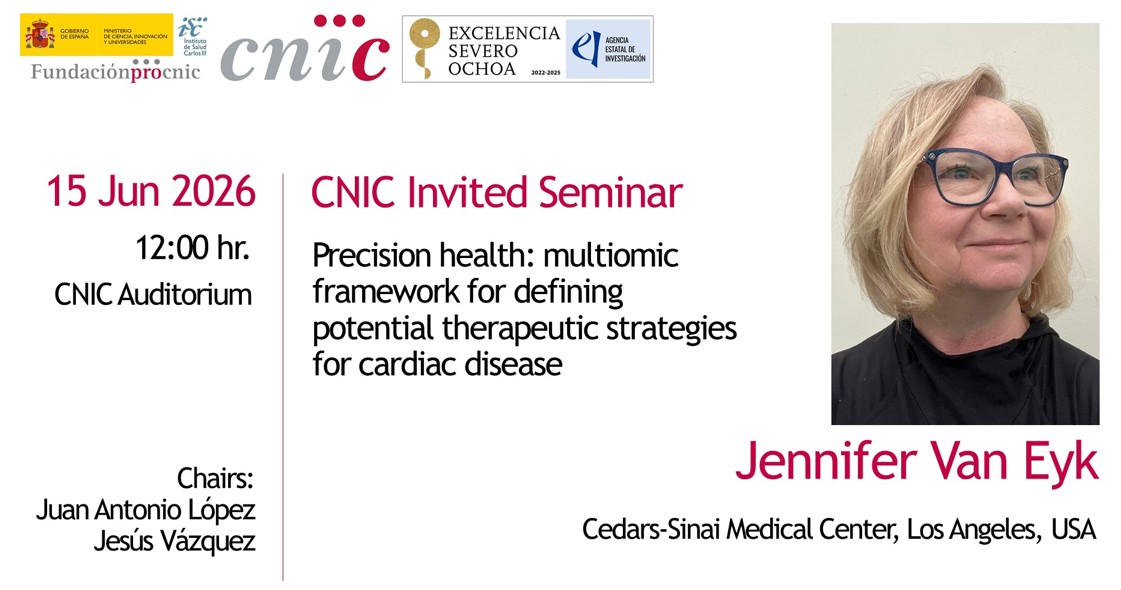
Jennifer Van Eyk: "I simply loved proteins"


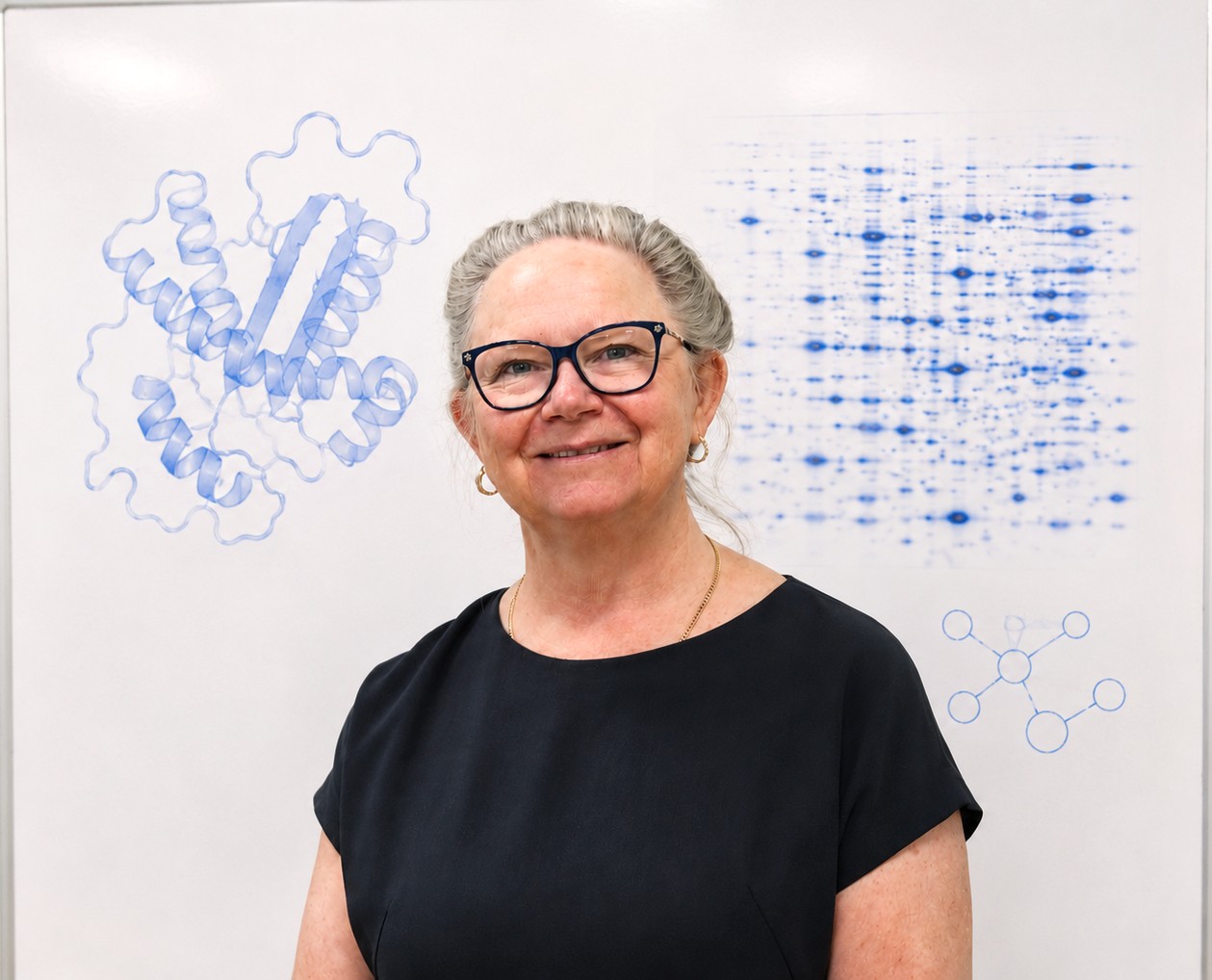
Jennifer Van Eyk, PhD, is Director of the Advanced Clinical BioSystems Research Institute and Professor of Cardiology and Pathology at Cedars-Sinai Medical Center (USA). An internationally recognized expert in proteomics and metabolomics, her research focuses on developing precision biomarkers and applying advanced omics technologies to understand the molecular basis of cardiovascular and other complex diseases. She has published more than 460 scientific papers, holds numerous patents, and served as President of the Human Proteome Organization (HUPO)
- What is proteomics?
Proteins are what make a cell alive. They are the machinery that makes life. What's remarkable about them is that, from a limited number of genes, an exponentially larger number of proteins can be formed. It is this diversity of protein forms that allows a liver cell to be a liver cell and a cardiac cell to be a cardiac cell. Proteomics is the study of those proteins. The challenge is that it is like sitting on the rings of Saturn and looking down into this room. Not only do we have to identify you and me as different individuals, but we also have to identify that you are wearing blue glasses that are different from my blue glasses. We need highly sophisticated technology to do that. In proteomics, we try to study proteins and all the molecular “magic” around them that makes a cell alive.
- You began studying proteomics before proteomics became fashionable. Why?
When I was doing my postdoc, I was working on cardiac troponin I, which is a regulatory switch for muscle contraction in the heart. We discovered that it gets clipped and becomes slightly smaller. When that happens, its function changes completely.
That observation started me on a path to understand all the changes occurring in troponin I. At that time, troponin I was becoming a circulating biomarker. We were helping diagnostic companies develop the right antibodies to deal with its complexity. That led to studying the complexity of myofilament proteins, then the complexity of the whole cell, and eventually the complexity of the whole tissue.
It just kept getting bigger and bigger. Understanding and technically capturing this dynamic aspect of the proteome fascinated me. A single change can cause a protein to do one thing instead of something completely different. Our job is to measure that and determine whether that modification is the trigger of a disease or a reflection of it. That is the goal.
- How difficult was it at the beginning to convince medical doctors that these basic studies would have a clinical impact in the future?
Interestingly, I think it was easier in the early days. It was relatively easy to convince people that disease-induced changes in a specific protein were relevant. People understood that.
What was harder was convincing them that we needed to study all proteins to understand the coordinated effects. If cardiac troponin is phosphorylated, everyone wants to study that specific phosphorylation site. But that event does not occur in isolation. The whole cell becomes phosphorylated to amplify the signal.
- Convincing people that we needed to understand the broader context was the challenge.
We showed very early on that a phosphorylation event could occur within 15 minutes on an inner mitochondrial protein, ATP synthase. At the time, nobody thought phosphorylation even occurred in mitochondria, let alone in an inner mitochondrial protein. But we demonstrated it unambiguously. That helped change perceptions. People started to realize that maybe we needed a broader view.
Having said that, 25 years later, we are still trying to convince people that understanding everything happening in the cell is more important than focusing only on what you expect to see. Seeing everything costs very little more today, and it reduces the risk of being wrong. Proteomics repeatedly shows that many accepted dogmas are not correct. Seeing more is always better.
- Everybody has an idea of what genomics is, but proteomics is different.
The complication is that genomics and even transcriptomics are much simpler chemically. Proteins can exist in many forms. Take troponin T, for example. One gene can generate dozens of different protein forms through alternative splicing, and each variant can undergo numerous post-translational modifications.
Biology is complicated because proteins are complicated. When I move my hand, the changes occur at the protein level, not at the genomic level. Even in chronic diseases that involve genetic alterations, most of the functional consequences happen through proteins. This extraordinary diversity is what allows the same genome to produce liver cells, heart cells, and muscle cells that behave differently. The complexity is not random. Protein expression, splicing, modification, and interaction are all highly regulated. There are rules governing these processes.
My job is to measure all of that and identify the key points that can become biomarkers or therapeutic targets. Many people are intimidated by the complexity, but to me, the complexity explains biology.
A single mutation in a cardiomyopathy gene can trigger changes in thousands of proteins. The mutation may be the cause, but the whole cell changes in response to it. That is why we need to study the proteome.
- With all the information your lab and others are generating, how close are we to personalized medicine?
I think proteomics is already contributing to personalized medicine, although we are only at the beginning.
For circulating biomarkers, we can already distinguish patient populations and predict responses. For example, in pancreatic cancer, the blood proteome can help predict survival. This allows treatment strategies to be adapted.
With therapeutics, it is more challenging because we are only now realizing that two patients with the same clinical phenotype may have completely different underlying mechanisms. That means they may need different drugs. For biomarkers, personalized medicine is advancing very quickly. For therapeutics, it is coming, but it requires a deeper understanding of disease mechanisms.
- Your recent research showed that cardiomyocytes are much more diverse than previously thought. Why is that important?
We already knew there were differences between cardiomyocytes in different regions of the heart. What surprised us was what we found using single-cell proteomics.
Only in the last five years have we been able to study the proteome of individual cells. The technology has advanced dramatically. In the human left ventricle, we found at least two distinct cardiomyocyte subpopulations. The differences are largely driven by sarcomeric proteins and metabolism.
More importantly, when we treated induced pluripotent stem cell-derived cardiomyocytes with a drug, only one of these subpopulations responded. This has enormous implications. If a drug fails in a clinical trial, we usually assume it did not hit its target. But another possibility is that the patient's cardiomyocytes were not in a responsive state. In that case, we might need to shift the proteome into a responsive state before administering the drug. That possibility changes how we interpret drug failures and how we design therapies.
- This is not something that is currently done in clinical trials.
Exactly. If I were a pharmaceutical company, I would incorporate single-cell analysis very early in the development process. We are currently studying a sarcomeric mutation. Individuals carrying exactly the same mutation can have very different clinical outcomes.
Using single-cell proteomics, we discovered that mutant and wild-type proteins are not distributed uniformly among cells. Some cells express mostly wild-type protein, others mostly mutant protein, and many express intermediate ratios. This cellular heterogeneity could explain why patients with the same mutation have very different clinical phenotypes. That is something we could only discover through single-cell proteomics.
- It seems that proteins and proteomics have all the answers.
Only if you ask the right questions. That is the joy of proteomics. And that's why I'm saying the To me, the joy of proteomics is seeing what you did not expect to see or seeing or breaking dogma. People used to just run Western blots to show that the expression of the mutant was at 50%. Now we have the resolution to say, yes, generally, but not every cell is something different. And that could be depending on where it is in the heart. We don't know. We're trying to figure that out. So to me, it's the beauty of this discovery and breaking dogma that people thought was true because we just looked more. We just opened up the window to see more. It means we still have hypotheses. We still think we know what's going on. But we're not excluding the rest of the viewpoints of what's going on. And to me, this is the joy of the technology.
- But breaking dogma is what science is about.
Exactly. We were just discussing some discoveries made here through proteomics. We do not yet know what all of them mean, but that is the exciting part. Biology is inherently complex. If our goal is ultimately to help patients, then we cannot ignore that complexity. Over the next five to ten years, I think we will learn much more about how proteins are organized and how different cell types interact within organs.
- Now you have the technology. Twenty-five years ago, how did you do this?
The last five years have been extraordinary in terms of technological development. Mass spectrometers are now capable of generating a complete proteome in about 20 minutes. We can track dynamics, study protein localization within cells, analyze entire protein complexes, and perform highly accurate quantification. We can analyze single cells. We can perform spatial proteomics and map proteins across tissues. At the same time, sample preparation and bioinformatics have improved dramatically. We are now at a mature stage where proteomics can be performed at high throughput, relatively low cost, and with remarkable precision. Many people still think of proteomics as it was 25 years ago, when it was difficult and slow. That is no longer the case. It is a remarkable moment for the field.
- What are the most important challenges for proteomics over the next 10 years?
I think the biggest challenge will be biological interpretation. We know the function of only about half of human proteins. Many proteins are still poorly understood and are therefore excluded from our analyses. Another challenge is the so-called dark proteome. We are discovering many more peptides and proteins than we previously imagined. We do not yet know what most of them do.
Understanding how all these proteins, modifications, and signaling networks interact to create biological function will be one of the great scientific adventures of the coming decade. The bottleneck is no longer measuring proteins. The bottleneck is understanding what the measurements mean.
- When you started your career, did you imagine proteomics would become one of the leading areas of science?
No. I simply loved proteins.
- When did you start loving proteins?
From the very beginning. I actually started as a peptide chemist. My goal was to understand how a tiny peptide of 12 amino acids could replace the function of cardiac troponin I, which contains more than 200 amino acids. That led me to discover the many modifications affecting that protein, then larger protein systems, and eventually the entire proteome. I have gone from studying the smallest pieces to studying the largest possible system because I realized that everything is connected. When I started, the word “proteomics” did not even exist. We called it “differential protein display.” Now proteomics is a major field. It is essentially protein biochemistry taken to an extraordinary scale.