José Javier Fuster receives the 2026 ESC Outstanding Achievement Award


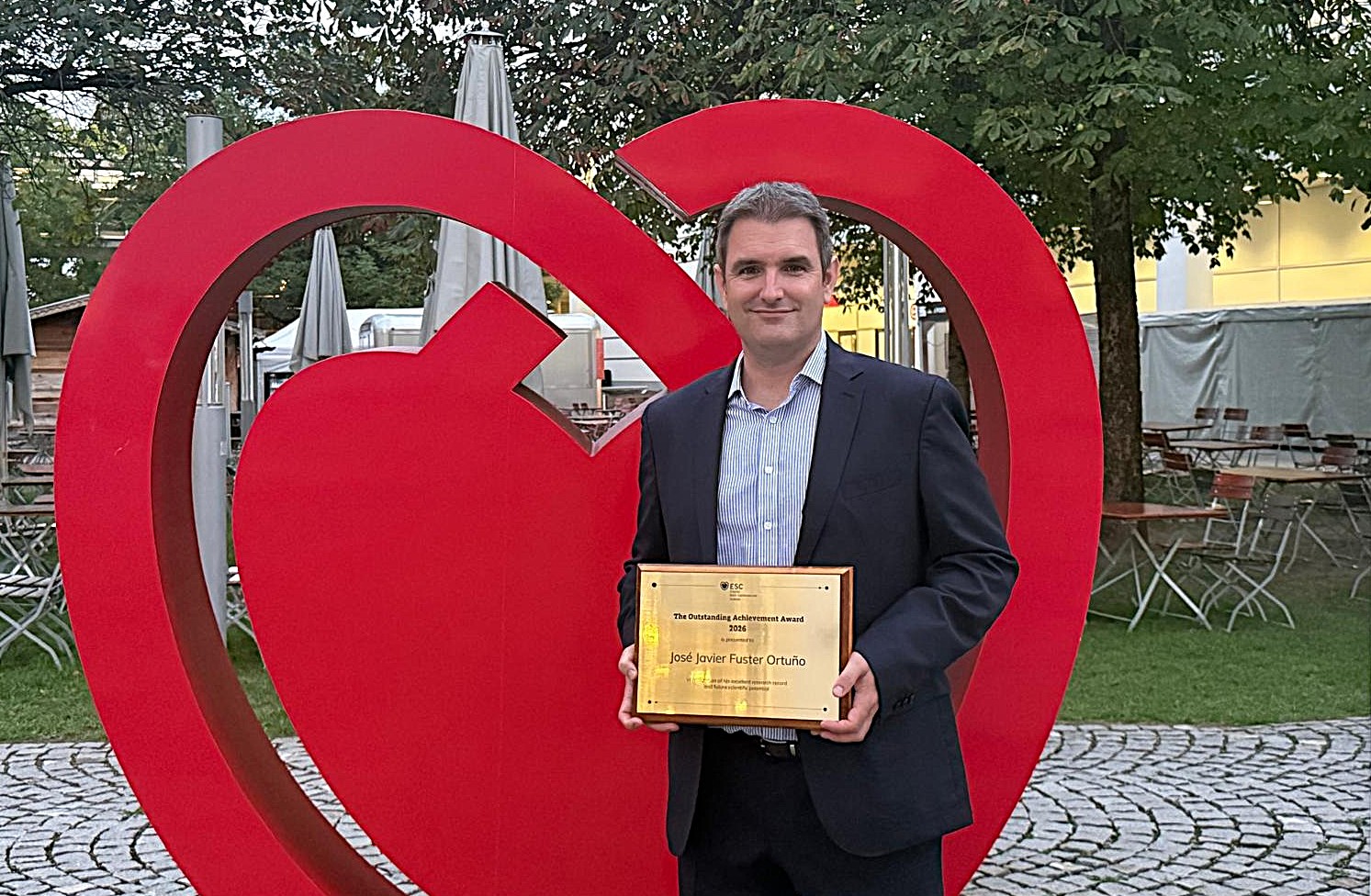
José Javier Fuster, researcher at the Centro Nacional de Investigaciones Cardiovasculares Carlos III (CNIC), has received the 2026 ESC Outstanding Achievement Award, presented by the European Society of Cardiology (ESC) Council for Basic Cardiovascular Science (CBCS) in recognition of his outstanding contributions to basic cardiovascular research.
The award recognises researchers in the early to mid-stages of their careers who have demonstrated sustained scientific excellence and made significant contributions to their field.
Among Fuster’s major scientific contributions is his work on clonal haematopoiesis, an age-related process in which blood-forming cells acquire somatic mutations and expand into genetically related populations of blood cells. His research provided the first experimental evidence that some of these mutations can contribute directly to the development of atherosclerosis, helping to establish clonal haematopoiesis as a new causal cardiovascular risk factor. This work helped bridge haematology and cardiovascular research and opened new avenues for understanding how acquired mutations in blood cells can promote inflammation and increase cardiovascular risk. A major goal of Fuster’s current research is to determine whether this knowledge can ultimately be used to improve risk assessment and develop preventive strategies tailored to the biological effects of specific mutations.
The award also highlights the international visibility of research carried out at CNIC and the Centre’s commitment to advancing basic and translational cardiovascular science.
“Professionally, it is a tremendous honour to have our work recognised by the European Society of Cardiology and its Council for Basic Cardiovascular Science. It is also very special to me personally: the ESC Congress was the first major international scientific meeting where I presented my research, in Barcelona in 2009, and since then it has become one of the main venues where we have shared our work,” says Fuster.
Fuster leads the Hematovascular Pathophysiology Group at CNIC and coordinates the Centre’s Scientific Programme on Novel Mechanisms of Atherosclerosis. His research investigates mechanisms linking ageing, haematopoiesis and inflammation to cardiovascular disease, with a particular focus on atherosclerosis.
His group combines experimental models with studies in human cohorts to understand how acquired alterations in blood cells modify inflammatory responses and contribute to cardiovascular disease, and to identify potential strategies to prevent their harmful effects.