Nature: Scientists have uncovered alternative pathways for blood vessel growth that could help overcome resistance to anti-angiogenic cancer treatments


A study involving CNIC researchers shows that blood vessels can grow in the absence of VEGF-VEGFR2 signalling, one of the pathways most commonly targeted for therapeutic purposes in clinical practice.
Researchers at the Centro Nacional de Investigaciones Cardiovasculares Carlos III (CNIC), together with international collaborators, have uncovered previously unknown mechanisms that allow blood vessels to grow even in the absence of VEGF–VEGFR2 signalling, one of the best-known and most widely targeted pathway in the clinics aimed at blocking tumor angiogenesis, growth and metastasis.
The findings may help to explain why tumors develop resistance to anti-angiogenic therapies over time and identify alternative mechanisms of angiogenesis that could become new therapeutic targets to improve the efficacy and reduce resistance to anti-angiogenic cancer treatments.
Published in Nature, the study demonstrates that endothelial cells, which line the inside of blood vessels, can survive, proliferate and contribute to the formation of new vessels even in the absence of VEGF-VEGFR2 signalling, which was so far considered to be essential for all aspects of angiogenesis. The results reveal that, rather than relying exclusively on this signalling pathway, some of these cells adapt, resist and are able to activate alternative molecular programs that enable angiogenesis.
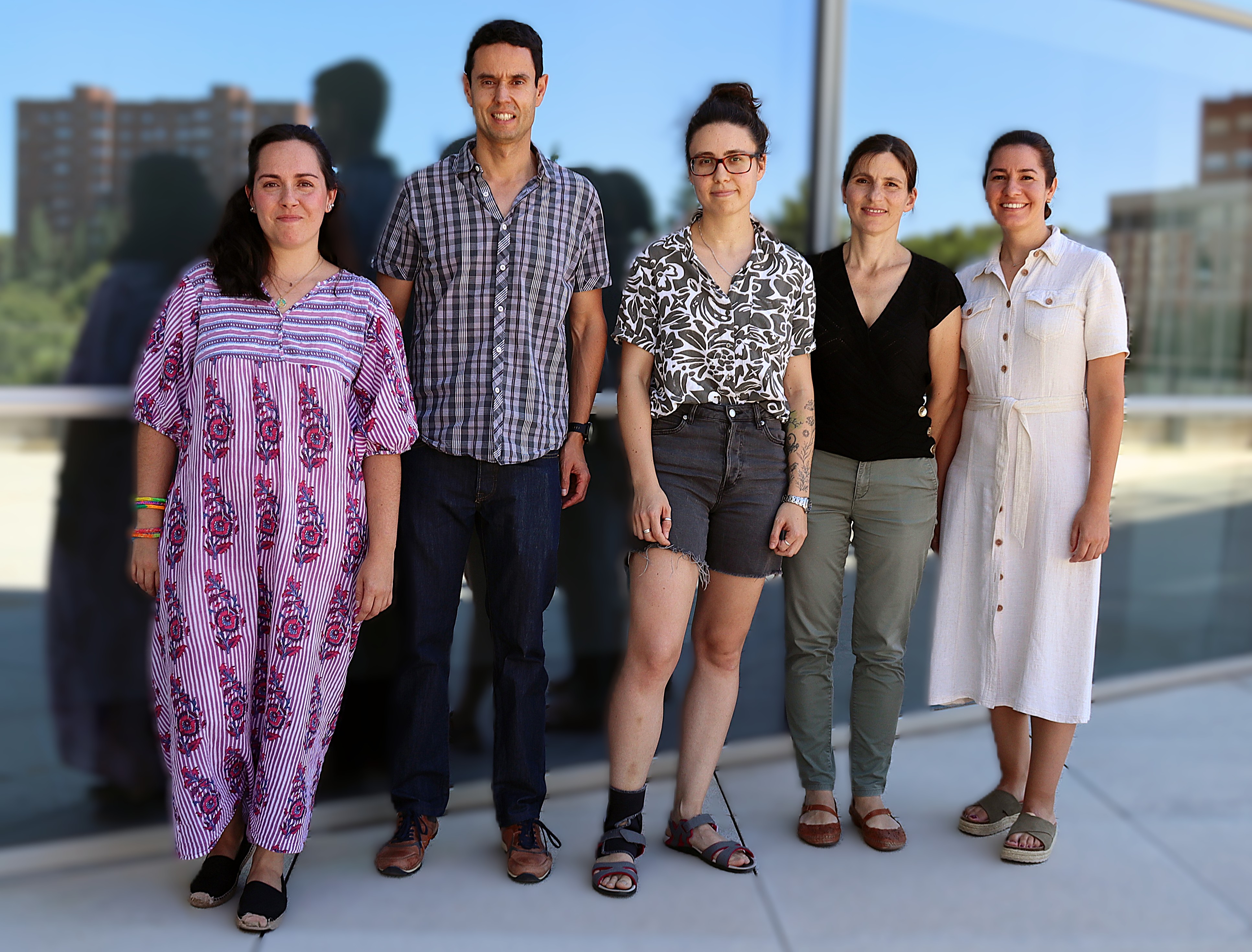
To investigate how blood vessels respond to the loss of VEGFR2, the research team directed by Rui Benedito, leader of the Molecular Genetics of Angiogenesis Group at CNIC and of the Department of Functional Genetics at Max Planck Institute for Molecular Biomedicine (Germany), developed an innovative mosaic genetics strategy that enabled them to distinguish and track normal endothelial cells alongside cells completely lacking VEGFR2 signalling throughout embryonic development and after birth.
“This enabled us to observe and compare how the two types of cells populations behaved throughout embryonic development and after birth” explains Dr. Irene García González, researcher at CNIC and co-first author of the study.
The team found that the loss of VEGFR2 primarily affected endothelial cells that are actively involved in the formation of new blood vessels during an early stage of growth, but not in subsequent stages. The cells responses also varied significantly depending on the organ. Whilst blood vessels in the brain showed strong resistance to the loss of VEGFR2, endothelial cells in the heart, kidneys and liver proved more sensitive to its loss, displaying a reduced survival and proliferation.
One of the study's most striking findings was that endothelial cells lacking VEGFR2 progressively recovered and increased their contribution to the vascular network, particularly in veins and the small vessels surrounding them.
This adaptation was accompanied by the acquisition of genetic characteristics typical of venous endothelial cells, a process the researchers describe as venousization. The study demonstrates that this change in cellular identity is crucial for enabling endothelial cells to survive and expand despite the absence of VEGFR2 signaling.
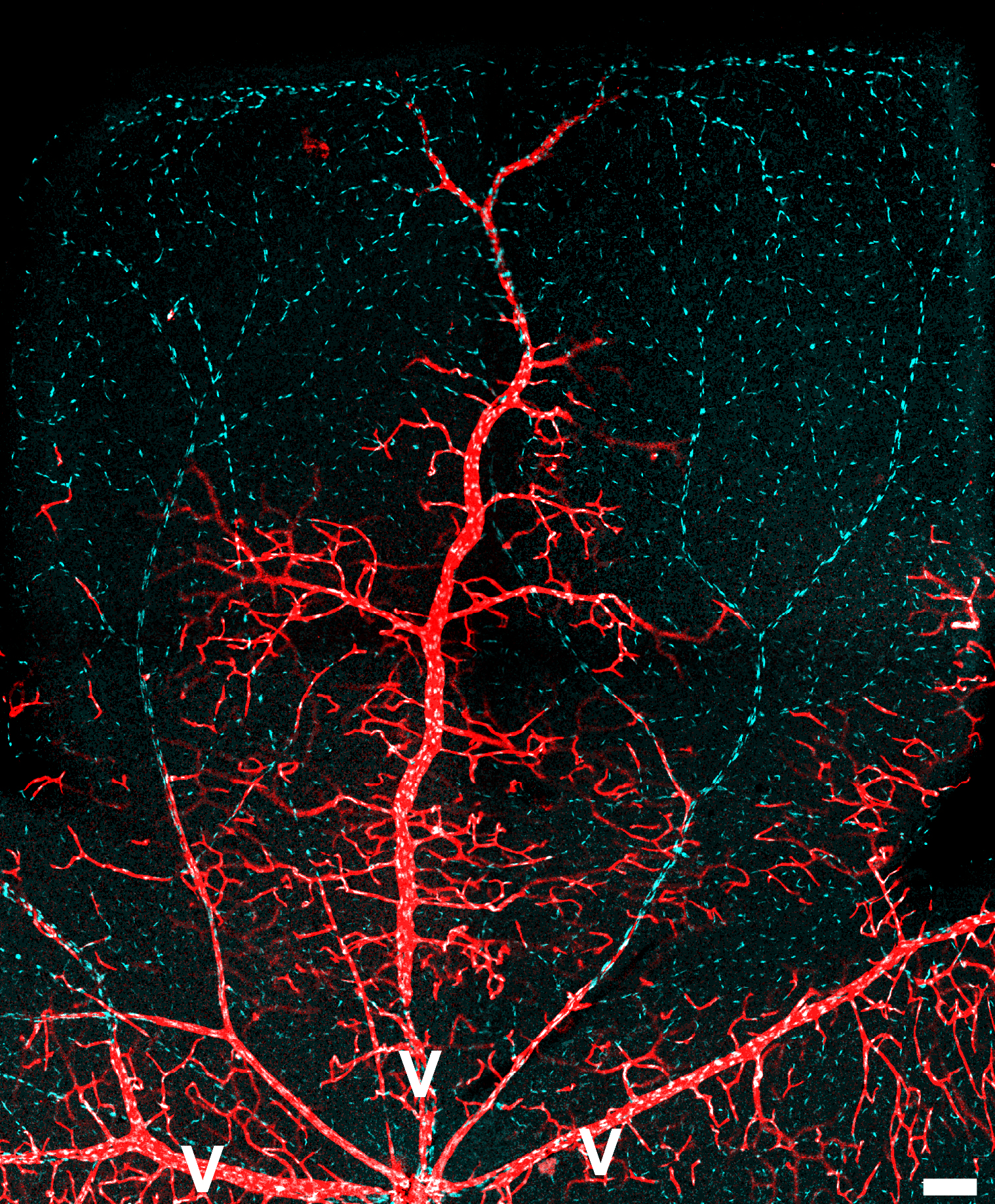
The team also identified the role of two additional VEGF receptors of the same family: VEGFR1 and VEGFR3. These receptors help sustain some endothelial cell survival and migration in the absence of VEGFR2, and act in parallel with the venousization genetic program.
These compensatory pathways reveal an unexpected degree of plasticity in endothelial cells and show that blood vessels have a much greater capacity to adapt to the loss of VEGF-VEGFR2 signalling than previously thought.
According to Dr. Benedito, co-leader of the study, “the findings may also help explain why tumors become resistant to treatments that block VEGF–VEGFR2 signalling” .
The findings may also help explain why tumors become resistant to treatments that block VEGF–VEGFR2 signalling
The discovery challenges the long-held view that VEGF–VEGFR2 signaling is invariably essential for angiogenesis and suggests that therapies targeting VEGF-VEGFR2 signalling alone may not be sufficient to achieve durable responses. By identifying the molecular mechanisms that allow blood vessels to resist and bypass VEGFR2 signalling, the study opens new opportunities to develop combination therapies capable of blocking these compensatory pathways, with the potential to inhibit tumor angiogenesis and growth more effectively.
Microscopy experiments were carried out at the CNIC Microscopy and Dynamic Imaging Unit, an ICTS ReDib facility co-funded by MCIN (/AEI/10.13039/501100011033) and the ERDF “A way to build Europe” (ICTS-2018-04-CNIC-16).
This research was supported by the European Research Council (ERC Consolidator Grant AngioUnrestUHD, 101001814), the Spanish Ministry of Science, Innovation, and Universities (grants PID2020-120252RB-I00 and PID2023-148880OB-I00), the "la Caixa" Foundation (grant HR22-00316 AngioHeart), Knut and Alice Wallenberg Foundation (2020.0057), the Swedish Research Council (2020-02692), and the Jenny and Antti Wihuri Foundation.