2nd International Symposium: Understanding the Neurovascular Network to Prevent Dementia


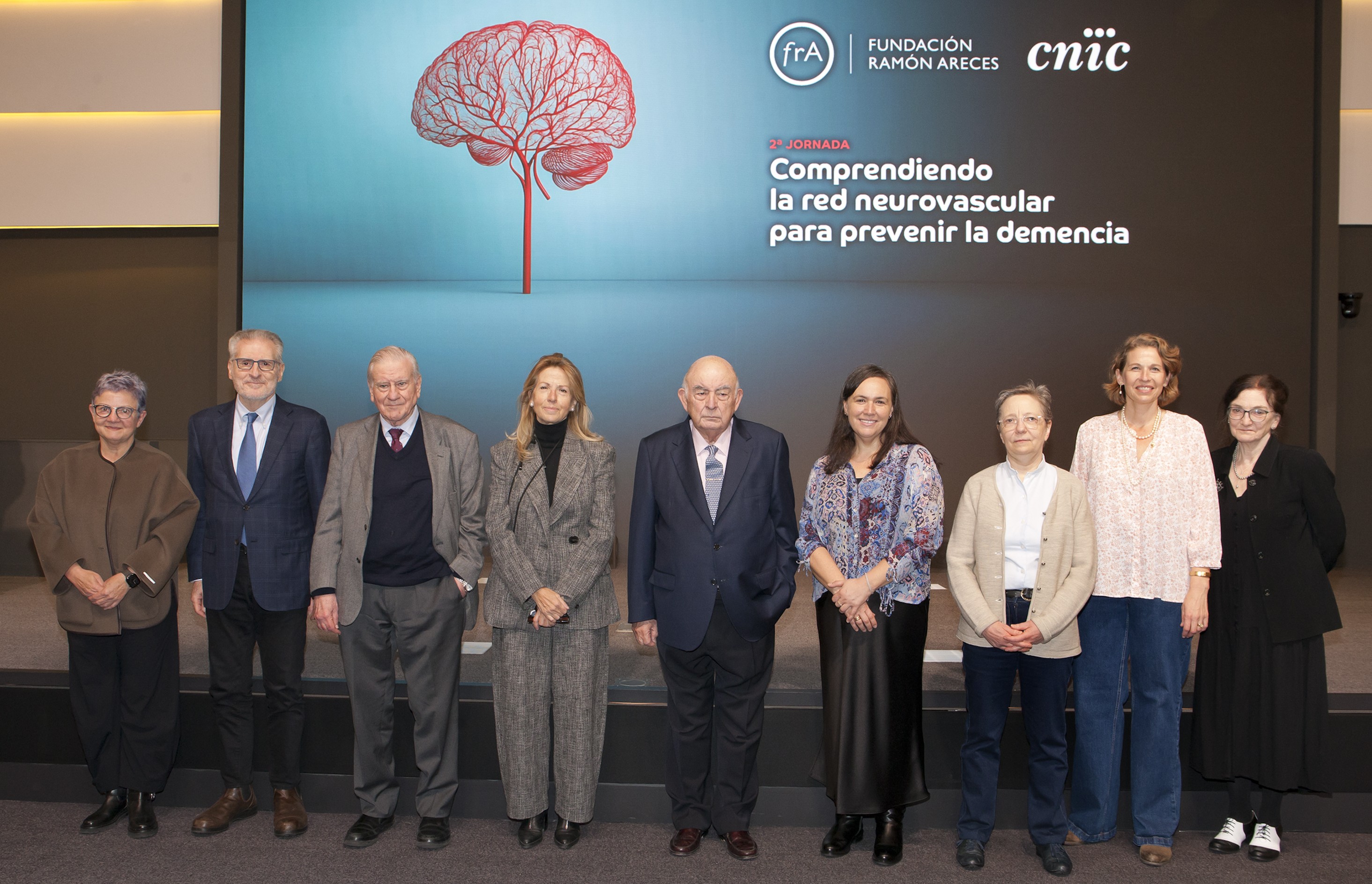
The CNIC and the Ramón Areces Foundation have brought together leading international experts to discuss how the neurovascular network influences the development of dementia and creates new opportunities for prevention.
Dementia is one of the greatest health challenges of our time, and there is an urgent need to develop effective prevention strategies. The latest scientific evidence highlights the essential role of the neurovascular network in maintaining cognitive function and brain health throughout life.
The neurovascular network encompasses processes that are essential for proper brain function, including cerebral blood flow, the blood-brain barrier, and the brain's waste clearance and drainage systems, as well as the influence of systemic biology. Its dysfunction may play a decisive role in the development and progression of dementia, as emphasized during the 2nd International Symposium Understanding the Neurovascular Network to Prevent Dementia, organized by the Centro Nacional de Investigaciones Cardiovasculares Carlos III (CNIC) and the Ramón Areces Foundation. The meeting was coordinated by Dr. Valentín Fuster, General Director of the CNIC; Dr. Costantino Iadecola, Director of the Feil Family Brain and Mind Research Institute at Weill Cornell Medicine in New York; Dr. Marta Cortés Canteli, from the Cajal Institute of the Spanish National Research Council (CSIC); and Dra. María Ángeles Moro, Coordinator of the CNIC's Cardiovascular and Brain Health Program.
According to Dr. Fuster, growing evidence indicates that cognitive decline in older adults is closely linked to cardiovascular health. "Cardiovascular disease and its associated risk factors play a key role in vascular cognitive impairment and also contribute to the development of other forms of dementia, including Alzheimer's disease."
For decades, research into neurodegenerative disorders focused primarily on neurons and, in the case of Alzheimer's disease, on the accumulation of proteins such as beta-amyloid and tau. However, as Dr. Moro pointed out, the brain relies on a complex network of blood vessels and cells that work together to ensure the delivery of oxygen and nutrients, regulate inflammation, protect brain tissue, and remove waste products.
"We now know that neurons do not function in isolation. Brain health depends on continuous interactions among neurons, vascular cells, immune cells, and multiple protective and maintenance mechanisms, as well as systemic influences, including the role of the microbiota," she explained.
In this regard, the work of Dr. Iadecola has been instrumental in transforming the traditional view of the brain. "Our studies have shown that vascular cells and neurons form a functional unit whose dysfunction promotes cognitive decline," said Dr. Iadecola.
Other research groups, such as those led by Dr. Anne Joutel and Dr. Julie Siegenthaler, have demonstrated how cerebral small vessel disease can cause brain injury and cognitive impairment, while also revealing the crucial role of cells surrounding blood vessels and of the barriers that protect the brain. "We can no longer understand dementia solely as a disease of neurons," emphasized Dr. Cortés Canteli. "Vascular dysfunction can actively participate in its development and progression."
One of the most important themes discussed during the symposium was the possibility of intervening before the first symptoms of cognitive decline appear.
"There is increasing evidence that the processes leading to dementia begin years before clinical symptoms emerge. Cardiovascular risk factors and atherosclerosis can be detected and, in many cases, modified decades before symptoms develop," said Dr. Fuster.
Studies conducted at the CNIC have shown that atherosclerosis begins to develop long before cardiovascular disease becomes clinically apparent. Researchers have also demonstrated that seemingly healthy individuals around the age of 50 already exhibit alterations in brain metabolism associated with increased cardiovascular risk and subclinical atherosclerosis.
The 2nd International Symposium Understanding the Neurovascular Network to Prevent Dementia brought together in Madrid leading international experts in neuroscience, neurology, vascular biology, brain imaging, and neurodegenerative diseases. These experts included Dr. Joanna Wardlaw, Professor at the University of Edinburgh and a global leader in vascular dementia research, and Dr. Helene Benveniste of Yale University, one of the world's foremost experts on the brain's physiological clearance systems.
Studies by Dr. Wardlaw and colleagues have made it possible to detect early alterations in cerebral small vessels, perfusion, and the blood-brain barrier using advanced magnetic resonance imaging techniques. According to Dr. Moro, "Combining cardiovascular and brain imaging with blood-based biomarkers will allow us to identify individuals at risk of cognitive decline earlier and thus improve prevention strategies."
Dementia: A Vascular Disease?
Dementia does not arise from a single mechanism. In many cases, neurodegenerative and vascular abnormalities coexist and reinforce one another. Consequently, it is becoming increasingly unsustainable to regard these processes as entirely independent entities.
Researchers such as Joanna Wardlaw and Anne Joutel have demonstrated that damage to cerebral small vessels can contribute to cognitive decline. In addition, Dr. Moro's studies on the consequences of stroke and Dr. Cortés Canteli's work on microthrombus formation in Alzheimer's disease are helping to clarify how vascular alterations may promote the development of cognitive impairment.
This perspective has major implications for prevention because many cardiovascular risk factors are modifiable. "Controlling high blood pressure, diabetes, and cholesterol levels; avoiding smoking; and maintaining a physically active lifestyle protect not only the cardiovascular system but also brain health," said Dr. Fuster.
The symposium also addressed the close relationship among processes such as cerebral blood flow, blood-brain barrier integrity, inflammation, brain drainage systems, and the microbiota.
Rather than a single causative mechanism, researchers described a complex network of interdependent systems coordinated through the so-called neurovascular unit, which comprises neurons, astrocytes, immune cells, and vascular cells.
Among the most notable contributions were those of Dr. Helene Benveniste, a pioneer in the study of the glymphatic system and brain lymphatic drainage. Her work is helping to explain how the brain removes waste products and how these mechanisms become impaired during aging and vascular disease.
Research by Dr. Julie Siegenthaler has highlighted the essential role of the meninges and perivascular cells in maintaining the brain's protective barriers and perivascular spaces.
As speakers explained, failure of one of these systems can trigger a cascade of events that compromises oxygen delivery, increases inflammation, or hinders the removal of substances that may be harmful to the brain.
Towards Personalized Dementia Prevention
The symposium conveyed a clear message: the future of dementia prevention lies in combining two complementary strategies, namely acting early on established risk factors and developing tools capable of identifying the specific biological mechanisms that contribute to disease in each individual. "The great opportunity is to intervene before cognitive decline appears and to preserve brain health for longer," concluded the symposium coordinators.
.