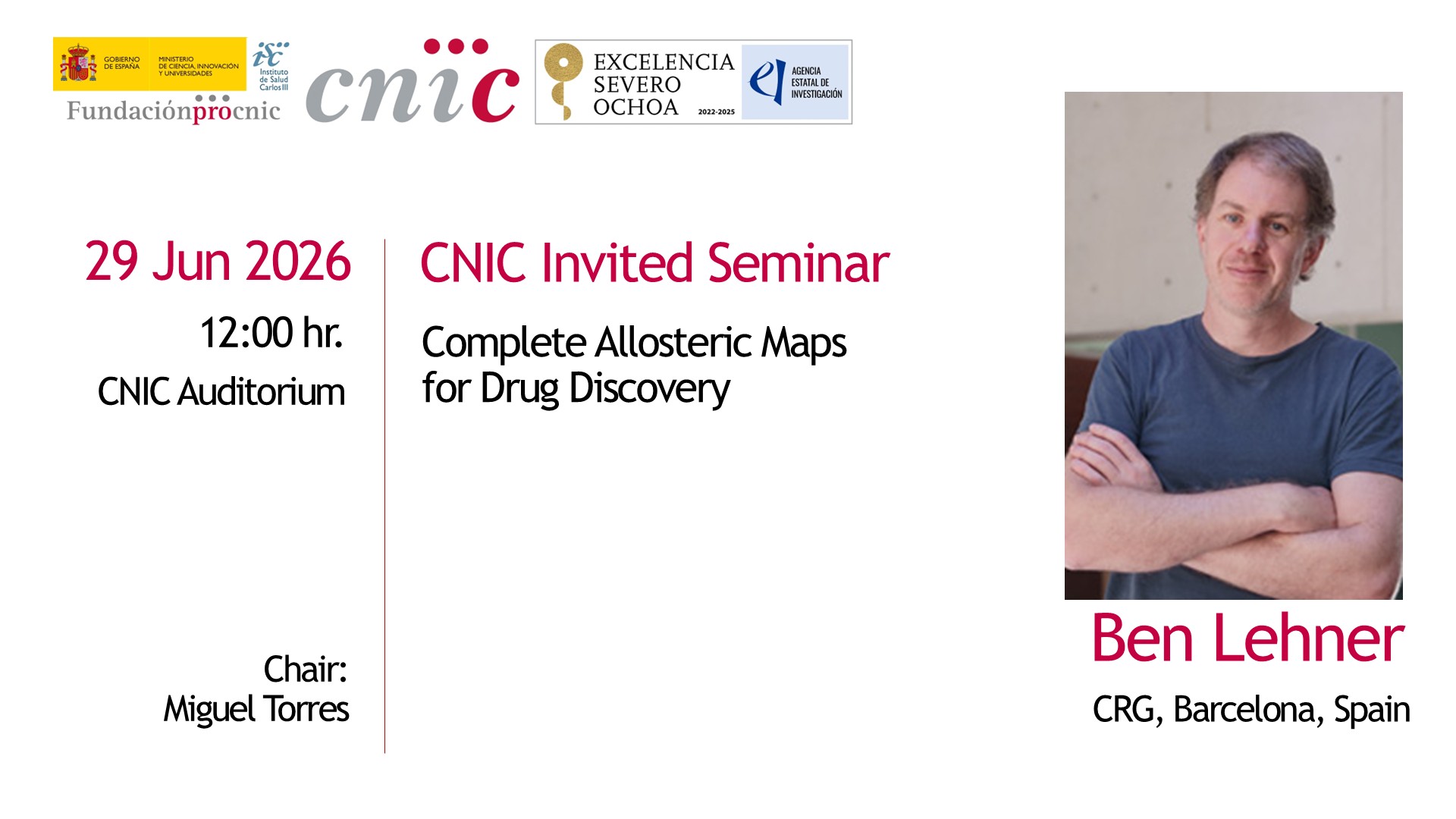
Ben Lehner: "Good governance is just as important as good science"


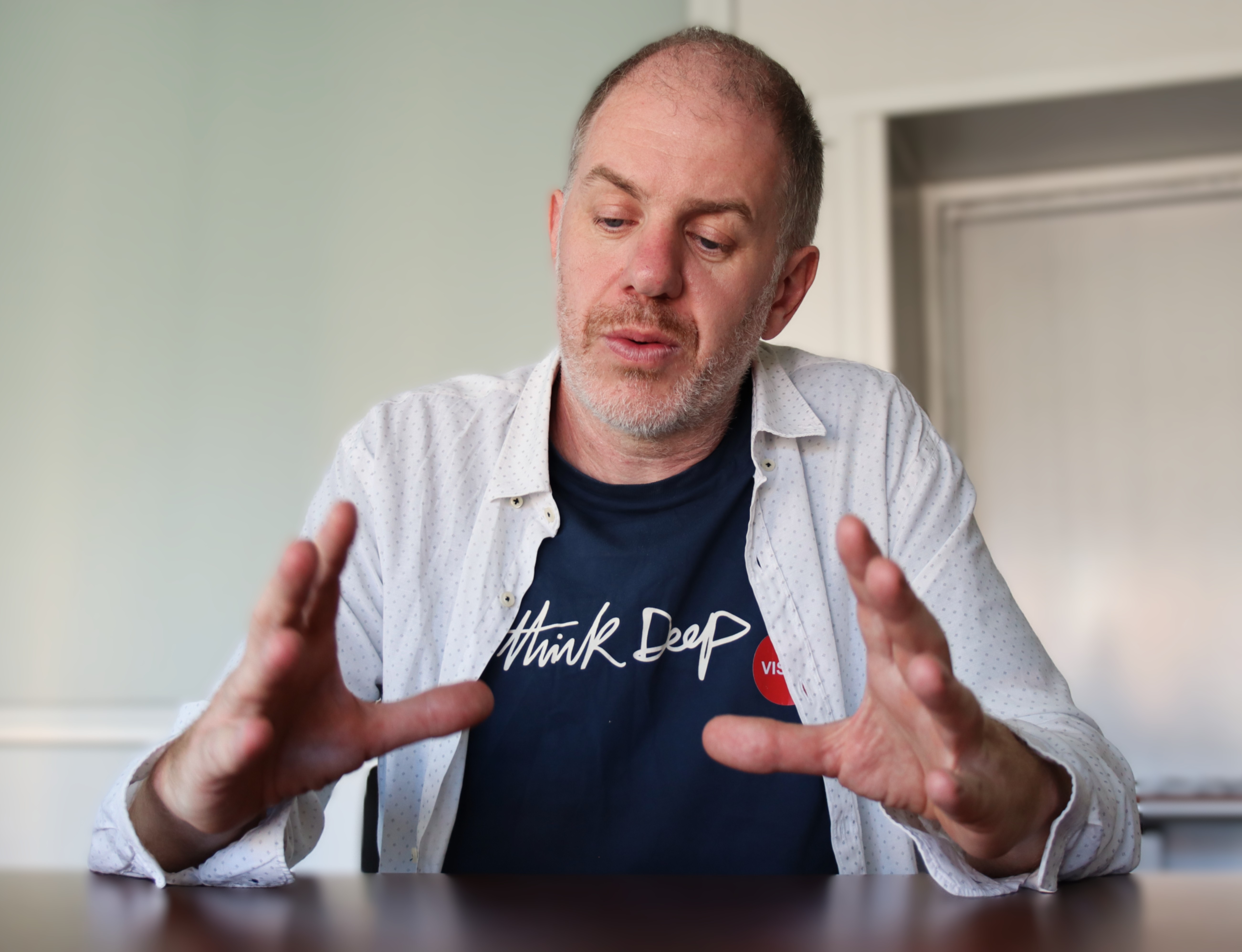
Ben Lehner is Head of Generative Genomics at the Wellcome Sanger Institute and Senior Group Leader at the Centre for Genomic Regulation (CRG) in Barcelona. An internationally recognised geneticist and systems biologist, his research combines high-throughput genomics, protein biology, and artificial intelligence to understand how genetic variation affects protein function and drives human disease. He is a Fellow of the Royal Society, the Academy of Medical Sciences, and EMBO, and was awarded the 2026 Rei Jaume I Prize for Biomedical Research.
- Could you explain what the domainome is and why it is so important? For many years we have considered the genome to be the key to understanding human disease. Now you are proposing a different perspective.
The genome is certainly key, but it is only the sequence that encodes proteins. Proteins are the molecules that actually perform the functions of biology—they are the machines that make life work. To understand how genetic variation causes disease, we need to understand how changes in DNA sequence alter protein function. Which mutations completely disrupt a protein? Which make it work too much, too little, or differently? Ultimately, we want comprehensive maps showing the effects of every possible mutation in the human genome.
The domainome is one part of this much larger effort. Many proteins are large molecules, but they are built from smaller structural units called domains. These are evolutionary building blocks that can fold independently and perform specific functions.
Working at the level of domains has two major advantages. First, domains are the fundamental functional units of proteins. Second, from a technical perspective, they are much easier to study. DNA synthesis and sequencing are far more efficient and less expensive when working with shorter DNA fragments. By breaking proteins into their individual domains, we can generate much larger datasets in the same amount of time and at a much lower cost than if we studied entire proteins. In other words, by simplifying the system, we can produce far more information.
- Your team has created one of the largest experimental catalogues of human protein domains. What has been the most surprising finding, and how could it ultimately help patients?
Perhaps the most important finding is that many disease-causing mutations destabilise proteins. When we selected the domains to study, we deliberately focused on proteins known to contain pathogenic mutations associated with rare diseases. What we found is that a very large proportion of these mutations simply make the protein less stable.
Proteins have to adopt a precise three-dimensional structure to function correctly. Many pathogenic mutations slightly reduce this stability, causing the protein to unfold more easily or preventing it from maintaining its correct shape. As a result, there is less functional protein available inside the cell, cellular processes become impaired, and disease develops.
This is a remarkably unifying observation because it suggests that many apparently unrelated rare diseases share the same underlying biophysical mechanism: protein destabilisation.
Equally important, our experiments show that not all disease-causing mutations behave this way. Those that do not destabilise proteins must cause disease through different mechanisms, giving us entirely new questions to investigate.
Overall, around 40–50% of the pathogenic mutations we studied appear to act through protein destabilisation. This is true not only for cardiovascular diseases but across many different rare genetic disorders.
- Does this finding also have therapeutic implications?
Absolutely. If reduced protein stability is the cause of disease, then one obvious therapeutic strategy is to restore that stability.
Fortunately, mutations usually destabilise proteins only slightly. A relatively small increase in stability can therefore make a significant difference. One effective way of stabilising a protein is simply to bind another molecule to it.
You can think of it like repairing a slightly damaged machine with adhesive tape. The machine is still damaged, but the tape helps it function properly again. In the same way, certain drugs bind to proteins and stabilise their structure.
These compounds are known as protein stabilisers, correctors, or pharmacological chaperones, depending on the field.
One of the best examples comes from cystic fibrosis. The disease is caused by mutations in the CFTR gene, many of which destabilise the CFTR protein. Over the past five years, treatment has been transformed by a combination of three small-molecule drugs. Two of these drugs simply bind to the protein and stabilise it, allowing it to reach the cell surface and function normally. The third drug improves its activity.
This illustrates how understanding the molecular mechanism of disease can lead directly to highly effective therapies. Only a handful of similar stabilising drugs have been developed so far, but our findings—and those of other groups—suggest that many more rare diseases could benefit from this strategy. We should be investing much more effort into discovering molecules capable of stabilising disease-associated proteins.
- In that case, the goal is no longer to develop one drug for each individual rare disease, but potentially one drug for a whole group of diseases.
Exactly. More precisely, it could be one drug for a whole group of patients whose mutations have the same molecular effect. Different mutations in the same protein—or even different proteins—may all destabilise the protein in essentially the same way. If we can classify patients according to the mechanism of their mutation rather than the mutation itself, we can develop therapies that benefit much larger groups of people.
That completely changes the economics of rare disease drug development. At the moment, particular mutations in many rare diseases affect only a handful of patients worldwide, making it extremely difficult for pharmaceutical companies to justify developing treatments. But if we can group together hundreds or even thousands of patients whose mutations share the same molecular mechanism, clinical trials become much more feasible and drug development becomes economically viable. I believe this strategy has enormous potential for many rare genetic diseases.
- You will also be presenting your work on complete allosteric maps for drug discovery. What are allosteric maps, and why are they important?
Our lab is interested in generating very large datasets that reveal how mutations affect proteins. We do this for two reasons. The first is to understand the consequences of genetic variation in humans—which mutations cause disease, which do not, and, also importantly, how. The second reason is that these datasets provide exactly the kind of information needed to train artificial intelligence models.
Artificial intelligence is transforming many fields, and biology is no exception. One of the best-known examples is AlphaFold, which can predict the three-dimensional structure of proteins from their amino acid sequence with remarkable accuracy.
If you ask why AlphaFold has been so successful, the answer is simple: data.
It was trained using the Protein Data Bank, a massive collection of experimentally determined protein structures that researchers have been building for decades. It is exactly the kind of dataset that AI needs: large, diverse, carefully curated, and highly reliable.
Unfortunately, biology lacks comparable datasets for many other important questions. At the Wellcome Sanger Institute, we are trying to generate those datasets using high-throughput sequencing technologies.
Our goal is not only to predict protein structures—which is now largely a solved problem—but also to predict many other aspects of protein biology, such as stability, aggregation, interactions with other molecules, and patterns of gene expression. One area we are particularly interested in is allostery.
- What exactly is allostery?
Allostery describes how communication occurs within a protein. Proteins are three-dimensional molecules that perform specific biological functions, but many of them also act as molecular switches. They need to be turned on or off depending on what the cell requires.
This regulation often happens when a molecule binds to one region of a protein and changes the behaviour of another region that may be some distance away. In other words, something happening at one site influences the activity of another site.
That long-range communication is what we call allostery.
It is also fundamental to drug discovery because many drugs do not bind directly to the active site of a protein. Instead, they bind elsewhere and regulate its activity indirectly. These are known as allosteric drugs.
The problem is that identifying allosteric sites has traditionally been extremely difficult. Most have been discovered by chance through large-scale screening.
- How are you trying to change that?
We have developed experimental methods that allow us to generate complete maps of allosteric regulation within proteins.
Essentially, we measure how every position in a protein influences its active site. We do this by combining systematic mutagenesis with machine learning to quantify the functional coupling between every amino acid and the active site.
These maps have two major applications. First, they reveal previously unknown allosteric sites that could become targets for new drugs. Imagine a protein involved in cancer for which no obvious therapeutic target exists. If our map identifies an allosteric site, that immediately suggests a completely new strategy for drug development.
Second, the maps themselves become training data for AI.
Clearly, we cannot experimentally generate allosteric maps for all 20,000 human proteins—that would take far too much time and money. But if we create high-quality maps for perhaps a thousand representative proteins, we can use those data to train AI models capable of predicting allosteric regulation across the rest of the human proteome.
So, once again, it is the combination of large-scale experimental data and artificial intelligence that allows us to move much faster.
- Could we say that we are entering a new era of predictive biology?
I think that's a fair description. Artificial intelligence is allowing biology to become increasingly predictive.
For molecular biology in particular, we're moving towards a future in which we will be able to predict the effects of mutations directly from sequence, understand how proteins function, and interpret individual genomes much more accurately than we can today.
Predicting human health is, of course, much more complicated because many additional biological and environmental factors are involved.
But at the molecular level, especially when it comes to understanding protein function and genetic variation, we are definitely entering a much more predictive era.
- Your research begins with fundamental questions about proteins and genetic variation, yet it has obvious clinical implications. How do you balance basic science with translational research?
I consider myself a basic scientist. My primary motivation is to answer fundamental biological questions. At the same time, I always keep in mind that the knowledge we generate may eventually become useful.
The reason we focus on fundamental problems is that solving them benefits everyone. Once you understand the underlying biology, many different applications become possible. Interestingly, that wasn't our original intention.
We didn't begin this research because we wanted to develop new drugs. We started by trying to answer an entirely different biological question and developed new experimental methods to do so.
Halfway through the project, we realised that those same methods could also be used to study allostery—and that complete allosteric maps could have enormous value for drug discovery.
In other words, the application emerged unexpectedly from basic research.
I think that's a crucial point because many of the most important advances in biology have followed exactly the same path. Scientists investigate one fundamental question, develop new methods, and then discover that those methods can solve an entirely different, much more applied problem.
It's almost impossible to predict in advance where these breakthroughs will come from.
One of my favourite examples comes from the Centre for Genomic Regulation (CRG) in Barcelona.
A computational biology group there was working on a very fundamental computer science problem: how to ensure that bioinformatics software produces identical results regardless of where it is run.
That research led to the development of Nextflow, which is now one of the world's most widely used workflow management systems for bioinformatics. It has become the foundation of a highly successful company based in Barcelona and is used in research institutes and hospitals around the world.
Nobody could have predicted that such a fundamental computational problem would eventually have such a major scientific, economic, and clinical impact.
That's why it's so important to explain to politicians and society that investing in basic research is not a luxury. Fundamental discoveries often generate transformative applications—but almost never in ways that anyone could have anticipated at the beginning of the project.
- That is why it is so important for researchers to explain to society—and to politicians—that they are not necessarily trying to cure cancer or another disease directly. They are trying to understand how biology works, and only later does someone realise that this knowledge may help treat a particular disease.
Exactly. The same is true for methods development. If you create a technology or an experimental method that everyone can use, you accelerate progress across the entire field. The impact goes far beyond your own research because it enables many other scientists to make discoveries more quickly. Ultimately, that benefits translational research as well.
- You spent almost two decades building your laboratory in Barcelona. How did the city's scientific ecosystem contribute to your work? And how does it compare with the UK research environment?
I started my laboratory in Barcelona almost twenty years ago, at a time when the CRG was itself a very young institute. I didn't move to Barcelona for personal reasons—it was simply the best scientific opportunity available when I was looking for an independent position. Looking back, it was an outstanding place to build a research career.
Like the CNIC, the CRG is a core-funded institute. That meant that when I started my lab, I already had the resources to begin doing science immediately. I didn't have to spend my first years writing grants simply to keep the lab alive.
That makes an enormous difference. The institute is also exceptionally diverse, both scientifically and culturally. Researchers work on a wide range of biological questions, using many different approaches, and there is a very international community. That creates an intellectually stimulating environment where ideas circulate very freely.
Investing in fundamental research doesn't only produce scientific knowledge—it also creates innovation and contributes directly to the local economy
Perhaps even more importantly, core funding gave me the freedom to change research direction.
When I started my laboratory, we were working on developmental biology using Caenorhabditis elegans. We were interested in understanding why the same mutation can have different effects in different individuals.
The work we are doing today—large-scale mutagenesis and protein function mapping—only began around ten years later, when new technologies became available. Because we had stable institutional funding, we were able to change direction completely.
That kind of scientific flexibility is extremely difficult to achieve in a purely grant-funded system. If you apply for funding to study something you've never worked on before, reviewers often say, "You haven't done this before, so we're not going to fund you." Core funding allows scientists to take those risks.
- So, in many ways, Spain gave you the freedom to reinvent your research programme.
Absolutely. I'm genuinely grateful to Spain and to Catalonia for creating institutions like the CRG, where researchers have the freedom to pursue new ideas.
Looking back, that investment has paid off.
One spin-out company from my laboratory has already become very successful, and we now have another two companies being established in Barcelona. So the original public investment has generated scientific discoveries, economic activity, and highly qualified jobs.
That illustrates an important point: investing in fundamental research doesn't only produce scientific knowledge—it also creates innovation and contributes directly to the local economy.
- At the same time, do you think Spain still faces structural challenges in science?
Yes, I do. Spain has created a small number of outstanding research institutes such as the CNIC and the CRG. These centres are internationally competitive and have transformed Spanish science.
However, maintaining that competitiveness requires continued investment. One problem is that the core funding of these institutes has not kept pace with inflation. Their budgets have gradually lost purchasing power over the past ten or twenty years.
If Spain wants these centres to remain internationally competitive, their funding needs to grow accordingly.
- Many researchers assume that funding in the UK is substantially higher. Was that one of the reasons you decided to move to the Wellcome Sanger Institute?
It was certainly one of the reasons. The kind of science my laboratory now does has become much more expensive. We work with large-scale sequencing, high-throughput mutagenesis, and very large datasets. Those projects require access to substantial funding.
The second reason concerns the way my laboratory was funded while I was in Spain.
For many years we relied heavily on grants from the European Research Council. Those grants are fantastic, particularly for early- and mid-career researchers. The Starting Grants and Consolidator Grants have been enormously important.
The problem comes later. At the Advanced Grant stage, success rates are extremely low. Even if you're an excellent scientist, it becomes very difficult to maintain continuous funding.
That creates a structural problem. A laboratory can be thriving one year and suddenly face financial uncertainty the next—not because the science has changed, but simply because the competition has become so intense.
Spain's national funding system is valuable, but individual grants are generally quite small. There is no equivalent of the large investigator-led grants that exist in countries like the UK or the United States.
As a result, researchers often have to participate in large collaborative networks simply to access bigger budgets. While collaborations are important, they shouldn't be the only way to obtain substantial research funding. I think that's one of the structural weaknesses of the Spanish system.
- One of the issues often discussed in Spain is the relationship between science and politics. Do you think there is too much political influence on research funding?
I think one of the challenges in Spain is that there isn't enough separation between politics and scientific decision-making. In the UK, there's a long-standing principle known as the Haldane Principle, which dates back more than a century. The idea is simple: governments decide how much public money should be invested in research, but scientists decide how that money should be allocated.
That's why organisations such as the Medical Research Council (MRC) exist. The government defines broad strategic priorities—for example, increasing investment in neurodegenerative diseases or cancer—but it does not decide which projects receive funding. Those decisions are made by scientists through independent peer review.
I think that model works very well.
In Spain, political authorities have a much more direct role in determining how research funding is distributed. Politicians are, of course, responsible for setting national priorities, but they are not scientists, and they cannot reasonably be expected to evaluate scientific excellence.
There should be a stronger independent funding agency that acts as a buffer between politics and science, allowing researchers to make scientific decisions based on scientific criteria.
- Spain has created internationally recognised research centres such as the CNIC and the CRG. Do you think that model should be expanded?
Yes. The creation of institutes like the CNIC and the CRG has been one of the great successes of Spanish science over the past two decades.
These institutes have demonstrated that Spain can compete internationally when researchers are given stable funding, scientific independence, and long-term institutional support.
I think that model should certainly continue to be strengthened.
- Recently there has been considerable public discussion about governance issues at the CNIO. Do situations like this affect the international reputation of Spanish science?
Unfortunately, yes. International reputation is extremely important. When governance problems become highly visible, they inevitably affect how the international scientific community perceives an institution, regardless of the quality of the science being carried out there. Good governance is therefore just as important as good science.
Problems should be identified early and addressed internally before they develop into public crises.
Ultimately, institutions need strong leadership, effective oversight and boards that are actively engaged in ensuring that organisations are functioning properly.
- Do you think research institutes need stronger evaluation systems?
I think evaluation is essential. Science advances because it is constantly evaluated.
Researchers, laboratories, and institutions should all be assessed regularly against clear standards of scientific excellence.
That doesn't mean creating instability, but it does mean ensuring that resources are invested where they can have the greatest impact.
Strong evaluation systems help maintain excellence, encourage continuous improvement, and ultimately strengthen the entire research system.
- What makes governance work well in countries like the UK?
One important difference is the role played by governing boards.
In the UK, research institutes are typically overseen by highly engaged boards of trustees. These individuals take their responsibilities very seriously and devote significant time to ensuring that the institute is well managed, financially sound, and scientifically successful.
Good governance isn't simply about responding to problems once they appear—it's about identifying potential issues early enough to prevent them from becoming major public crises.
That kind of oversight is essential for maintaining both scientific excellence and public trust.
- Finally, after almost twenty years in Barcelona and now at the Wellcome Sanger Institute, what continues to motivate your research?
Curiosity. I've always been motivated by fundamental biological questions. What fascinates me is understanding how biology works—how mutations change proteins, how proteins determine cellular behaviour, and ultimately how those processes give rise to health and disease.
If, along the way, those discoveries lead to new medicines, better diagnostics, or even new companies, that's wonderful.
But those applications are usually impossible to predict at the beginning. That's precisely why fundamental research is so important. The best discoveries often come from asking simple questions about how nature works.
And that's still what motivates me every day.