CNIC participates in COMPASS, a European project promoting the early detection and personalised treatment of cardiotoxicity in cancer patients


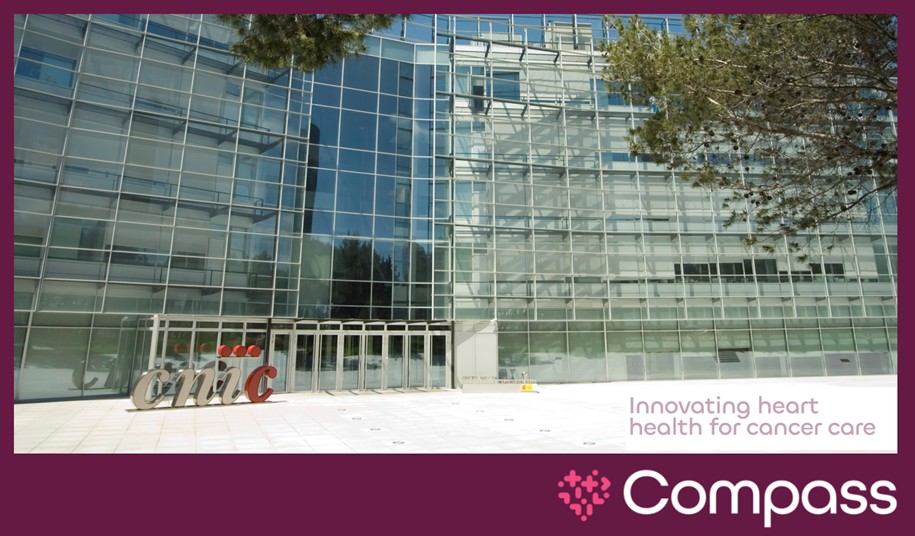
The initiative will combine innovative medical and digital technologies to improve the early detection of cardiac risk and complications in cancer patients and survivors
Europe is taking a step forward in improving the cardiovascular health of cancer patients with the launch of COMPASS (Cardio-Oncology Multidisciplinary Patient Assistance Solution), an ambitious European project that leverages artificial intelligence and digital technologies to prevent and treat cardiotoxicity associated with cancer treatments.
The initiative, funded by the European Union under the Innovative Health Initiative (IHI), has a budget of over €50 million and involves more than 60 organisations from 25 countries, including hospitals, research centres, universities, technology companies and patient organisations.
The Carlos III National Centre for Cardiovascular Research (CNIC) is taking part in this ambitious project, which aims to transform care in the field of cardio-oncology through the use of artificial intelligence, advanced biomarkers and digital technologies.
The project, which began on 1 March 2026, will run for five years and aims to improve the early detection of cardiac damage, optimise clinical decision-making and advance towards more personalised medicine in cardio-oncology.
As cancer survival rates rise, so do cardiovascular side effects. It is estimated that one in four cancer treatments requires warnings about potential cardiac or vascular complications, posing new challenges for patients and healthcare systems.
COMPASS involves leading research centres, hospitals, technology companies and patient organisations
COMPASS will tackle this challenge by developing predictive models based on artificial intelligence, using blood biomarkers, advanced medical imaging techniques and continuous monitoring systems. These tools will enable the identification of risk before symptoms appear and facilitate safer, more personalised care.
Coordinated by King’s College London, COMPASS involves leading research centres, hospitals, technology companies and patient organisations from across Europe.
As explained by Dr Borja Ibáñez, scientific director of the CNIC, cardiologist at the Hospital Universitario Jiménez Díaz and group leader at CIBERCV, the CNIC is involved in a number of projects. “We use experimental models of anthracycline-induced cardiotoxicity, in which we test different imaging probes to assess whether it is possible to develop new imaging modalities that enable the early detection of cardiotoxicity.”
In the clinical arm of the project, led by the CNIC within the consortium, the aim is to develop new risk scales to identify the likelihood of cardiovascular events in long-term cancer survivors. “We will bring together international databases comprising around 100,000 patients to develop models capable of predicting cardiovascular risk. In addition, we will analyse the impact of immunotherapy on silent atherosclerosis as part of a complementary sub-project,” explains Dr Ibáñez.
Furthermore, COMPASS will promote integrated care models that strengthen collaboration between cardiologists, oncologists and other healthcare professionals, as well as long-term follow-up strategies for the growing number of cancer survivors.
In the fields of artificial intelligence, data analysis and predictive modelling, projects such as GRACE and RESILIENCE stand out
The initiative also takes the patients’ perspective into account, through the development of educational materials, digital tools and awareness-raising activities designed to improve understanding of the cardiovascular risks associated with cancer and its treatments.
COMPASS builds on a strong track record in research and the collective experience of its partners in previous European initiatives. In the fields of artificial intelligence, data analysis and predictive modelling, projects such as GRACE and RESILIENCE are particularly noteworthy.
The expected outcomes include validated new biomarkers, AI-based predictive models, digital monitoring platforms, clinical decision support systems, and new care pathways for cancer patients at cardiovascular risk.
With this multidisciplinary and innovative approach, COMPASS aims to mark a turning point in the prevention and management of cardiotoxicity, moving towards a more precise, integrated and patient-centred form of medicine.