Nature: NeuMap, a pioneering map of neutrophils that redefines their role in health, infection, and inflammation


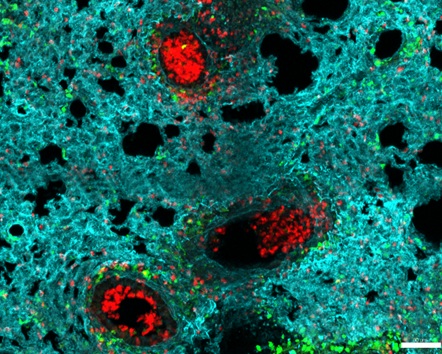
An international team has published NeuMap, the first atlas to reveal the global architecture of neutrophils, showing how this “first line of defense” reorganizes to protect, remember, and heal.
Neutrophils are the most abundant immune cells in the body and the first to respond to infection or tissue damage. Yet despite their importance, until now very little was known about how they truly function, how they change depending on the tissue they inhabit, or how they contribute not only to host defense but also to inflammatory, cardiovascular, or cancer-related diseases. Their diverse actions enable them to save lives during infection but can also worsen inflammation, as seen in conditions such as COVID-19.
To unravel this complexity, an international consortium led by scientists at the Centro Nacional de Investigaciones Cardiovasculares (CNIC), Universidad Carlos III de Madrid (UC3M), Yale University, and Westlake University (China) has developed NeuMap, the first comprehensive map describing how neutrophils are organized across tissues, life stages, and disease states. With NeuMap, scientists have, for the first time, a clear guide to navigate the immense heterogeneity of these cells, opening a new era in the understanding and control of the immune system.
The study, published in Nature, analyzed more than one million cells using next-generation sequencing technologies.
“What is most surprising,” explains Dr. Iván Ballesteros, professor in the Departament of Neuroscience and Biomedical Sciences and in the Faculty of Health Sciences at UC3M and researcher at the CNIC – is “is that individual neutrophils live only a few hours, yet this cell population maintains a stable architecture throughout life. It is a pattern that emerges from chaos. Understanding this logic opens new avenues to guide immunity toward healing.”
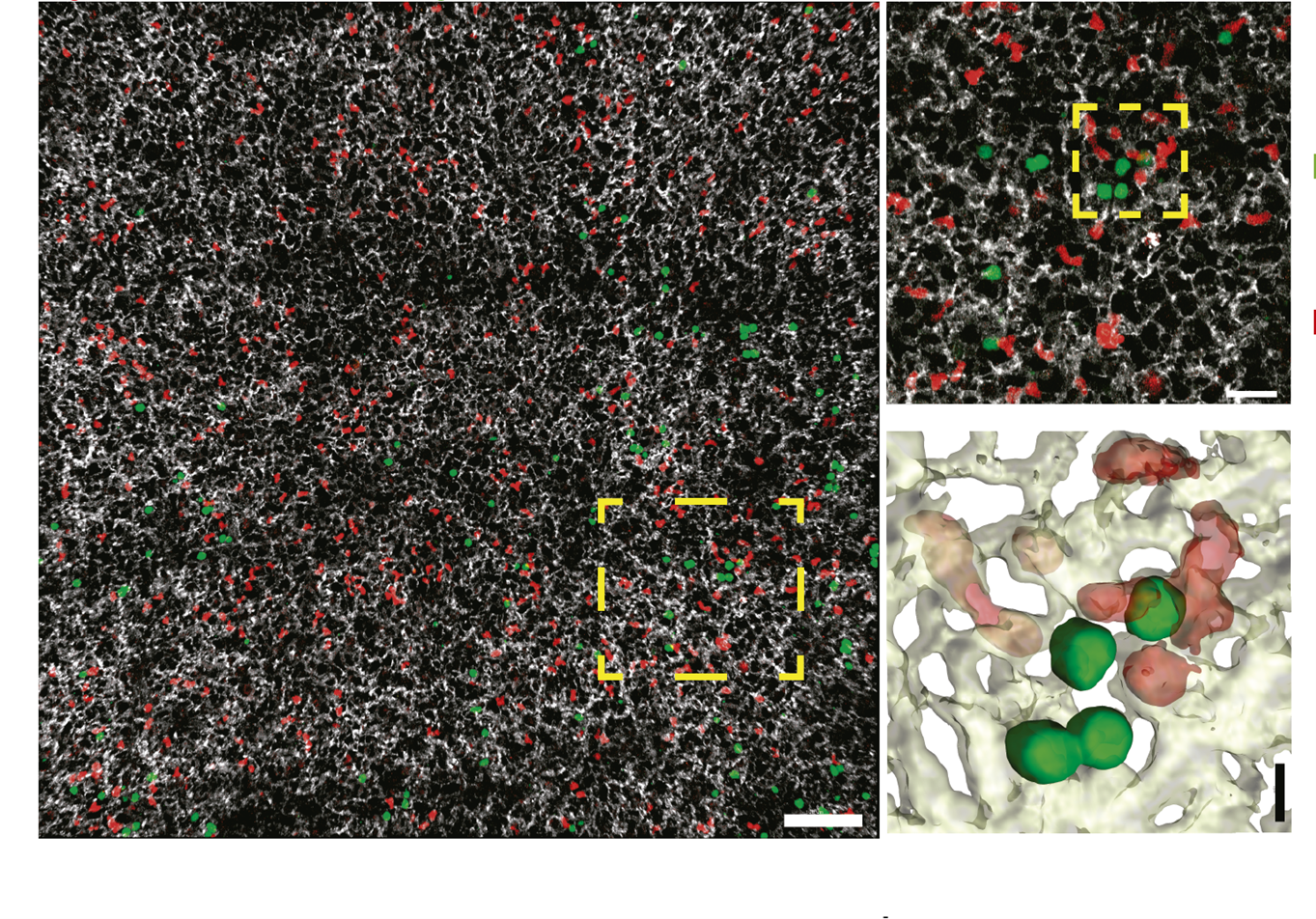
The work also shows that, until now, the lack of a reliable benchmark limited our ability to interpret the true role of these cells.
Yale-CNIC scientist Andrés Hidalgo notes that previous studies were largely focused on specific diseases, such as cancer or infection. “Here, we brought together an enormous variety of conditions—from pregnancy and fetal development to infections, cancer, myocardial infarction, and aging.”
By integrating all these data,” adds co–first author Daniela Cerezo-Wallis (Yale University), “we were able to observe how neutrophils follow common patterns despite their apparent diversity.”
Cross-species analyses, explains co–first author Andrea Rubio-Ponce (CNIC), showed that many of these cell programs are unexpectedly conserved between mice and humans. “This greatly facilitates translation to clinical studies and accelerates the development of biomarkers and new therapies,” adds Laiguan Ng of Westlake University.
In addition to bringing order to a traditionally fragmented field, NeuMap provides a practical tool that will allow researchers to identify which neutrophil types are present in a disease and what function they may perform.
The authors emphasize that the atlas will be freely available to the scientific community worldwide.
The research received funding from the Cancer Research Institute; Ministerio de Ciencia, Innovación y Universidades/ Agencia Estatal de Investigación (AEI); Fundación BBVA; WorldwideCancer Research; NIH; Deutsche Forschungsgemeinschaft; Fundación Leducq; IZKF/IMF Münster, BachynskiFamilyFoundation; CanadaFoundation for Innovation; National Medical Research Council y Skin Research Institute of Singapore; National Natural Science Foundationof China; European Union “NextGenerationEU/PRTR, y European Regional Development Fund.