Dr. Francesco Costa: "The sustained use of tools like ChatGPT produces a phenomenon called deskilling"


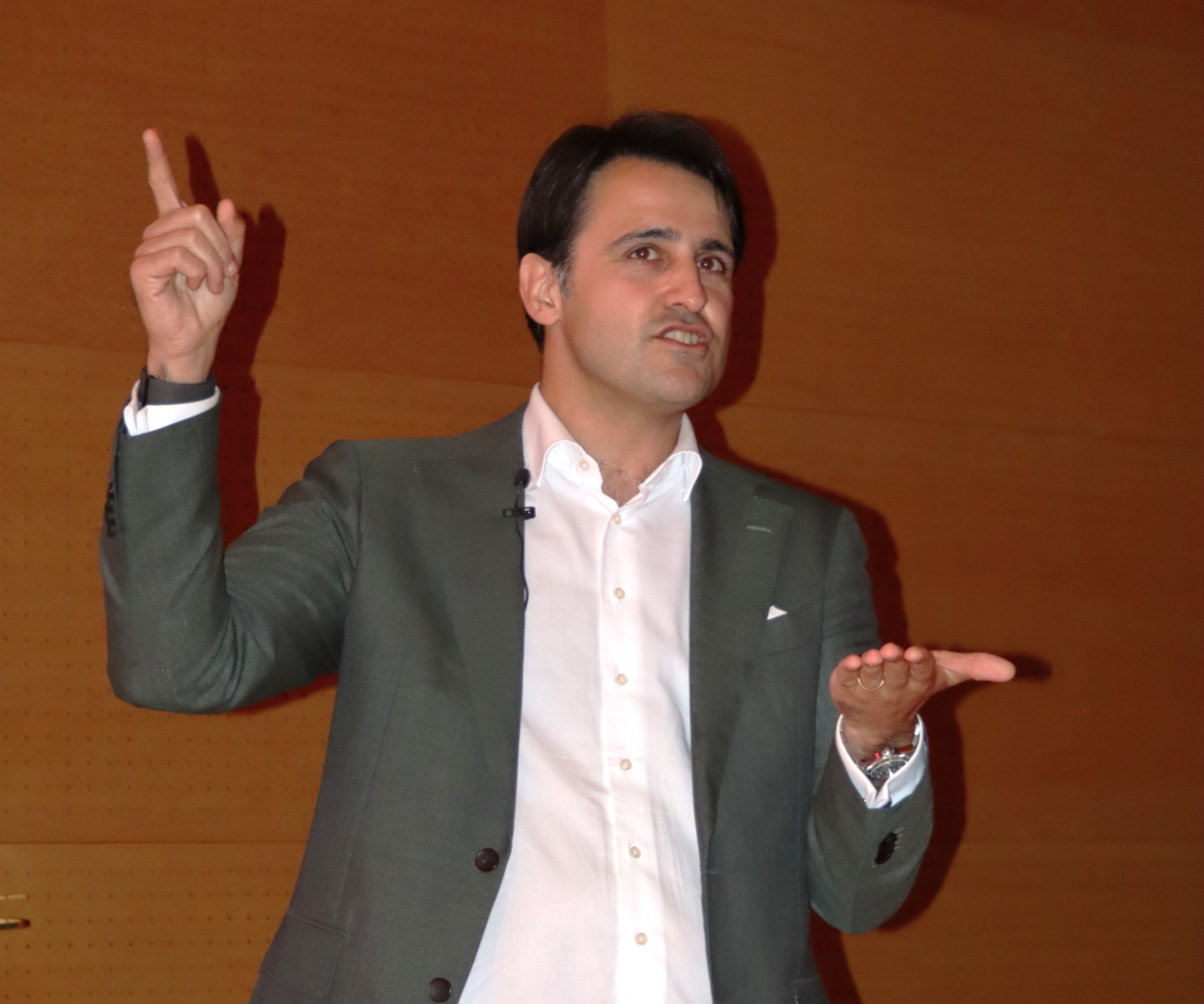
Dr. Francesco Costa is an interventional cardiologist, professor of cardiology, and research scientist with an outstanding scientific track record centered on the personalization of antithrombotic treatment in patients suffering a myocardial infarction or undergoing percutaneous coronary intervention (PCI). After graduating with honors from the University of Messina, he obtained a jointly awarded PhD from the Universities of Rotterdam and Messina, later specializing in Interventional Cardiology at prestigious European centers, including the Erasmus Medical Center (Rotterdam), Inselspital (Berne), Hospital Clínic (Barcelona), and Hospital Virgen de la Victoria de Málaga (Málaga).
From the beginning of his career, Dr. Costa's research has focused on the progressive personalization of antithrombotic therapy, highlighted by his pioneering studies on the optimal duration of dual antiplatelet therapy (DAPT). He has made significant contributions to the development and validation of risk prediction scores, including the PRECISE-DAPT Score, published in The Lancet, which allows the duration of treatment to be adapted to the bleeding risk of each individual patient.
- Artificial intelligence (AI) has become an established tool in scientific research.
That's right, and the impact is not limited to research. AI is having wide social, philosophical, and ethical impacts that raise profound questions about what it means to be human, and it's a fascinating area.
We are in the midst of a profound technical but also social revolution. And the discourse around AI has given rise, as with any major advance, to some ideas and hypotheses that are positive and to others that are negative. AI has the capacity to serve the good of humanity or to make matters worse.
- And increase social divisions even further?
Absolutely. AI has enormous potential to reduce the distances between people and between social classes—to reduce inequality. But at the same time, it has a similar capacity to increase these distances. There is an essential dualism involved.
I'm an optimist, but the outcome will depend on how these tools are used, both at a personal level and, above all, socially.
There's a well-known refrain that says we have God-like technology, medieval institutions, and stone-age brains. Why is this? It's because our brains have not changed significantly in the last hundreds of thousands of years. Institutions change over the centuries, but technology can completely transform our way of life in barely five years.
So, it's both exciting and worrying that this revolutionary technology has entered our lives without us having enough time to adapt, either as a society or as individuals.
- The technology is far ahead, for example, of the legislation.
Exactly. We've seen this in Spain, which has been a pioneer in regulating the use of social media by young people. There is evidence of the negative impact social media platforms have had, especially in this age group. Nevertheless, 20 years have passed, and now two generations have been exposed to this phenomenon. In the future, this issue may well be viewed in the same way as tobacco smoking.
- Yes, the situation is reminiscent of the smoking debate, or perhaps the debate around vaping: that debate is still open.
Exactly, to what degree is it harmful? One effect we are already beginning to see, though it needs to be confirmed, is that in some populations, generation Z is the first to show no improvement in certain cognitive indicators compared with previous generations.
- And do you think is this directly linked to the use of social media platforms and cell phones?
Social media platforms especially, though also to the use of tech more generally. And I think this trend will become more pronounced with the increasing use of AI tools like ChatGPT.
One thing we do know is that the sustained use of tools like ChatGPT leads to deskilling: experts who constantly use a tool to do their skilled work for them find—within just a few months—that their skills have diminished.
- Because they stop using those skills?
Exactly. The brain is designed to use as little energy as possible. If you have access to a tool, you use it, and as a result you lose critical judgment.
This happens with experts, but less experienced students face the risk of never skilling: not developing certain skills because they know that the machine can do the work and lacking the motivation to learn the process.
- Are you seeing this at the university?
Yes, and what's really striking is that this has happened in such a short time. In barely two years, since 2023 when more reliable models became widely available, their use has become completely generalized.
In exams, if students have the opportunity, they use them. Everyone does it.
.
It's a concerning situation. And I'm not immune. If I have the chance, I use AI platforms in my work, because they're incredible tools.
They give you the impression, even if you're an expert, that they are more intelligent than you.
- Do they make you doubt your abilities?
I use AI tools in my work, and if I compare 2023 with 2025, my sensation is that for many tasks they are now better than me. Much of what you contribute at this point lies in asking the right questions and filtering the outputs according to your own priorities. But in many areas today, the feeling is not just that these tools are faster—it’s also that the quality of what they produce is remarkable. Something that used to take me two weeks can now be done in 45 seconds or a couple of minutes.
And it's very hard to go back because it becomes a way of life. It's like discovering something better: you don't want to give it up. It gives you access to an enhanced version of yourself.
- But over time, that could also leave you feeling that you are losing your own value.
Exactly. That's the philosophical dimension: not only do you stop being what you once were, you actually lose ground, because these tools are quietly untraining your existing capabilities.
- How do you rate your experience of the Fundación Occident Visiting Researchers program at the CNIC?
Over the past ten years, as an interventional cardiologist, I have been active both clinically and in research. Along the way, I have met many international researchers and had the opportunity to work with Dr. Borja Ibáñez, Scientific Director of the CNIC.
I already knew the CNIC well—it is a highly regarded institution internationally. A grant I was awarded in 2024, which only one other cardiologist, Borja Ibáñez, has previously won in a clinical context, opened the door to working here within this Fundación Occident project. It's a remarkable opportunity, because it gives researchers from other centers access to the enormous potential the CNIC offers across clinical, preclinical, and experimental research.
- You combine short stays at the CNIC with your work at Hospital Virgen de la Victoria in Málaga.
I am clear that I want to continue with clinical research. In my view, clinical research is the final link in the chain—the point at which science has a direct impact on patients. I find it enormously stimulating, but it requires maintaining a position as a practicing physician within a hospital. Patient enrolment in clinical trials depends on your presence and your clinical expertise. Almost every clinical researcher I know straddles these two roles: the scientist, focused on the research itself, and the physician—a role you can never set aside.
- What does your project at the CNIC involve specifically?
My research is connected to the application of AI at several levels of clinical investigation. I currently have three main projects here.
The first focuses on the assessment and extraction of information through radiomics applied to carotid atherosclerotic plaque. The aim is to extract objective features from imaging data that allow us to evaluate the plaque's impact both on patient phenotyping and on longitudinal progression over time.
This project is directly linked to my work in Málaga, where we are implementing the same imaging protocols developed at the CNIC. The CNIC has extensive expertise in this area, and in Málaga—where this was less developed—we have adopted these protocols directly, to transfer what we learn here to the Málaga population, which is different and carries higher risk, in the context of secondary prevention.
The idea is to establish a concept in a well-characterized CNIC population, assess the impact of this new information both longitudinally and cross-sectionally, and then translate it to patients with more advanced disease, so that we can explore whether it can contribute to improved secondary prevention.
The second project focuses on the use of AI to analyze data from the REBOOT study, with the aim of identifying patients who can be defined as responders or non-responders to a given drug—in other words, determining in a more personalized way which populations benefit from these treatments and which do not.
This is one of the most interesting analyses we are doing, because the results of clinical trials are population-level, not individual. We obtain the effect of a drug across a population that may run to thousands of patients, but in practice we are dealing with individuals. As a clinician, I have to translate that information to the specific patient in front of me. Developing tools that can assess how applicable a trial's findings are to a particular patient—and predict the likelihood that they will be a responder who benefits, or a non-responder who does not, or may even be harmed—is extremely relevant from a clinical standpoint.
That is what we are doing in REBOOT. We are building a clinical profile of patients who respond or do not respond to treatment, and we will then seek to validate these findings in a separate population. The goal is to create a tool—something like a clinical calculator—that gives the probability of response. If we can demonstrate its external validity, it could be used in clinical practice and subsequently evaluated in a personalized treatment trial.
The third project, which was actually one of the first I worked on with Dr. Ibáñez, is a completely new pragmatic clinical trial, in the same spirit as REBOOT but with a fresh hypothesis.
The goal is to identify the optimal medical treatment after myocardial infarction from among the available antithrombotic therapies. The trial, called STREAMLINE, compares two antiplatelet agents—ticagrelor and prasugrel, currently the most widely used in myocardial infarction—and also evaluates, through a factorial design, whether a longer or shorter duration of treatment offers greater benefit to patients.
We have already secured funding and expect to begin enrolling patients before the summer.
- How many patients are you planning to include?
Approximately 8,100, drawn from the Málaga hospital and around 65 additional centers across Europe. Six countries are participating: Spain, Italy, Poland, Norway, Ireland, and Lithuania. The funding period is four years, with three years dedicated to patient enrolment. The CNIC is acting as coordinating center, and my hospital in Málaga is also involved.
- Was research always part of your vision for your career?
Honestly, no. During my medical studies I spent a year in a basic research laboratory, and I came away with a fairly clear conclusion: research was not for me. It felt very remote from clinical practice, which was what I really cared about.
But when I started my cardiology residency, I began to engage with clinical research and clinical trials. It was at that point that I moved to Rotterdam to focus exclusively on clinical research, and my whole perspective shifted. I found it enormously stimulating to see how an idea that had not yet reached the clinic could make its way into practice within a relatively short time—not necessarily decades away.
- So you could see that the findings might translate quickly.
Exactly. That experience gave me greater scientific maturity, particularly in terms of patience—learning to understand the timelines of research and its translation into practice.
In Rotterdam I worked mainly with data that had already been collected, which lends itself to a faster process. But later, as I began developing my own clinical trials, I came to understand that these require at least four or five years to yield results. That forces you to take a longer view and to appreciate the importance of translational research at earlier stages.
So no, it wasn't a lifelong vision. Quite the opposite—my first experience of research was rather frustrating. It has been clinical research itself, and my passion for it, that has gradually drawn me toward different levels of translational investigation.
- Your experience working across different countries and settings has also exposed you to different ways of working. And you collaborate not just with fellow physicians, but with biochemists, bioinformaticians, biologists, and engineers. That not only enriches you—it changes the way you think.
Completely agree. Arriving at this point at a somewhat more advanced stage of my clinical career has been very useful, because one of the greatest challenges—and one of the most stimulating aspects—is working with scientists who come from an entirely different background.
The central challenge is finding a common language: understanding what the other person is saying, what their expectations are, and what their limitations are, including logistical ones. It's a constant exercise in perspective-taking.
In that sense, I think medical training gives you an important advantage when it comes to leading these projects. Physicians are accustomed to communicating complex concepts—especially to patients, which is one of the most demanding tasks in our profession. We have to translate abstract ideas into accessible language to support decision-making.
That skill has helped me understand how my own priorities are perceived from the standpoint of other professionals.
For example, working with engineers—as I do in my team in Málaga—one of the first challenges was explaining basic concepts: what is an atherosclerotic plaque, what is a heart attack. Even more specific questions, such as why a drug might be associated with a higher risk of bleeding but fewer ischemic events, are completely unfamiliar territory for them.
- Concepts that don't even exist in their mental framework to begin with.
Exactly. Which is why knowing how to explain is essential—but so is knowing how to listen.
Just as I need to convey medical concepts, I also need to understand tools and models that are outside my own training, such as how a neural network works. The goal is to reach a sufficient level of shared understanding that allows both perspectives to be integrated. And the same applies to collaboration with biologists, bioinformaticians, and computational scientists.
- In a sense, you build a common language across all the different professional profiles involved.
Yes, and in that context I think medical training greatly facilitates the integration of the different pieces within a team, particularly from a translational perspective.
- Do you think that also has something to do with a stronger sense of vocation to serve in medicine?
I think that dedication exists across all professionals who commit to research. In my experience, the engineers I work with are deeply engaged. They could pursue careers in the private sector with far higher salaries, but they choose research instead.
The main difficulty is not motivation—it's understanding the priorities of the clinical environment, because that world is simply not part of their everyday experience. Grasping what patients actually need is fundamental.
- And is that where the physician brings a distinctive perspective?
Probably, yes. The physician doesn't command every technical aspect of the process—cell culture, gene sequencing, many statistical or AI models—but they are trained to keep sight of the ultimate goal: the patient.
That training makes it possible to identify, from the outset, which elements of a project are likely to have clinical relevance and which are not. Ultimately, it's a way of orienting research toward what can genuinely make a difference in medical practice.
.