Julián Palomino-Doza: "“No research question makes sense unless it is rooted in a patient need”"


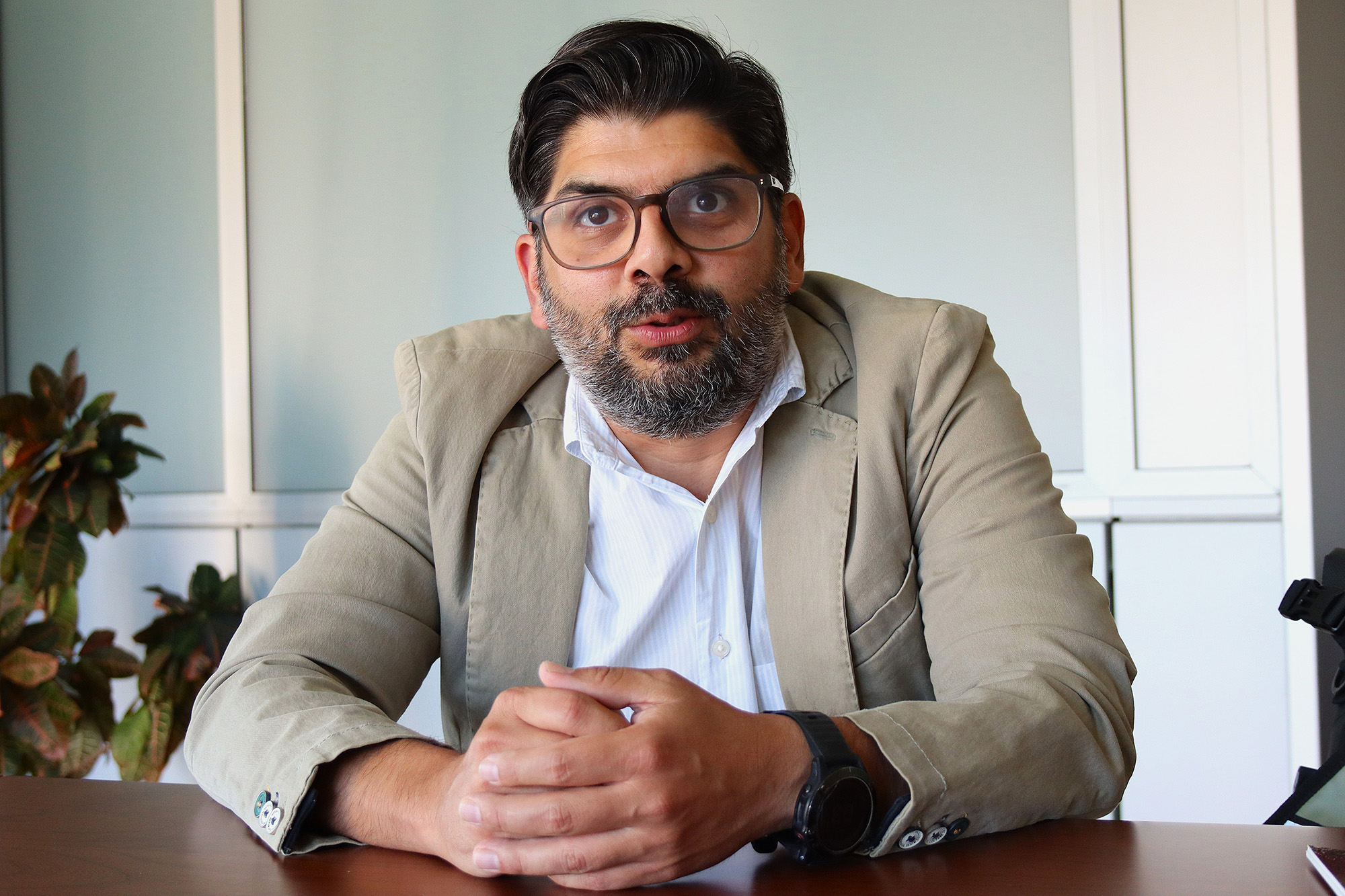
Julián Palomino-Doza: Radcliffe Department of Medicine, University of Oxford
Dr. Julián Palomino-Doza is a cardiologist specializing in cardiovascular genetics and non-invasive cardiology. He coordinated the Familial Heart Disease Unit at Hospital 12 de Octubre de Madrid until 2025. He is currently a Senior Clinical Researcher and Honorary Cardiologist in the Inherited Cardiac Conditions Unit of the Department of Medicine at Oxford University, as well as a researcher with CIBER-CV. Trained in Colombia, the United Kingdom, and Spain, he has developed an outstanding career in the field of inherited cardiovascular diseases. His research focuses on the relationship between genetics and cardiovascular disease.
- Your career has taken you from Colombia to becoming a leading figure in genetic cardiology. What has that journey been like?
I wouldn’t say that I’m an international reference in genetic cardiology. Throughout my journey, the key driving force has been curiosity. I’ve always been curious about what lay beyond my immediate surroundings, and that curiosity was nurtured from a very early age. In their own ways, both my parents were agents of major change despite coming from very small towns. My mother was the first female civil engineer in her region and the first woman from her community to attend university. The constant message in our family was that there was always something more to discover.
I left what was then a very small town for Bogotá on a scholarship. Later, another scholarship took me to England, and eventually I came to Spain to train in clinical cardiology. In fact, I came to cardiology through genetics rather than the other way around, which is the more common route. I was interested in the genetics of the cardiovascular phenotype, so I trained as a geneticist before becoming a cardiologist. Once I had both sets of skills, the natural next step was to work on the genetics of cardiovascular diseases, particularly monogenic disorders.
That entire journey has led me to ask questions, open doors, move between places and countries, and establish research projects. More than being a reference, I see myself as someone who has accumulated a certain amount of knowledge in a very specific area of medicine that I have always loved.
- I read that during your year of social service in Colombia you practiced medicine in settings marked by conflict and extreme poverty. What lessons from that period still influence your clinical practice today?
Colombian physicians cannot be separated from their context. I trained at a time when medicine was geared toward addressing health problems in underserved settings. Our education was strongly clinical and generalist because we had to respond to a reality marked by serious challenges in healthcare access and public health.
I carried out rural medical work near the rural areas of Norte de Santander and also worked in Bogotá, in the Samper Mendoza district, an area affected by displacement and social exclusion. It was during the height of the conflict, and I treated paramilitaries, guerrilla fighters, homeless individuals, and displaced populations.
All of that was part of my life and of what I enjoyed doing. In fact, when I spent four years in the laboratory during my PhD in England, I missed clinical medicine enormously. That is why I returned to it. During that time, I came to understand something fundamental: no research question makes sense unless it is rooted in a patient need.
One of the mistakes researchers can make is to start with a question, delve ever deeper into it, and end up answering our own questions while forgetting the original problem. What is happening to the patient? What is the fundamental question I want to answer? How can my research help someone experience less pain or achieve a better outcome?
I am a physician by training and by clinical experience, and I view research through the lens of clinical application. I do not believe there could have been any other path for me.
- For more than a decade you led the Familial Heart Disease Unit at the Hospital 12 de Octubre. How has the diagnosis and management of these conditions evolved over the last ten years?
Completely. The transformation has been enormous, largely thanks to genetics, which has provided tools that allow us to assess prognosis more accurately, monitor patients more effectively, and deliver better treatment. Most importantly, however, these tools have transformed precise diagnosis, family counselling, and disease characterization from molecular findings.
The early 2000s saw the emergence of next-generation sequencing technologies. The ability to generate vast amounts of data at very low cost has completely changed the landscape. The first Human Genome Project cost billions of dollars and required dozens of centers worldwide. Today, a genome can be sequenced for a tiny fraction of that cost.
Our capacity to generate, manage, and analyze data has grown exponentially. This has greatly expanded access to genetic testing and has been accompanied by an enormous volume of research that has provided many answers.
Cardiovascular genetics is a relatively young field. In the 1990s we knew very little about the genes responsible for these diseases. Thirty years later, we have identified most of the major genes involved in cardiomyopathies and understand these conditions far better.
- Genetics is transforming cardiology. Which advances do you consider most promising?
The ability to access genetic information and interpret it within its clinical context has been revolutionary. We can now interpret results more accurately, provide better counselling to families, and make more precise clinical decisions.
In addition, research is enabling us to move toward new therapeutic strategies, including gene therapy, which represents one of the most promising areas for inherited diseases.
- In your lecture, you discussed the CureHeart project and gene therapy for inherited cardiomyopathies. Are we witnessing a paradigm shift?
Yes. CureHeart emerged from a major initiative funded by the British Heart Foundation. My supervisor, Professor Hugh Watkins, brought together some of the scientists involved in identifying the genes responsible for these diseases, alongside experts in gene editing and gene therapy who had already achieved advances in other conditions.
The goal is to develop gene therapy technologies for cardiomyopathies, using hypertrophic cardiomyopathy as the initial model.
This condition alone affects approximately one in every 500 people. If we consider all cardiomyopathies together, the prevalence is about one in 250 individuals. So while these are often regarded as rare diseases, collectively they are relatively common.
- Alongside its opportunities, gene therapy also raises risks and challenges. What are the main obstacles?
There are many different gene therapy strategies, and each carries distinct risks. Some approaches use viral vectors, which can trigger immune responses and other adverse effects.
I think there is a strong awareness within academia of the need to balance risk and benefit. Certain therapies may be appropriate for very severe diseases, while others aim to be safer and more scalable for larger patient populations.
One of the central ideas behind CureHeart is precisely to develop safer strategies. That is why we are working with inhibitory molecules that have more favorable safety profiles and may enable therapeutic approaches applicable to a broader population.
- If you could convey a single message to patients and families living with an inherited heart condition, what would it be?
Genetics is allowing us to understand these diseases as never before. We are diagnosing them more accurately, understanding risks more clearly, and developing new therapeutic strategies.
The important message is that knowledge is advancing very rapidly, and that progress is focused on improving the lives of patients and their families.
- You combine clinical practice, research, and teaching. How do these three roles enrich one another?
Clinical practice shows you which questions matter. Research attempts to answer them. Teaching forces you to keep your knowledge up to date and pass it on to the next generation.
For me, all three activities are deeply interconnected and mutually enriching.
- You have supervised and mentored numerous residents, students, and researchers. What qualities do you consider essential for young professionals?
Curiosity. Always curiosity. Also, the capacity for hard work and the willingness to keep asking questions.
But above all, it is essential never to lose sight of the patient. That must always remain the starting point.
- Away from the hospital, you play tennis and the saxophone. What role do these interests play in your life?
Tennis is a love-hate story. I played almost every day from the age of five until I was seventeen. I competed extensively, but it is a psychologically demanding sport, and at that time no one taught us how to manage frustration.
After losing an important final, I stopped playing for twenty-five years. Later, a friend encouraged me to return, and I discovered that tennis was still there waiting for me. When my son was born, I felt tennis was the sport I most wanted to pass on to him because it had taught me discipline, resilience, and tolerance for frustration.
Music has always been part of my family. I joke that I come from a family of musicians and that, since I was the least talented, I had to become a doctor. Everyone played an instrument. I am passionate about jazz and blues, which is why I took up the saxophone. I even have a quartet, and we occasionally perform concerts.
- And where do you find the time to do it all?
I don’t know. I get up every day at five in the morning. By the time most people begin their working day, I have already answered emails, reviewed data, and organized a significant part of my workload.
I owe that to my mother. When I was a child, she taught me to organize my time into 45-minute blocks. I had two 45-minute study periods separated by a 15-minute break. Whatever I failed to do within that time was my responsibility.
I have lived that way ever since. I work in 45-minute blocks: studying, writing, analysing data, playing the saxophone, or exercising in exactly the same manner. By the end of the afternoon, I feel that I have already accomplished a great deal. I have my mother to blame for that.