Circulation: A study led by Spanish scientists identifies dilated cardiomyopathy patients at greater risk of sudden death and arrhythmias[


The findings could help more precisely identify candidates for a preventive implantable defibrillator
An international study has identified new markers that substantially improve risk stratification for severe ventricular arrhythmias in patients with non-ischemic dilated cardiomyopathy, one of the leading causes of heart failure and sudden death. The research was led by investigators at the Centro Nacional de Investigaciones Cardiovasculares Carlos III (CNIC) and the Department of Cardiology at Hospital Universitario Puerta de Hierro Majadahonda, a public hospital in the Community of Madrid.
The study, conducted in a cohort of 925 patients from 22 hospitals in Spain and the Netherlands and published in Circulation, a journal of the American Heart Association, shows that combining genetic information with advanced cardiac MRI techniques predicts arrhythmia risk far more accurately than the criteria currently used in clinical practice. The findings could help more precisely identify candidates for a preventive implantable defibrillator.
Until now, the decision to implant a defibrillator to prevent sudden death has been based mainly on left ventricular ejection fraction, a parameter that reflects the heart's pumping capacity. However, this criterion has major limitations and does not adequately identify patients at risk of arrhythmic complications. In the study, close to half of the arrhythmic events occurred in patients whose cardiac function was above the threshold below which patients are considered high risk.
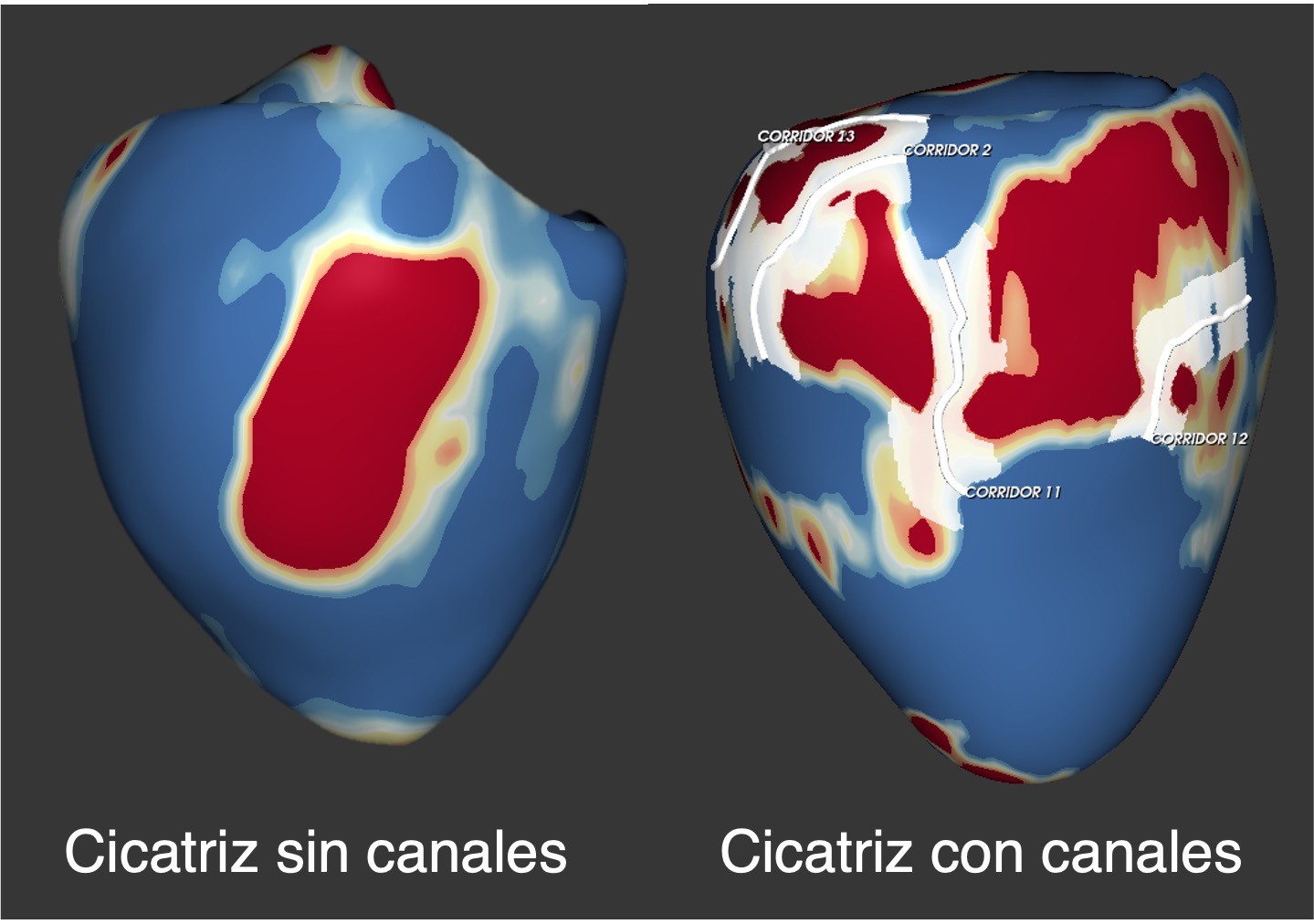
The study evaluated the characteristics of cardiac fibrosis detected by late gadolinium enhancement MRI, a technique that identifies scar tissue in the heart muscle. The researchers analyzed a feature that had been little explored in this disease until now: the presence of “slow-conduction corridors” — narrow pathways of healthy tissue within areas of fibrosis that can give rise to the abnormal electrical circuits responsible for ventricular arrhythmias.
The results show that a greater number of these corridors is independently associated with the occurrence of severe arrhythmias. Risk was especially high in patients with four or more corridors detected using advanced image-processing techniques.
The study also confirms the importance of certain genetic variants already considered high-risk, particularly in patients who do not yet show detectable fibrosis on MRI.
Based on these findings, the researchers developed an algorithm that combines all three elements: the presence of fibrosis detected by MRI, the number of conduction corridors, and the presence of high-risk genetic variants. This model classified patients into different levels of arrhythmia risk and clearly outperformed the predictive power of the traditional criterion based on cardiac function alone.
The results show that the low-risk group had an annual rate of arrhythmic events below 1%, whereas the rate for patients classified as high-risk exceeded 7% per year.
The study also highlights that this strategy could help avoid unnecessary defibrillator implantation in patients at low risk of arrhythmias while, at the same time, identifying other patients who currently might go unnoticed despite being at high risk of sudden cardiac death.
"These results reinforce the need to move toward a personalized risk assessment in dilated cardiomyopathy, integrating clinical, genetic, and advanced cardiac imaging information into decision-making," say Dr. Jesús González Mirelis and Dr. Pablo García-Pavía, cardiologists at Hospital Universitario Puerta de Hierro de Majadahonda and researchers at CIBERCV and the CNIC, who led the study.
"Although these findings will need to be confirmed in future studies and clinical trials, this work opens the door to new strategies for improving the prevention of ventricular arrhythmias and sudden cardiac death in this patient population," concludes Dr. Noemí Ramos, a cardiologist at Hospital Universitario Puerta de Hierro Majadahonda and the first author on the study.
This study was funded by the Instituto de Salud Carlos III and by the HORIZON-EIC-2022-PATHFINDERCHALLENGES 01 "CARDIOGENOMICS" call, under the European Innovation Council (EIC) Horizon grants of the European Commission (DCM-NEXT project).