Dr. Casey Gifford: "One goal in my lab is to define when there’s a genetic cause, so we can do better risk assessment"


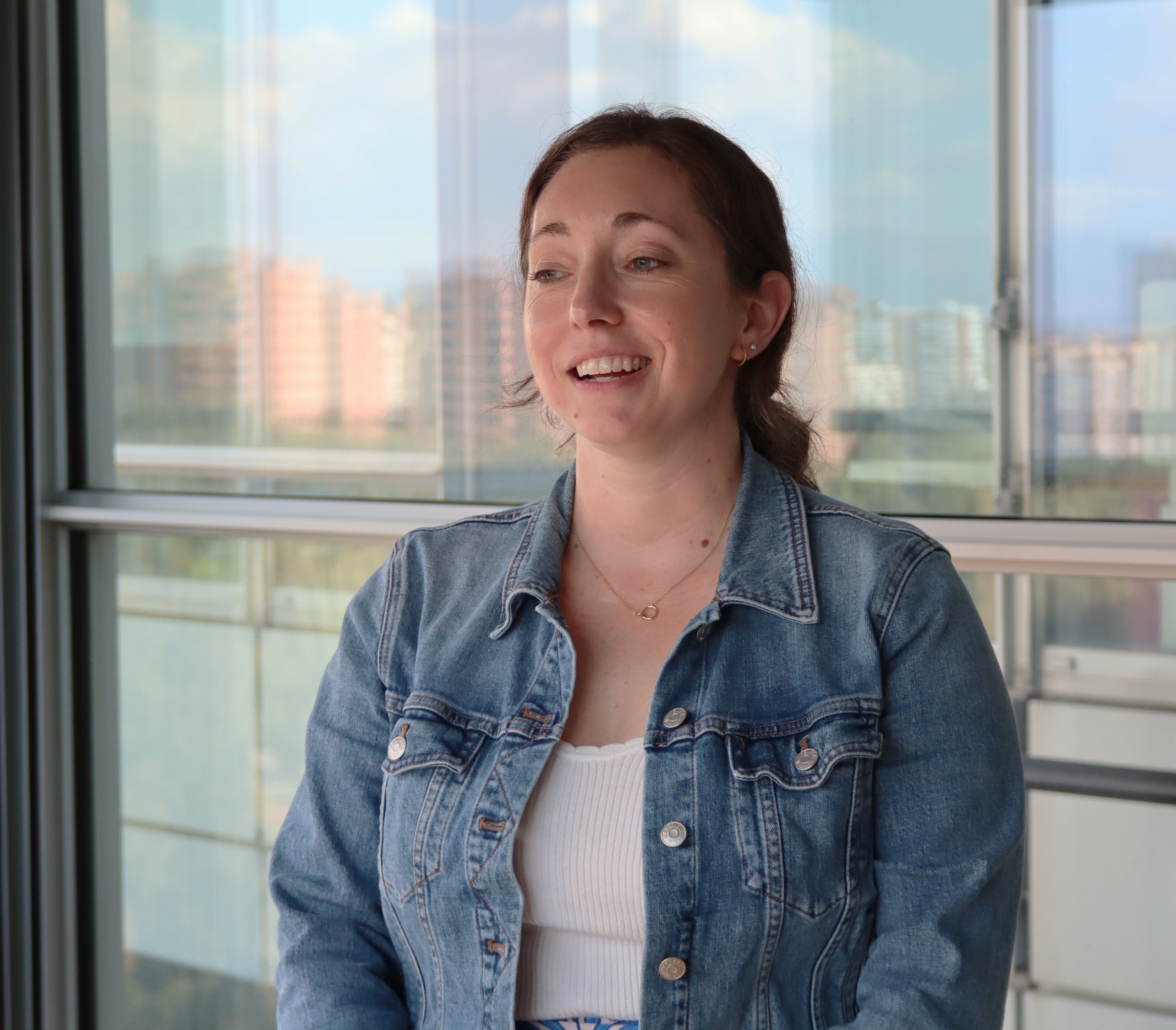
The laboratory of Casey Gifford, Assistant Professor of Pediatrics and Genetics Stanford University School of Medicine and Akiko Yamazaki and Jerry Yang Faculty Scholar in Pediatric Translational Medicine Stanford Maternal & Child Health Research Institute, studies how coordination between multiple cell types guides the early development of the heart, one of the first organs to form. Disruptions in this process can lead to congenital heart disease (CHD). Gifford seeks to identify the genetic and molecular mechanisms that govern this development and how their disruption leads to disease, with the goal of advancing personalized medicine for patients with CHD and comorbidities such as autism. Her team uses cardiac organoids to model the interaction between cell types, investigates the genetic relationship between cardiac and brain development, and uses large-scale CRISPR screening to discover genetic interactions that influence complex heart defects. These strategies reveal both overlooked monogenic causes and combinations of variants that together contribute to severe cardiac malformations.
- Your laboratory integrating artificial intelligence (AI) and stem cells to identify the genetic causes of congenital heart disease
So the first hurdle we have to overcome for understanding the genetics is we actually have to understand all the places in the genome that are used during heart development. And that is really hard to do using traditional statistics and computational approaches. And so we have turned to using AI to disentangle all the complicated changes that are happening in the gene regulatory landscape during differentiation. Because AI models, and in particular these deep learning models, they can sift through all this data and pull out patterns a lot better than some of the more traditional approaches to understanding this data.
- Do you have designed any specific AI to do that?
No, so I am not a computer scientist by training. I am not a clinician. But my research is focused all on the heart. I'm not a tool developer. Some people love developing tools, whether they're computational or experimental. I'm much more of a question person with my question being, why does this child have congenital heart disease. But I love taking advantage of the tools that other people make. And so I teamed up with a computer scientist who developed this AI model called ChromeBPNet, which is able to learn regions of the genome that are important for gene regulation. He developed the computational model and then I developed and adapted a stem cell model and then we worked together on it collaboratively to try and use the ability of AI to sift through all these patterns much more quickly and efficiently than we would have been able to do otherwise. We can actually learn how the differentiation of all these cells is working and then why it's going wrong in development in the context of congenital heart disease.
- Do you have any results with this model?
We've uncovered a number of non-coding regulatory regions of the genome that we believe are important for development using this AI model for development in general, for the heart. And that's important because if you then want to look in the non-coding region of the genome for mutations that cause disease, this AI model, integrated with our stem cell model, helps narrow your search space. It's like shining a flashlight on the area where you should look for mutations when you're trying to understand disease. We have a few examples of that where we have identified regions that this model predicts are important, and then we've found mutations in patients in those regions that the model has said are important. That's important because it's, again, helping us uncover the genetic causes of this disease, for which we have very few. And that's really the first step to developing therapeutics because there's no therapeutic options for these kids.
- And with this approach, can you prevent or diagnose these diseases before the disease has developed?
That would be one goal. And usually when I tell people I want to prevent it before it develops, they kind of laugh at me because they're like, well, the heart develops before a woman knows she's pregnant. And so from that perspective, it sounds like it would be really hard to prevent these defects. Because that's when the heart develops and that's when we think disease starts, it is really in the first month of pregnancy or gestation. But I think we can prevent it based on this idea that some of the genetic causes of congenital heart disease are inherited from healthy parents. I think that if we sequenced a healthy person's genome and we said, aha, you have this mutation that isn't sufficient for disease on its own, that's why you're healthy. But if it's inherited by a child or a baby that has other mutations, then there's a high likelihood there'll be disease. And that comes, so I guess to work my way backwards, we think that congenital heart defects are caused by a combination of mutations. Some of them are inherited from healthy parents. Some happen de novo during development. And so at least if we could identify those that are inherited from a healthy person, we could develop therapeutics that mitigate whatever that mutation does.
And when a woman, if we sequence your genome and we say, when you're ready to have kids, you have a higher risk of having a kid with this disease, the way we already do this, we do this for a number of different mutations, cystic fibrosis, Tay-Sachs, people get sequenced and you're told you're at high risk. There's no therapeutics in those cases either to prevent, except IVF. So you can screen embryos that way. But in our case, I think that we could develop a therapeutic that a woman could take prophylactically while she's trying to get pregnant. And so this approach would only work in a planned pregnancy setting, but I think we could develop a therapeutic a woman could take, and it would rescue whatever mutation puts her at high risk, and then we could prevent at least serious disease. Some people think that's crazy, but we already do that. Because when women want to have children, they're told to take a vitamin with folic acid. And that extra folic acid helps us avoid spinal defects. It's the same idea. There's no harm in having too much folic acid. So that shows that if we, but we just, we don't know what the folic acid is for congenital heart disease. If we did, I think that's proof that we could find a way to mitigate it. So that's our goal, is if we understand the genetics, especially this inherited component, then we could develop therapeutics for women to use when they're trying to get pregnant. And we would at least be able to say, you're at high risk of having a child with a congenital heart disease, whereas other people are at lower risk. It all starts with just understanding the regions of the genome that are important for the heart to develop. We can't do any of this if we don't actually pinpoint all the places in the genome. And that's where this model, this AI model comes in. Because we can't search the genome very efficiently using traditional approaches. We have to be able to use these higher throughput complex systems.
- But you must do this genetic test for all mothers before they have children.
Yes.
- So that's… I think that's unusual.
Maybe or maybe not. I mean, I think everyone, most people are having their genome sequenced now at some point during care. I guess in the United States at least.
I think it will be commonplace everywhere in the not too distant future. It assumes we're all going to have our sequence, our genome sequenced, and we're going to know that there are certain genes or regions of the genome that put you at high risk. And if you have them, the other way to think about it is, which makes it a little more economic, is that there are a couple of pathways that are really critical for heart development. And congenital heart disease probably arises from perturbations to these few pathways. The genes and the mutations that cause those perturbations all converge on the same pathways. But the genes and the mutations themselves can be different, but they're all affecting the same pathways. They're converging on one spot. I think if we knew that one spot, that one convergence, we can also target that therapeutically. Then we don't need to worry about the specific mutation in all these different individuals. We can kind of group them into pathways, even, like all these individuals that have mutations that affect this pathway, this convergence point can take this one therapeutic. Whereas this other group can take this other one. So that's my life goal. I'm sure it'll take my entire career.
- What kind of therapy are you thinking of? Gene therapy??
No, because this would be in zygotes, and so I think gene therapy would be hard. I mean, although IVF will probably always be an option, in which case then gene therapy would work. And then it wouldn't have to be a prophylactic thing. Then if you spontaneously or randomly become pregnant unplanned, then it would still be applicable. But I think that there's a lot of different ways to deliver biomolecules to the baby. Although I think that's still something that's being worked out. If you're trying to treat a baby in utero, what's the most effective delivery vehicle? Lipid nanoparticles, some sort of biocapsid. I don't think that’s clear yet. So for us, I have to wait for those tool developers. There's a bunch of people developing those tools. And then once they develop those tools, I will have an answer for congenital heart disease, and then I will love to work with them on that..
- You also studied the relation between cardiovascular, heart diseases, and brain diseases.
If you're diagnosed with congenital heart disease, there's a very high likelihood you'll be diagnosed with neurodevelopmental delay. And that's like congenital heart disease, which is an umbrella term for a lot of different defects, neurodevelopmental delay is an umbrella term for defects or phenotypes like autism and ADHD, and now includes Asperger's, and also a broad spectrum, which is speech delay. Lots of different phenotypes fall under the umbrella. And for a long time, people thought that these diagnoses in kids with congenital heart disease were secondary. So the first reason could be that kids with severe disease spend the first few years of their life in a hospital. And so they just don't have the socialization. And some people thought that was the problem. Another hypothesis was that if you have a heart defect, in utero or postnatally your heart's not working effectively, maybe the brain’s not getting enough oxygen. So the neurodevelopmental delay could be secondary to the heart defect. But a couple of years ago, groups identified genes and mutations in kids with congenital heart disease that were previously associated with neurodevelopmental delay. Those kids had neurodevelopmental delay and no congenital heart disease. That suggests a shared genetic cause between congenital heart disease and neurodevelopmental delay. One goal in my lab is to define when there’s a genetic cause, so we can do better risk assessment. This is meaningful because early intervention is really helpful. If we can sequence a baby’s genome at birth and find mutations affecting both heart and brain, we can get help early.
- I’m not sure if it’s appropriate to ask about U.S. funding at the moment.
The NIH isn’t issuing any new grants at the moment. No new funding is being provided, in part because the government is shut down. If you already have a funded grant, you can continue spending that money, but no new funds are being distributed. What’s most frustrating is that the federal government and the current administration keep coming up with these radical ideas to “reform” NIH or government funding — ideas that are supposedly meant to improve scientific rigor but really make no sense and don’t benefit scientists. Often it feels like it’s driven by greed: the money isn’t meant for supporting science, but for other purposes. I will admit, the NIH RO1 review system in particular does tend to favor incremental science, and I agree that some change is needed. We need more support for high-risk, high-reward research. I also agree that reproducibility is an issue in some areas of science. But the solution isn’t to slash funding or suddenly cut paylines from 18% to 2%. That would just drive talented scientists out of the system. Similarly, making H-1B visas prohibitively expensive undermines our ability to recruit top international talent, which is exactly how U.S. science has become so strong and successful, by attracting brilliant minds from around the world. Reducing funding or access to talent is not the answer, and it’s incredibly frustrating to see these obstacles placed in the way of scientific progress.
- Dou you think this situation could have any impact in the scientific progress in the US.
Absolutely, absolutely. One example is with postdocs who come to the U.S. Many start on a J-1 visa and eventually plan to transition to an H-1B. Now, we’re being told that postdocs who have already been in the U.S. for two or three years — who have moved from around the world and invested time in their projects, their teams, and their careers — would face a $100,000 cost to obtain this visa. They simply don’t have that kind of money. These postdocs are fully invested in their work, but now they may have to leave. No institution has the resources to cover everyone in this situation. This isn’t just unfortunate; it’s devastating for them. They would have to start over elsewhere, losing continuity in their research and potentially derailing their careers. It’s not only a loss of potential new talent, it’s also the loss of the talent that has already committed to the U.S. scientific system. This is going to have a negative impact on everyone: the individuals, the labs, and ultimately the scientific progress in the country.