Dr. Femke van Nassau: “We know that every movement counts—every step counts"


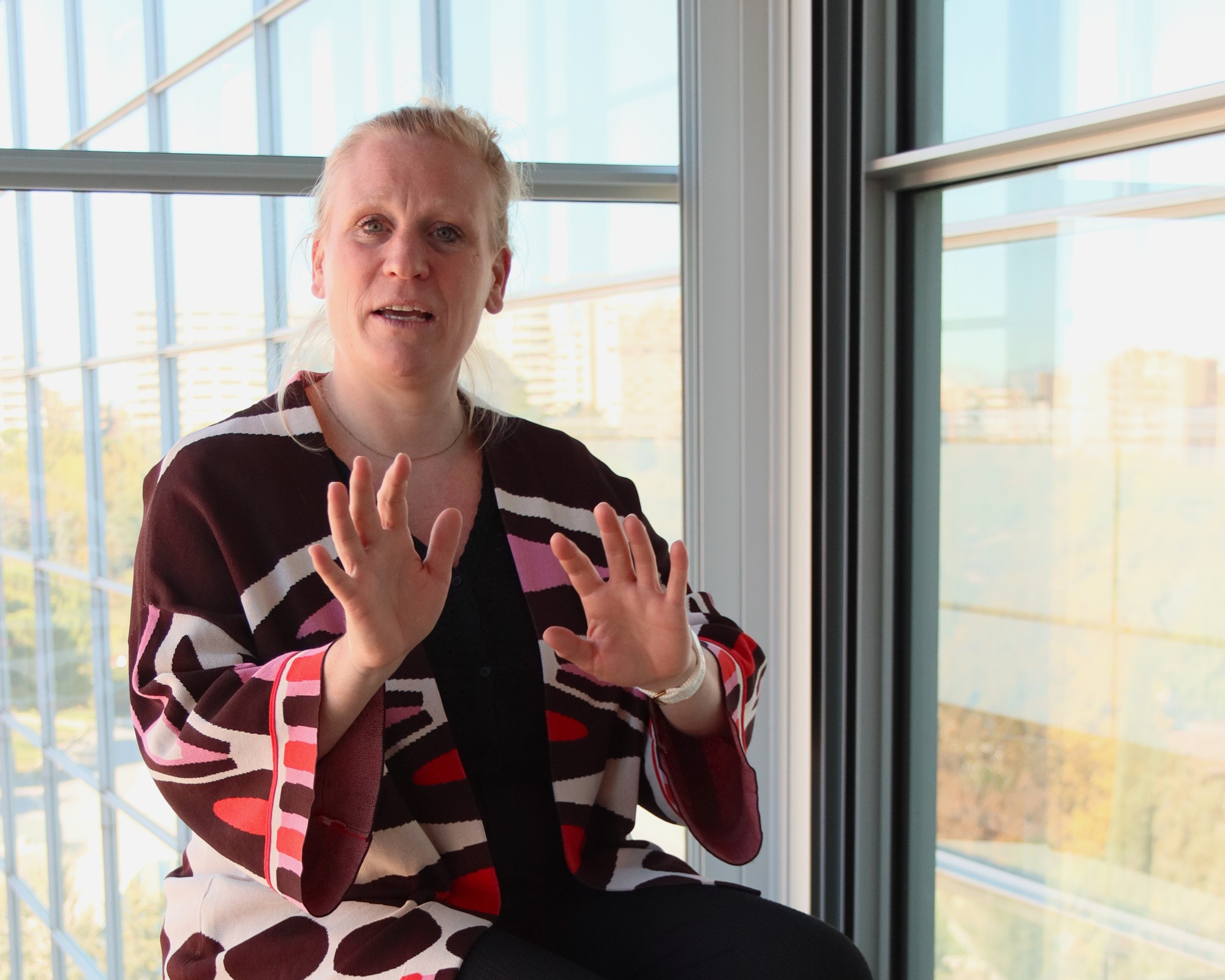
Dr. Femke van Nassau: Department of Public and Occupational Health and the Amsterdam Public Health Research Institute at Amsterdam UMC, the Netherlands.
Dr. Femke van Nassau is an implementation scientist at the Department of Public and Occupational Health and the Amsterdam Public Health Research Institute at Amsterdam UMC. Since completing her PhD in 2015, she has focused on bridging the gap between science, practice, and policy. She leads a research group, has published over 80 peer-reviewed articles and two book chapters, and has secured more than €3 million in competitive research funding. Her work centers on three pillars: implementation science, including scaling up interventions, understanding implementation mechanisms, testing strategies, and conducting process evaluations; developing, implementing, and evaluating lifestyle interventions in schools, communities, workplaces, football clubs, and hospitals; and measuring physical activity in national and international projects. She founded the Amsterdam Center for Implementation Science (AmsCIS) and co-founded the Netherlands Implementation Collaborative (NIC) and the Sport and Exercise Implementation Network (SPIN). She also serves as an advisor to researchers seeking to strengthen the implementation components of their projects. As an educator and mentor, she has supervised more than 60 Bachelor’s and Master’s students and currently supervises 10 PhD candidates. Through her combined leadership, research, and education efforts, she is advancing the field of implementation science and training the next generation of professionals.
- What exactly is physical activity, and how much physical activity is recommended?
Physical activity is any form of movement you do; it could be walking, exercising, or even gardening. Being busy with your body and making sure you’re active, that’s physical activity. We look at different contexts of activities: how you’re active at work, at home, or maybe how you commute. I remember collaborating on the PEASA-TANSNIP Project here at CNIC in Madrid, and I had a bike, so I would cycle to CNIC. And yes, that’s also a form of activity. It depends on the person, whether you are really active or less active. The WHO, the World Health Organization, has guidelines that say you need to be active for at least 150 minutes per week, which translates to about 21 minutes a day. That could be moderate to vigorous activity. It’s not really slow walking, but something a bit more intense. However, we see that many people do not meet those recommendations. We use cars, we sit in offices, and we take the elevator instead of the stairs. So, there are a lot of programs or initiatives being organized to make people more active and to help as many people as possible meet the physical activity guidelines.
- You mentioned things that you can do every day without any effort — like taking the stairs, walking on the street, or riding a bicycle. But when people think about physical activity, they usually think about something you have to do in a sports center or gym. So how can these programs convince people that there are other ways to improve their health without going to a gym?
I think the WHO framed it in their guidelines: 150 minutes of moderate to vigorous activity. But now they also say every movement counts, every step counts. That’s changed over the years. We know that people who are not active, if they move just a little bit more, have the most health gain. People who are already active and become even more active also benefit, but not as much. So, the message now is if you’re not active at all, at least try a little. Try to walk a bit for example.
In our programs or campaigns, we try to make people aware of what physical activity is — that it’s not only going to the gym or cycling on the road, but that every form of activity counts. Even dancing, playing with kids, or working in the garden are forms of activity. In lifestyle programs, we often ask people to monitor their behavior at the start — maybe with a questionnaire or an activity tracker — and then we look at what their current level is, what the recommendation is, and what’s possible for them to move a bit more toward the recommendation.
For some people, it’s going to the gym. For others, it’s walking daily with neighbors, playing tennis, or taking the stairs. Some people already have active jobs, so we discuss what’s possible in their situation. I think it’s important to leave autonomy with people but help them understand where they are now, what the recommendation is, and what small steps they can take.
- I don’t know if there are any numbers about physical activity in the Netherlands. Do you have any?
In the Netherlands, about half of adults are not meeting the physical activity guidelines. We cycle a lot. But now we have a lot of electric bikes, which also influences things. Still, not everybody cycles. If you live in the city, many people take the metro or subway. If you live outside the city, people often take the car.
So yes, we cycle a lot, but it’s still hard for people to meet the recommendations — especially because the guidelines refer to moderate to vigorous activity. If you only take a brief, slow walk, you’re not adding many minutes to your weekly total. That’s why the WHO changed its approach to “every movement counts.” Even small increases in movement improve your health, but it takes time to reach the full physical activity guidelines.
- How do you measure people’s physical activity? You mentioned trackers and devices.
There’s a difference between people monitoring their own behavior and researchers measuring it. For personal monitoring, activity trackers — even simple ones — can give step counts, which is good feedback. For research, we use validated questionnaires asking people about their average day: how much they walk, how much vigorous activity they do, etc. Or we use devices.
For example, in one study, we used a device people stick on their leg for a week. It records all movements and accelerations, and later we analyzed the data to see if their activity changed after participating in an intervention. We know that questionnaires tend to overestimate how much people exercise and underestimate how much they sit. Devices give a more accurate estimate — but they’re more expensive and sometimes intrusive, so not every study can use them.
- What kind of program works best? Should we have personalized programs in the future; one program for each person?
We’ve developed many programs - in communities, sports clubs, hospitals, schools, and workplaces. I think each program should include key ingredients for behavior change. That means monitoring your behavior, comparing it to the guidelines, setting a goal, working toward that goal, and reflecting on your progress. That’s essential.
This can also be done in group programs. For example, we had a successful project in professional football clubs: a group-based program.m Everyone looked at their data, discussed it, and set personal goals. Coaches were trained to give individual support. Another project is PESA-TANSIP here in Madrid; we offered office workers one-on-one coaching with psychologists using motivational interviewing. It worked very well, people loved it. But when the coaching stopped, many returned to their old habits. That’s the challenge with all lifestyle interventions: if new behaviors don’t become habits, it’s hard to maintain them after the program ends.
- What is the best age to promote physical activity?
I think it’s important to promote amongst all ages, but with different focuses. For preschoolers (ages 0–4), it’s about developing motor skills and involving parents to create awareness. In schools, it’s important to include sport activities, develop motor skills, and help kids try different sports so they can find what they like. Not everyone loves football or hockey, some might enjoy something else. It’s also about experiencing the fun of being active.
Teenagers are different. They want to make their own decisions. When they move from primary to secondary school, a lot changes, and many stop doing sports. So that’s another key moment. Then as adults, when you start a family or get older, priorities shift, staying active helps maintain health and energy. Across the lifespan, promoting physical activity is always important, but the focus and motivation change depends on age and context.
- Maybe the problem isn’t just governmental, it’s educational. How can we change that? What kind of program could help?
There are different opportunities: personal, social, and governmental. Family and friends play a role-model function, but so does the environment. Governments can help make environments more inviting and active by making the active option the easy, default choice. We’ve moved from focusing only on individual behavior change to considering the whole context, including the “obesogenic” environment.
In the end, we need all three levels: individual interventions, social support, and environmental or policy changes. It’s a long process. Not all political parties prioritize prevention, but sometimes companies or communities take initiative. For example, in the Netherlands, some companies fund playgrounds in low-income neighborhoods, providing free activities for kids and training local youth as role models.
Still, it’s challenging. We often have evidence-based interventions that work, but they’re not implemented in practice. What works in the Netherlands might not work in Spain without adaptation. Even within Spain, what works in Madrid might not work in Huesca. Part of our research now focuses on implementation; how to make sure what works in theory is actually used in real life.
- One of the challenges you mentioned is that programs have a beginning and an end. So the problem continues after the program. Have you found any solution to that?
It’s not cost-effective to keep running programs forever. So we usually work with participants toward the end of the program to think ahead: What will you do after this? Sometimes the group continues on their own. Others find new options like joining a gym or a walking group. But we have to make people aware that, for example, a 12-week program is just the start, they need to plan what comes after.
- And what about medical doctors? Because physical activity can work like a treatment.
Yes, we’ve done projects on that, part of the Exercise is Medicine movement. We know exercise works, but when we asked doctors why they don’t prescribe it, they said: “I don’t have enough knowledge about physical activity. I’m not sure how to talk about it with patients. If someone comes in with an ear problem, it’s strange to start talking about exercise.” They also said: “If I start that conversation and the patient isn’t motivated, I don’t know what to do next or what local options exist.”
So, we developed the idea of a lifestyle broker in hospitals. When doctors see certain risk factors — smoking, high BMI, etc. — they refer the patient to a lifestyle broker. The broker is trained to motivate people and knows what options are available nearby. That way, the doctor’s role is just to identify and refer. It’s working well so far, and we’re evaluating its cost-effectiveness. It looks promising.
- And what about electronic devices? Are they useful for people?
It depends on the person. We had a project where participants received coaching and activity trackers. Some loved the tracker; some didn’t like it at all and preferred the personal coaching. Some people used it only at the beginning to understand their behavior and then stopped. Others, like me, enjoy tracking every day. So, we always say behavioral change is like a toolbox. The tracker is one tool, it works for some people, but not for everyone.
For example, personal coaching, setting goals, having supportive people around you, learning what a healthy lifestyle is, and knowing what opportunities exist in your area. We provide different tools, but not every tool works for everyone. Some people only need the tracker; others just need social support. Some buy a dog and walk every day, that’s what works for them. So, there’s no one-size-fits-all solution. Even in group programs, you can help many people by seeing what tool from the toolbox works best for each.
- What should the role of the government to promote or facilitate physical activity?
Governments should know what programs exist, which ones are effective, and promote those. They should raise awareness among citizens and clinicians and also improve the built environment, making active choices easier. There’s no single solution. But if policymakers make physical activity a priority, there’s a lot of room for improvement and visible progress.
In the Netherlands, depending on the municipality, the government supports low-income families to be more active. But not everyone wants to go to the gym. So, instead of investing only in gyms, it’s good to also invest in playgrounds and free community activities for children. People with less money are often in poorer health, so governments should focus support on those groups.
- Since most people live in big cities, what’s the responsibility of city planners and designers to make physical activity easier?
I think when municipalities build new areas, they should invite physical activity experts to be part of the planning. When I visit places, I always notice if there’s a cycle lane or a playground. So it’s good to have people with that perspective in the design team. For example, in many buildings like here in CNIC, it’s easy to find the stairs, which encourages use. But in hotels, sometimes you can’t find the stairs, you have to ask, and they’re hidden behind a dusty door. There are many small opportunities like that to make the active option the easy option. When designing or renovating cities, it’s important to include people with that active-living mindset.