Robert E. Gerszten: "Blood is like a highway of information"


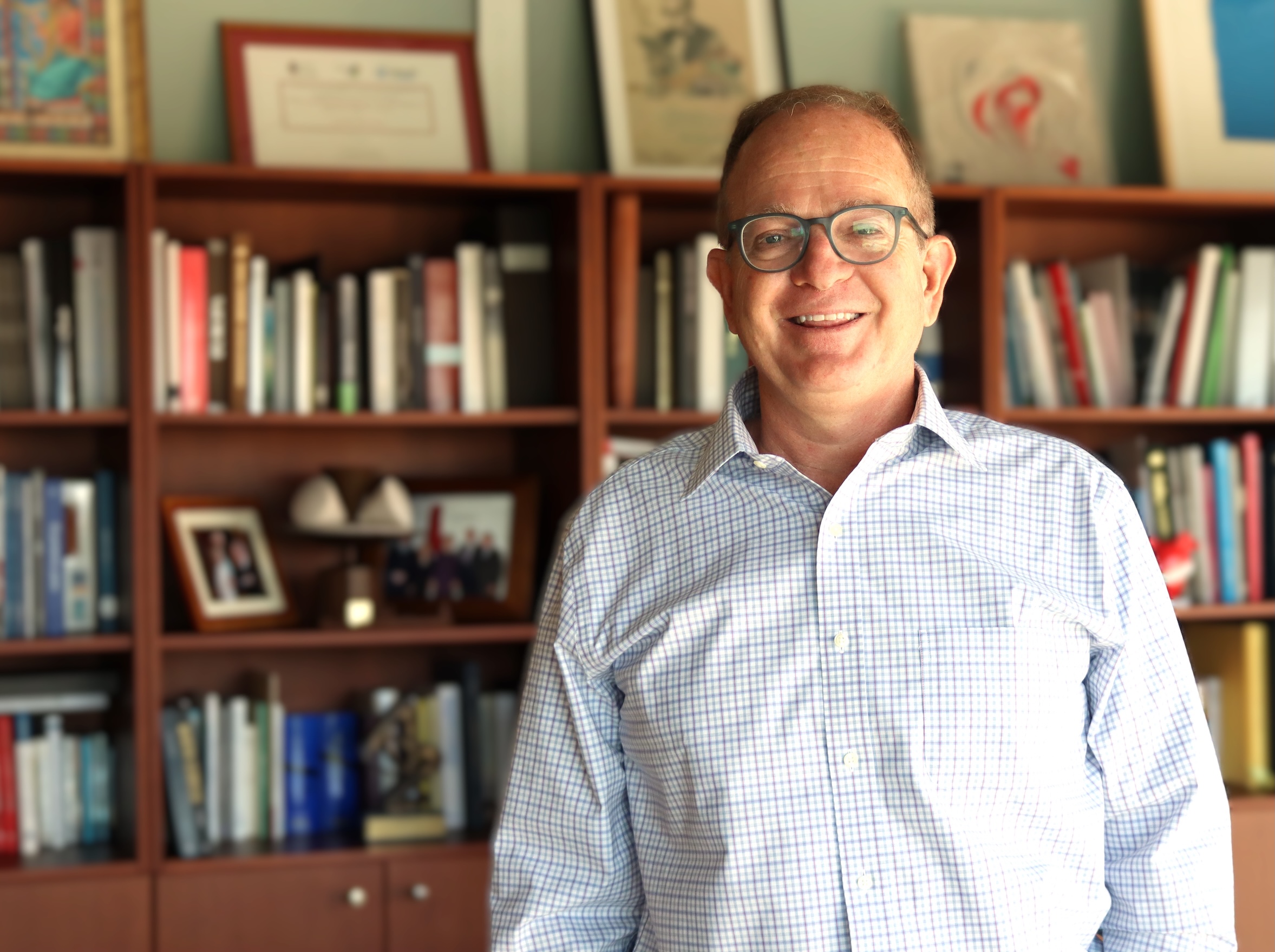
Robert E. Gerszten, MD, is Chief of Cardiology at Beth Israel Deaconess Medical Center, the Herman Dana Professor of Medicine at Harvard Medical School, and a Senior Associate Member of the Broad Institute. His research focuses on the intersection of cardiovascular and metabolic diseases, using metabolomics and proteomics to identify new biomarkers and pathways involved in heart disease. His collaborative work includes major studies such as the Framingham Heart Study, the Jackson Heart Study, and the NIH MoTrPAC exercise initiative.
Dr. Gerszten trained at Johns Hopkins University School of Medicine, the Hospital of the University of Pennsylvania, Massachusetts General Hospital, and the University of California, San Francisco. He has received numerous honors, including the 2019 Silen Lifetime Mentoring Award from Harvard Medical School and the 2024 Paul Dudley White Award from the American Heart Association.
- When you were a child, your father said that you were going to be a very good lawyer. What happened?
I like to argue, but argue in a good way, challenge ideas in a good way. He said, “You’re always arguing.” It’s very funny. But not arguing is just difficult. I like to question things. Questioning things and asking questions. That’s why I like science.
My mother is a social worker, and my father is a pathologist. He’s from Buenos Aires, so I’ve had a lot of inspiration from both of them. My father received a teaching award. He’s a professor in Virginia. So I’ve always had a passion for teaching and education.
And my mother is a social worker, so deep inside I’m a nice person because of my mother. Social workers are trying to cure and help the world. They’re very special people. So that’s my medical background. But seriously, this is a story you should really tell. It’s a true story.
In 1992, I was in San Francisco working in a very basic science laboratory studying platelet biology. I hadn’t started cardiology yet. I was doing a postdoctoral fellowship between residency programs, and I should tell you this at the beginning of my talk. I was going to tell it because it’s true. The best stories are the ones that are true.
I was in a laboratory, and I liked working in the lab a lot. But at that institution, you either did science or medicine. Nobody was doing both. So I went to interview in Boston with Dr. Valentín Fuster, who was at Mass General at the time, and he said, “Rob, you can do both.” And I said, “Wow, this is a place I want to go because I want to try.” Maybe I wasn’t good at either one yet, but I was influenced a lot by Fuster.
I do think there’s a lot that medical doctors can add to research, and of course, in the opposite direction, basic scientists can add to clinical medicine too. We really have to think about the dialogue. And I do think there aren’t many places in the world that foster that sort of collaboration.
- So in some way, Dr. Fuster changed your career.
For sure. For sure. And that’s not made up. That’s completely true.
That interview was in December of 1992, and I joined him the following July.
- And then how many years did you stay with Dr. Fuster?
For two years, and then he went back to New York. But I stayed. I didn’t go to New York. I stayed in Boston because at that time my wife said, “If we move again — San Francisco, Boston, New York...” So I love Dr. Fuster, but I love my wife.
- And then you started your career in Boston, doing both clinical work and research.
Yes. I used to do more clinical work than I do now. I spent about 25% to one-third of my time as a clinical doctor, mostly in the intensive care unit with cardiac patients, and the rest doing research. Now I’m the division chief, so I do more administrative work than I did before.
- Your research often combines cardiology, metabolomics, proteomics, human genetics, and exercise. What originally convinced you that blood-based molecular profiling could transform cardiovascular medicine?
I’m very interested in blood because blood is like a highway of information. We’re very interested, as there are many investigators here at this institution, in how one organ talks to another organ.
If you exercise, you’re running with your legs, but how do you burn fat when you exercise? That’s inter-organ communication. That’s some message being sent from your muscle to your liver and fat tissue to tell them to process glucose and burn fat, et cetera.
That’s why my research touches on many diseases, because so many diseases are about inter-organ communication. Even in heart failure, there’s a lot of data suggesting that peripheral muscle also becomes very ill.
So I’m very interested in this concept. By chance, and a little by design too, our work touches many different diseases.
How do you study all these relationships? What techniques do you use?
The story is that I learned how to do basic science and molecular biology during the first decade of my career. And as you heard in the interview, I like to be a bit of a contrarian. If everybody wants to do X, I want to do Y. So I began to look for technologies that would allow me to study things in an unbiased way. Everybody was studying molecule X, molecule Y, molecule Z. I wanted systems where I could discover new proteins or metabolites important in cardiovascular disease.
To do that, I had to embrace new technologies. That’s why in the early 2000s — now 25 years ago — I became very interested in metabolomics and proteomics technologies, which, by the way, are areas of great expertise at this institution.
I wanted them as an entryway into doing things other people weren’t doing.
We know cholesterol is really important for heart disease, and obesity too. But many people develop heart disease without high cholesterol or with only modest risk factors.
I’ve been very interested in looking at what’s called the residual component of heart disease — the unknown stuff. And to get at the unknown stuff, you have to use new technologies. If you keep studying what everyone else is studying, you’re not going to find anything new.
- And in your opinion, what are the biggest challenges in translating metabolic discoveries into clinical practice and therapies? Because you described metabolism as the proximal reporter of physiology.
We’ve identified a number of molecules that predict who’s going to develop heart disease — specific amino acids, organic acids, and lipids that people hadn’t really focused on before. Where I think this becomes important is when it predicts who’s going to respond to therapy. It’s one thing if I tell you that you’re going to develop diabetes in ten years. What I really need to do is say, “You’re going to respond to this therapy.”
That’s where we are now. We’re applying this approach to clinical trials, and that’s the next and most important step.
We can predict disease now, but prediction alone isn’t enough. If you know genetically that you’re going to develop Huntington’s disease, that’s terrible information unless you can intervene. That’s where we’re trying to move clinically.
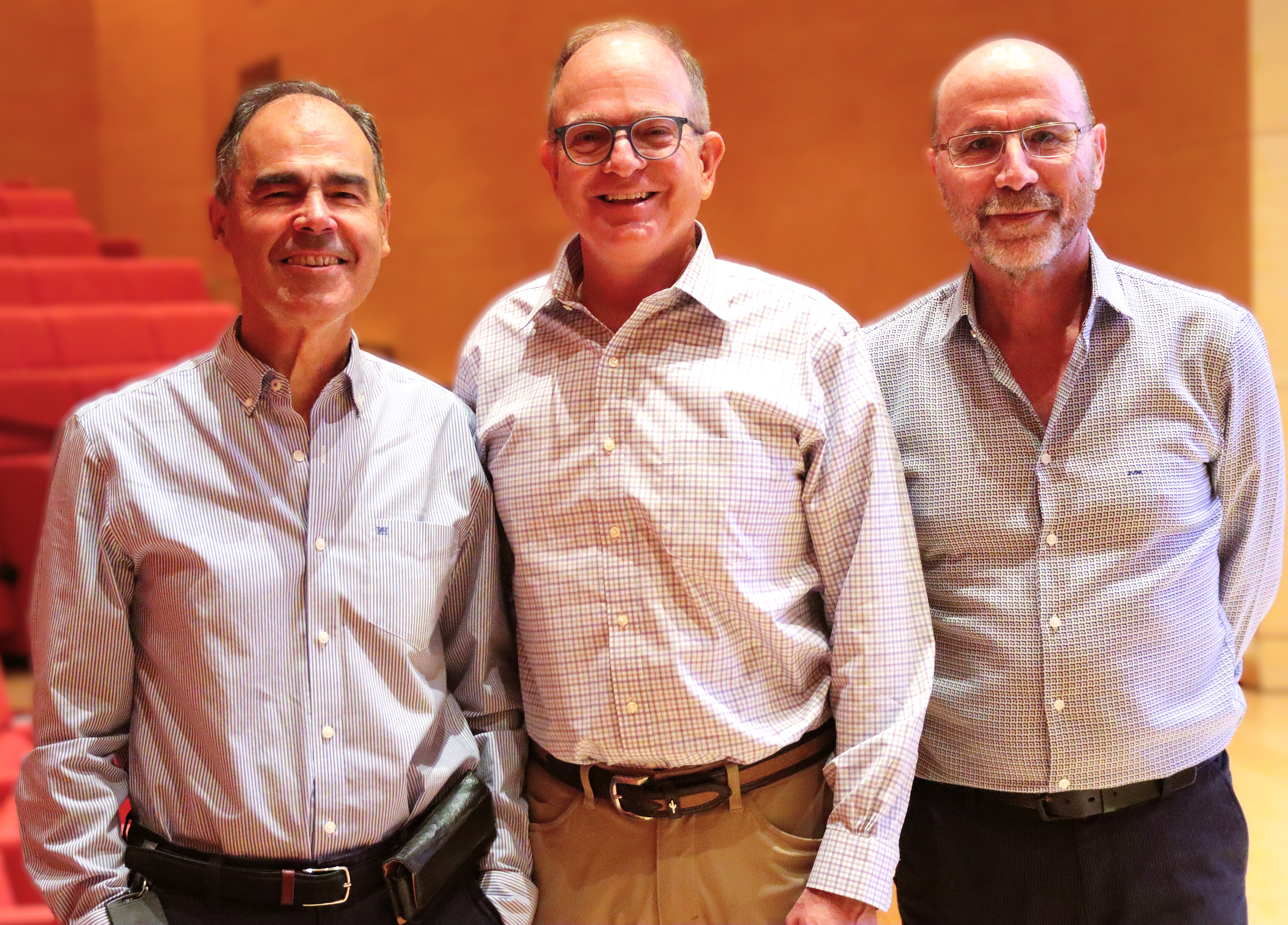
- Cardiovascular disease remains the leading cause of death worldwide despite major advances in treatment. What do you think are the most important unanswered questions in cardiovascular prevention today?
I really like exercise. Of course, any kind of exercise is good, but understanding at a molecular level how exercise confers its beneficial effects is fascinating to me. I’m also interested in figuring out which type of exercise is best for each individual. Should you be doing endurance exercise? Anaerobic or resistance exercise? I’m really interested in the biology behind how these work.
- How do you study the influence of exercise on people’s health?
We’re part of a very large study involving 2,000 individuals who are undergoing either an endurance exercise intervention or a resistance exercise intervention. The participants span all age groups — pediatrics, young adults, middle-aged people, seniors. There are many women, many men, a broad spectrum of individuals.
We’re trying to understand at a molecular level whether we can predict who’s going to respond to each intervention, and also what changes in people’s blood during exercise.
- So in your opinion, should doctors in primary care prescribe exercise as therapy for everybody?
Absolutely.
- Many doctors don’t really know which type of exercise is best for each patient. They don’t have enough training in exercise prescription. Do you think we can understand this better?
Well, that’s what we’re trying to do. But honestly, at 30,000 feet, if you do a mix of aerobics and anaerobic exercise, I think you need both. It’s very interesting in this study we’re working on. I didn’t realize how much oxygen uptake improves from resistance exercise, just as we know it improves with aerobic exercise. The increase is really striking.
And we also know glucose homeostasis and many other things improve markedly with resistance exercise, not just aerobic exercise.
Exercise is the best risk-factor modifier. How much exercise is probably the best marker of how long you’re going to live.
The other area I mentioned that I’m very interested in is disease prediction in people without obvious risk factors. There are definitely individuals with very few risk factors who still develop heart disease. Cholesterol is very important. Hypertension is very important. They’re all important. But there are people who still develop heart disease without those factors, and others who have modest levels of all of them and never develop disease.
So really understanding disease prediction — what’s sometimes called residual risk, the risk apart from the known risk factors — is another area we’re deeply interested in.
- And have you found any patterns?
Yes, we’re focusing now on apparently low-risk individuals. That’s really where our attention is.
- As chief of cardiovascular medicine at Beth Israel, how do you balance leadership responsibilities with maintaining an active research program?
Now I do less clinical work than before.
Our structure is very horizontal. It’s not a classic academic pyramid with one person on top. I have a lot of faith in the young people in the division. I think the way to build a great program is to give talented people responsibility at a young age. Of course, you have to be good at identifying who those people are.
We have many young people in the division with enormous responsibility early in their careers. That’s the secret sauce, as we say in the United States.
If you don’t give people responsibility and ownership early, eventually they become frustrated or leave to get those experiences elsewhere.
I also have a tremendous clinical director. He and I work together almost like siblings. We trust each other, and the whole group has a lot of mutual trust.
Boston is known for having a big boss and everybody below. That’s one model, but I think distributed leadership works very well too.
- I always wonder how difficult it is to select the right fellows for your department.
A lot of it is intuition — hunches about people. And also trajectory. Many people focus on candidates who attend the best schools.
- One researcher I interviewed told me he never looked at CVs or publications. He preferred to talk with the fellows and understand what they wanted to become in their careers. And I asked him, “But you spend a lot of time interviewing people.” And he answered, “That’s my job. If I choose the right people, everything becomes easier.”
I think I’m probably the only chief who interviews everybody. At least the only one I know of. I interview 80 people every September. Quick interviews — 20 minutes each — but you can get to know somebody in 20 minutes.
- I think in 20 minutes you can understand many things.
Of course, you need follow-up conversations too. But I take a lot of pride in it.
I really like being around young people. I love my children. That’s how you have a long career — by staying around young people. Like my dad. My dad taught until he was 90 years old.
- I was watching the video of your Paul Dudley White Award, and someone said you have a great sense of humor. Do you think that’s important for mental health?
Of course. I think if you take yourself too seriously, it’s a problem. A sense of humor helps you relax. And if you have a sense of humor, it allows you to see the good in everyone. It creates a common bond between people. A sense of humor reflects humanity.
You should be passionate about what you do, but not about one single idea. If you become too attached to one idea, there’s a good chance it’s incomplete or even wrong. Science and life are more complicated than that. A sense of humor allows you to be passionate about life without taking everything too seriously.
- A sense of humor is also useful when experiments don’t work or when results are disappointing.
Exactly. Of course, we don’t laugh when patients are suffering. But sometimes even patients or families say something humorous, and those moments are meaningful. They show humanity and compassion.
- You mentioned that your father came from Argentina.
From Buenos Aires.
- So I suppose you still feel Argentinian in some ways. Argentinians never completely lose their identity.
Actually, I have a joke in my talk about diet. I say that I love sushi, but I also show a picture of a cochinito. One of my best friends is vegetarian — one of the people I work with — and sometimes I send him photos of steaks. And he says, “I’m calling human resources.” That’s my sense of humor.