Circulation: Researchers Identify a Key Mechanism Driving Coronary Damage in Kawasaki Disease


The findings provide new insights for developing strategies aimed at preventing the cardiovascular complications associated with this rare disease
An international team led by researcher Silvia Martín-Puig, affiliated with the Cardiovascular Regeneration Program at the Centro Nacional de Investigaciones Cardiovasculares Carlos III (CNIC) and the Sols-Morreale Institute for Biomedical Research (IIBM), a joint center of the Spanish National Research Council (CSIC) and the Autonomous University of Madrid (UAM) has identified a fundamental mechanism that promotes the development of coronary lesions resembling those observed in patients with the most severe forms of Kawasaki disease.
Kawasaki disease is a rare inflammatory disorder that affects blood vessels and occurs primarily in children under five years of age. Although its incidence is relatively low in Europe and North America, it is the leading cause of acquired cardiovascular disease in children in developed countries. In its most severe forms, generally associated with delayed diagnosis and treatment, the disease can cause coronary artery dilation, aneurysms, thrombosis, and other complications that may result in permanent cardiovascular damage and increase the risk of heart disease during adolescence and adulthood.
Despite decades of research, the mechanisms responsible for these lesions remain poorly understood. Understanding how coronary artery damage develops is essential for designing more effective treatments and preventing its long-term consequences.
This study, which also involved researchers from several institutions including the CIBER Network for Respiratory Diseases (CIBERES), the CIBER Network for Cardiovascular Diseases (CIBERCV), the August Pi i Sunyer Biomedical Research Institute (IDIBAPS), and Toho University in Tokyo, demonstrates that sustained activation of the cellular response to oxygen deprivation (hypoxia) triggers vascular and inflammatory changes that closely reproduce many of the coronary lesions observed in the most severe cases of Kawasaki disease.
This biological response is regulated by a group of proteins known as hypoxia-inducible factors (HIFs), which coordinate cellular adaptation when oxygen availability decreases. This mechanism plays an essential role in processes such as new blood vessel formation, tissue repair, and cardiovascular adaptation to injury. Although the HIF pathway has previously been linked to common adult cardiovascular diseases, such as myocardial infarction or atherosclerosis, its potential involvement in a pediatric pathology like Kawasaki disease had not been investigated until now.
To investigate the origin of these lesions, the researchers developed a new mouse model in which the hypoxia response pathway remains continuously activated in cells involved in the formation and maintenance of the coronary arteries.
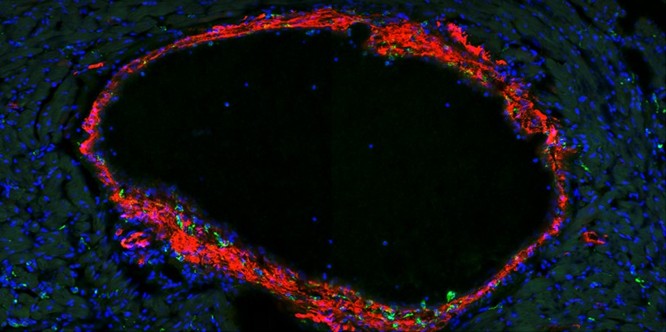
The animals developed cardiovascular abnormalities closely resembling those observed in the most severe cases of Kawasaki disease, including coronary artery dilation, vascular inflammation, thrombosis, calcification, hemorrhage, and cardiac tissue damage. In addition, molecular analyses revealed changes in the expression of genes involved in inflammation, coagulation, and other processes closely associated with the progression of vascular injury.
One of the key advantages of this model is its ability to faithfully recapitulate coronary artery damage, the hallmark cardiovascular manifestation of severe Kawasaki disease, whereas previous experimental models primarily affected large vessels such as the aorta. "Having a model that faithfully reproduces the alterations observed in the coronaries of patients provides us with a unique opportunity to better understand the disease and explore new therapeutic strategies," says Silvia Martín Puig, principal investigator of the study.
One of the study's most significant findings was the demonstration that inactivation of HIF2 reverses the profound cardiovascular abnormalities developed in the experimental model and restores the molecular alterations associated with the disease. "This allowed us to identify HIF2 as a key regulator of coronary inflammation, vascular remodeling, and the thrombotic complications characteristic of the cardiovascular alterations of severe Kawasaki disease," explains Silvia Martín Puig.
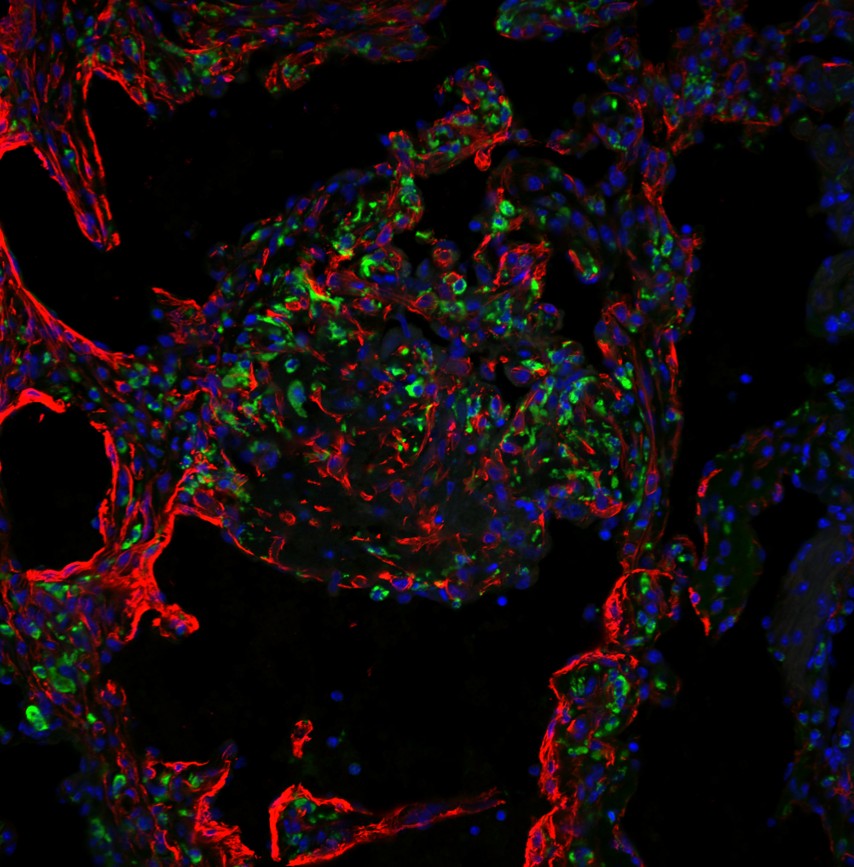
Furthermore, analysis of cardiac tissue from patients with Kawasaki disease revealed the presence of HIF2 both within coronary lesions and in the surrounding inflammatory cells. These findings strengthen the clinical relevance of the study and identify HIF2 as a promising therapeutic target for preventing adverse cardiovascular outcomes associated with the disease.
New Opportunities to Understand and Treat Kawasaki Disease
This study provides a new perspective on the mechanisms underlying cardiovascular damage in Kawasaki disease and identifies the HIF2 pathway as a promising target for the development of future therapeutic strategies. In addition, the new experimental model represents a valuable tool for investigating the pathogenesis of the disease and evaluating interventions aimed at preventing its most serious cardiovascular complications.
Although current treatment strategies, including intravenous immunoglobulins, corticosteroids, and biological agents used in refractory cases, have demonstrated clinical efficacy in patients with Kawasaki disease, no therapies are currently available that specifically prevent damage to the coronary arteries. In this context, the study identifies a previously unrecognized pathway involved in the development of these lesions and opens new avenues for the development of more targeted treatments.