European Heart Journal: Inflammation is involved in the earliest stages of atherosclerosis


A CNIC study shows that systemic inflammation contributes to the development of early atherosclerosis independently of classic cardiovascular risk factors.
Inflammation plays an important role in the development of atherosclerosis from its earliest stages, long before the onset of symptoms or cardiovascular events such as heart attack or stroke. This is the main conclusion of a study led by a team at the Centro Nacional de Investigaciones Cardiovasculares Carlos III (CNIC) and published in the European Heart Journal. The research shows that systemic inflammation contributes to disease development independently of traditional cardiovascular risk factors such as elevated cholesterol and hypertension.
Atherosclerosis is a silent process that begins decades before it becomes clinically apparent. While elevated LDL cholesterol and high blood pressure are well-established causal factors, the role of inflammation in the disease’s earliest stages had not been defined. The new study provides evidence that inflammation is an essential component of early atherosclerosis development and that its assessment can improve the identification of people at higher cardiovascular risk.
The study was carried out within the PESA study (Progression of Early Subclinical Atherosclerosis), one of the largest international cohort studies investigating the initial stages of cardiovascular disease. Over six years, 3,471 middle-aged men and women with no known cardiovascular disease were followed using advanced vascular imaging techniques and analysis of several inflammatory biomarkers.
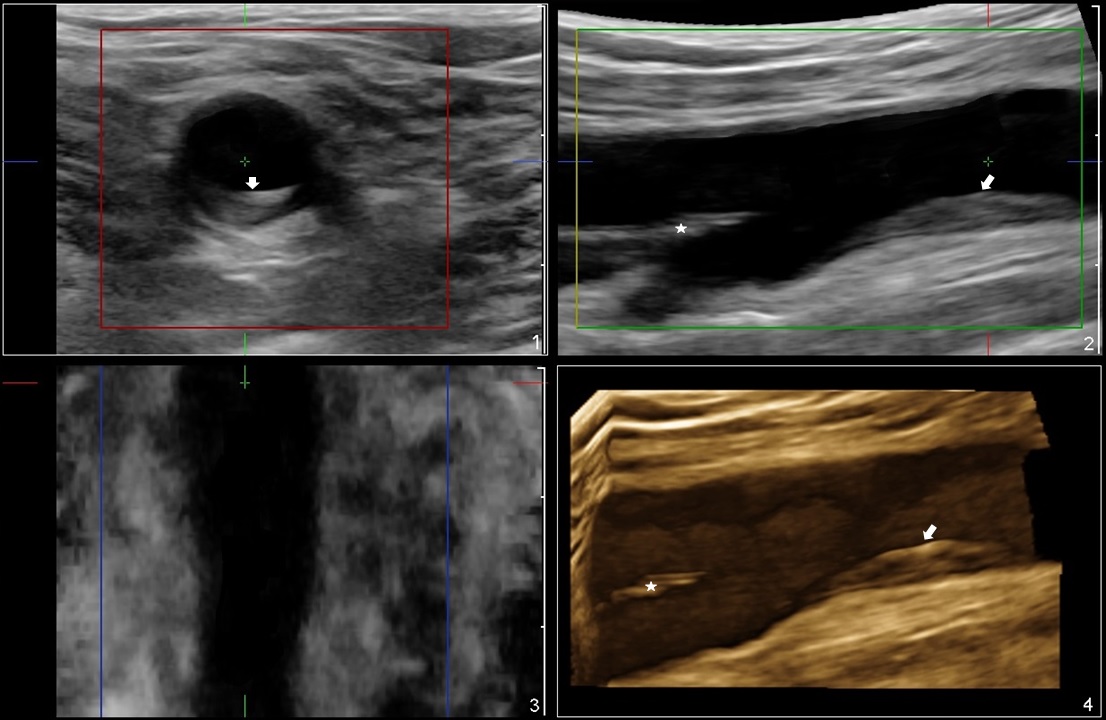
During this period, atherosclerosis progression was assessed using three-dimensional vascular ultrasound and coronary computed tomography, together with analysis of inflammatory markers. This approach made it possible to compare the contribution of inflammation with that of classic cardiovascular risk factors.
The results show that inflammation contributes to the development of atherosclerosis independently of LDL cholesterol and blood pressure, two of the most important cardiovascular risk factors. The study also identifies white blood cell count as the inflammatory biomarker that best reflects the presence and progression of early atherosclerotic disease.
Atherosclerosis begins decades before it causes a heart attack or stroke. During that time, arteries progressively accumulate fatty plaques and inflammatory cells without producing symptoms. Understanding the mechanisms that drive this silent phase is essential for designing strategies to prevent the disease before the appearance of clinical symptoms or events.
“The role of inflammation in atherosclerosis has been the subject of extensive research over decades. However, this study uses a novel approach to show that inflammation plays a clear role in the earliest stages of atherosclerosis development and that this role is independent of the effect of other associated factors, such as cholesterol or blood pressure,” explains Dr. Valentín Fuster, CNIC General Director, President of the Mount Sinai Fuster Heart Hospital and Physician-in-Chief of the Mount Sinai Hospital in New York, and co-lead author of the study.
The research also shows that incorporating inflammatory biomarkers into cardiovascular risk assessment could complement the information provided by traditional risk factors and contribute to more personalized prevention.
According to first author Dr. Guiomar Mendieta, Consultant Cardiologist at the Department of Cardiology, Hospital de la Santa Creu i Sant Pau, Institut de Recerca Sant Pau (IR SANT PAU), and CIBERCV, in Barcelona “We used advanced cardiovascular imaging to follow thousands of initially healthy people for six years. We found that markers of inflammation were associated with greater plaque buildup in several arteries. This suggests that inflammation may contribute to the development of atherosclerosis from its earliest stages, alongside lipids and other cardiovascular risk factors”.
The researchers also observed that inflammation was associated not only with a greater burden of atherosclerotic plaque, but also with more extensive involvement of different vascular territories, including the carotid, femoral, and coronary arteries. These findings reinforce the idea that inflammation is an essential component of the atherosclerotic process from its initial stages.
The results have important implications for cardiovascular prevention. Combining inflammatory biomarkers with advanced imaging techniques could enable more precise identification of people at higher risk before symptoms appear, making it possible to design more personalized preventive strategies and to better select candidates for future anti-inflammatory therapies.
Borja Ibáñez, CNIC Scientific Director, cardiologist at Fundación Jiménez Díaz University Hospital, a group leader in the Spanish cardiovascular research network (CIBERCV), and the study’s other co-lead author, notes that “the next step is to determine whether strategies to reduce inflammation can help halt the atherosclerotic process. Previous clinical trials in this area generated controversial results, but they were conducted in the context of much more advanced atherosclerosis. Targeting inflammation at earlier stages may turn out to be more beneficial than later interventions, although this is something we need to test.”
For Dr. Ibáñez, this study represents another step toward precision cardiovascular prevention based on the integration of biomarkers, imaging, and traditional risk factors.
The researchers conclude that integrating inflammatory biomarkers with advanced cardiovascular imaging techniques can help improve risk stratification and facilitate the development of new prevention strategies aimed at halting the disease before clinical manifestations appear.
The PESA study is funded by the Centro Nacional de Investigaciones Cardiovasculares Carlos III (CNIC) and Banco Santander.
Guiomar Mendieta was a recipient of the CardioJoven 2020-2023 scholarship, awarded by the Spanish Society of Cardiology (Sociedad Española de Cardiología) and CNIC, and presently Visiting Scientist at CNIC.