European Heart Journal: Pioneering technique allows the first-in-human repair of defective mechanical heart valves without surgery


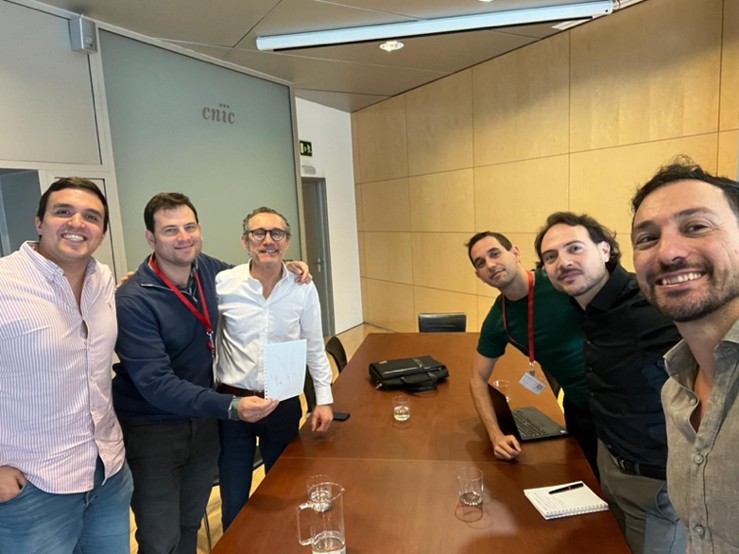
A team from the CNIC and Hospital Clínico Universitario de Valladolid has developed a minimally invasive, catheter-based procedure to treat defective mechanical aortic valves
A team led by the Centro Nacional de Investigaciones Cardiovasculares (CNIC) and Hospital Clínico Universitario de Valladolid has developed and clinically applied a minimally invasive technique that, for the first time, enables the treatment of defective mechanical aortic valves using a catheter-based approach. The procedure avoids high-risk open-heart surgery and opens new therapeutic possibilities for patients who previously had no realistic options. The two research groups, led respectively by Dr. Borja Ibáñez and Dr. Alberto San Román, are part of the Spanish cardiovascular research network CIBERCV .
Mechanical heart valves have been used for decades to treat severe aortic valve disease, with their high durability making them particularly attractive for younger patients. However, when these prostheses fail—due either to obstruction of their mobile discs or other malfunctions—the only available treatment until now has been repeat open-heart surgery, a high-risk procedure that is not feasible for many patients.
“We were encountering patients with severely dysfunctional mechanical valves for whom no reasonable therapeutic option existed,” explains Dr. Ibáñez, CNIC Scientific Director, cardiologist at Hospital Universitario Fundación Jiménez Díaz, and senior author of the study published in European Heart Journal. “The risk of repeat surgery was prohibitive, and until now there were no effective percutaneous alternatives.”
Unlike biological valves, mechanical valves could not previously be treated with catheter-based techniques. The new study describes the first minimally invasive alternative for these complex cases. Specifically, the researchers developed and validated a strategy known as mechanical valve-in-valve (ViMech), which enables the catheter-mediated implantation of a new valve inside a defective mechanical valve after controlled removal of its mobile discs.
“This study combines preclinical research and clinical application—a rarity in developments of this type—and demonstrates that an experimental concept can be translated safely to patients,” notes Dr. Ibáñez.
The team first developed and tested the technique in experimental models, demonstrating that the mechanical valve discs can be fragmented and retrieved safely using catheter-based tools and protection systems designed to prevent debris from entering the bloodstream. The procedure was then translated to the clinical setting and applied for the first time in patients with severely damaged mechanical valves and extremely high surgical risk.
“The ability to remove the discs of a mechanical valve in a controlled manner and treat the patient via catheter represents a radical change in the management of these highly complex cases,” says joint first author Dr. Ignacio J. Amat Santos, interventional cardiologist at Hospital Clínico Universitario de Valladolid.
The interventions were performed without open-heart surgery and with very rapid recovery in patients at extreme risk, adds CNIC cardiologist and joint first author Dr. Carlos Real.
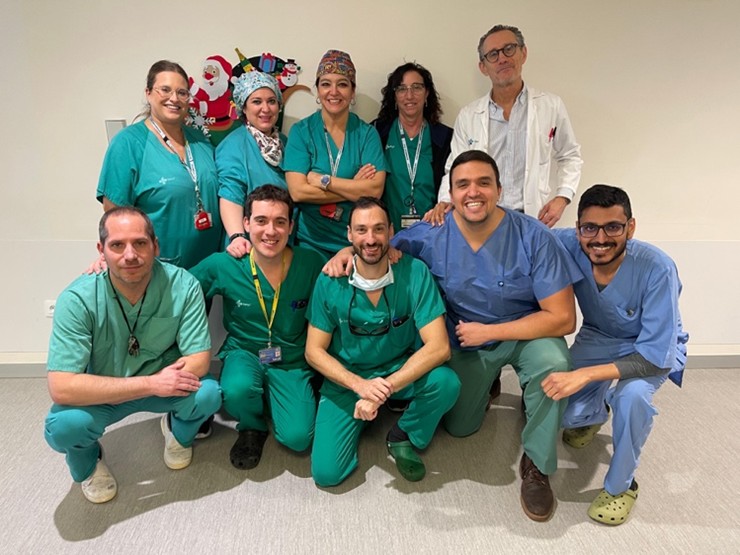
The study reports the first three ViMech transcatheter aortic valve implantation procedures performed in humans, in patients aged 67 to 79 who had undergone multiple previous cardiac surgeries or had severe mechanical valve-related complications that made conventional reoperation impossible. In all cases, the procedure immediately restored valve function, with a very favorable clinical course and no major neurological or vascular events during follow-up.
“In these first patients, the procedure was successfully performed through the femoral artery, avoiding open surgery,” adds Dr. San Román, Chief of Cardiology at Hospital Clínico de Valladolid. “Once the mechanical discs were removed, a new transcatheter heart valve was implanted, restoring normal blood flow. All patients remained clinically stable during follow-up.”
In addition, Dr. San Román notes that in some cases the procedure allowed significant simplification of the antithrombotic regimen, avoiding the lifelong anticoagulation usually required for mechanical valves. This has a direct impact on safety and quality of life in very fragile patients.
At six-month follow-up, all patients were alive, asymptomatic, and functioning normally with their transcatheter prostheses, with no significant ischemic or hemorrhagic events.
The authors note that the study has limitations, including the small number of treated patients and the need to further investigate the optimal antithrombotic strategy after this procedure. Even so, the study represents the first complete demonstration—from laboratory development to patient application—that percutaneous treatment of defective mechanical valves is feasible.
The authors conclude that this strategy could transform the clinical management of thousands of patients in the future by offering a less aggressive option and significantly expanding therapeutic possibilities in interventional cardiology.